
Development and Field Demonstration of a qPCR Panel for Heavy-Metal Detoxification Genes in Tomato from Irrigated Sites in Kano, Nigeria
DOI:
https://doi.org/10.33003/fjs-2026-1009-5340Keywords:
Assay validation, Heavy-metal monitoring, qPCR panel, Solanum lycopersicumAbstract
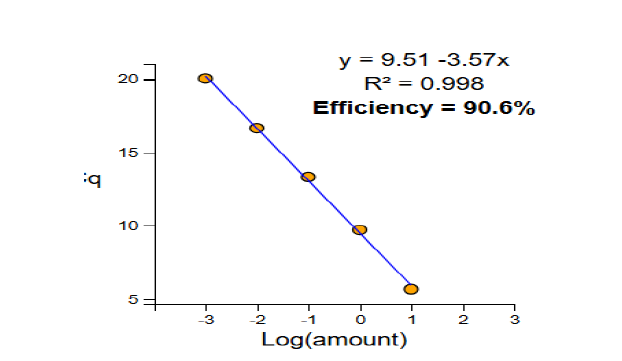
Heavy-metal contamination of wastewater-irrigated farmland in the Kano River Basin notably lead, cadmium, chromium, nickel, copper and zinc has been characterised repeatedly at the soil and tissue level, but local molecular tools for monitoring how crops respond to it are lacking. This paper presents the development, validation and first field application of a multi-gene quantitative real-time PCR (qPCR) panel targeting phytochelatin synthase (PCS1) and glutathione reductase (GR-1) detoxification related genes with actin (ACT) as the reference gene in tomato (Solanum lycopersicum). Primer performance was established by serial dilution standard curves and melt-curve specificity analysis: ACT amplified with an efficiency of 90.6% (slope -3.57, R² = 0.998), PCS1 produced a single specific product (melt temperature 83.5 ± 0.0 °C; R² = 0.971), and GR-1 produced a single product at 81.1 ± 0.2 °C. Metallothionein-2 (MT-2) primers were excluded on specificity grounds. The validated panel was then applied to root and shoot tissue of field-grown tomato sampled in December 2025 from three contaminated sites along a rural-to-industrial gradient Challawa, Wudil and Dambatta and a control at Bayero University, Kano. Exposure was from natural field contamination rather than controlled dosing. GR-1 was preferentially expressed in roots and most strongly at the most contaminated site while PCS1 expression was more evident in shoot tissue patterns consistent with the metal partitioning documented in the same agroecosystem in earlier studies indicating that the panel returns biologically coherent signal. The panel provides a locally validated, low-cost tool for transcript-level monitoring of metal detoxification in field crops.
References
Akan, J. C., Abdulrahman, F. I., Ogugbuaja, V. O., and Ayodele, J. T. (2009). Heavy metals and anion levels in some samples of vegetables grown within the vicinity of Challawa industrial area, Kano State, Nigeria. American Journal of Applied Sciences, 6(3), 534–542.
Bolukbasi, E. (2021). Expression analysis of some stress-related genes induced by cadmium on tomato (Solanum lycopersicum L.) plants. Hittite Journal of Science and Engineering, 8(4), 339–345.
Bustin, S. A., Benes, V., Garson, J. A., et al. (2009). The MIQE guidelines: minimum information for publication of quantitative real-time PCR experiments. Clinical Chemistry, 55(4), 611–622.
Cobbett, C. S. (2000). Phytochelatins and their roles in heavy metal detoxification. Plant Physiology, 123(3), 825–832.
Edogbo, B., Okolocha, E., Maikai, B., Aluwong, T., and Uchendu, C. (2020). Risk analysis of heavy metal contamination in soil, vegetables and fish around Challawa area in Kano State, Nigeria. Scientific African, 7, e00281.
Emamverdian, A., Ding, Y., Mokhberdoran, F., and Xie, Y. (2015). Heavy metal stress and some mechanisms of plant defense response. The Scientific World Journal, 2015, 756120.
Gill, S. S., and Tuteja, N. (2010). Reactive oxygen species and antioxidant machinery in abiotic stress tolerance in crop plants. Plant Physiology and Biochemistry, 48(12), 909–930.
Hall, J. L. (2002). Cellular mechanisms for heavy metal detoxification and tolerance. Journal of Experimental Botany, 53(366), 1–11.
Hamidu, H., Abubakar, S., Bala, A., et al. (2021). Heavy metals pollution indexing, geospatial and statistical analysis of groundwater around Challawa and Sharada industrial areas, Kano, Nigeria. SN Applied Sciences, 3, 1–18.
Hasanuzzaman, M., Bhuyan, M. H. M., Anee, T. I., Parvin, K., and Nahar, K. (2019). Regulation of ascorbate-glutathione pathway in mitigating oxidative damage in plants under abiotic stress. Antioxidants, 8(9), 384.
Hossain, Z., and Komatsu, S. (2012). Contribution of proteomic studies towards understanding plant heavy metal stress response. Frontiers in Plant Science, 3, 310.
Isiuku, B. O., and Enyoh, C. E. (2020). Monitoring and modeling of heavy metal contents in vegetables collected from markets in Imo State, Nigeria. Environmental Monitoring and Assessment, 192(7), 446.
Kisa, D. (2019). Responses of phytochelatin and proline-related genes expression associated with heavy metal stress in Solanum lycopersicum. Acta Botanica Croatica, 78(1), 9–16.
Lawal, A. O., and Audu, A. A. (2011). Analysis of heavy metals found in vegetables from some irrigated gardens in Kano State, Nigeria. Journal of Environmental Chemistry and Ecotoxicology, 3(6), 142–148.
Livak, K. J., and Schmittgen, T. D. (2001). Analysis of relative gene expression data using real-time quantitative PCR and the 2−ΔΔCt method. Methods, 25(4), 402–408.
Mejare, M., and Bulow, L. (2001). Metal-binding proteins and peptides in bioremediation and phytoremediation of heavy metals. Trends in Biotechnology, 19(2), 67–73.
Muktar, A. A., Alhassan, A. J., Atiku, M. K., Pedro, S. L., and Wudil, A. M. (2021). Assessment of toxicological indices of some heavy metals in soil, cabbage and lettuce samples grown along some rivers in Kano State, Nigeria. Dutse Journal of Pure and Applied Sciences, 7(4a), 65–76.
Nagajyoti, P. C., Lee, K. D., and Sreekanth, T. V. M. (2010). Heavy metals, occurrence and toxicity for plants: a review. Environmental Chemistry Letters, 8(3), 199–216.
Rozen, S., & Skaletsky, H. (2000). Primer3 on the WWW for general users and for biologist programmers. Methods in Molecular Biology, 132, 365–386.
Sharma, S. S., and Dietz, K. J. (2009). The relationship between metal toxicity and cellular redox imbalance. Trends in Plant Science, 14(1), 43–50.
Tombuloglu, H., Semizoglu, N., Sakcali, S., and Kekec, G. (2012). Boron induced expression of some stress-related genes in tomato. Chemosphere, 86(4), 433–438.
Yusuf, A., Musa, D. D., and Kutawa, A. B. (2025). Detection and phytoextraction of heavy metals by selected edible and non-edible plants from irrigated sites in Kano Metropolis, Nigeria. Sahel Journal of Life Sciences FUDMA, 3(3), 324–332.
Downloads
Published
Issue
Section
Categories
License
Copyright (c) 2026 Abubakar Yusuf, Daniel D. Musa, Abdullaziz B. Kutawa

This work is licensed under a Creative Commons Attribution 4.0 International License.


