
A Comparative Analysis of Gaussian, Triangular, and Trapezoidal Membership Functions in a Mamdani Fuzzy Inference System for Evaluating Mathematics Learning Achievement
DOI:
https://doi.org/10.33003/fjs-2026-1014-5335Keywords:
Fuzzy Inference System, Membership function comparison, Mamdani fuzzy inference system, Mathematics learning achievement, Educational assessment, MATLABAbstract
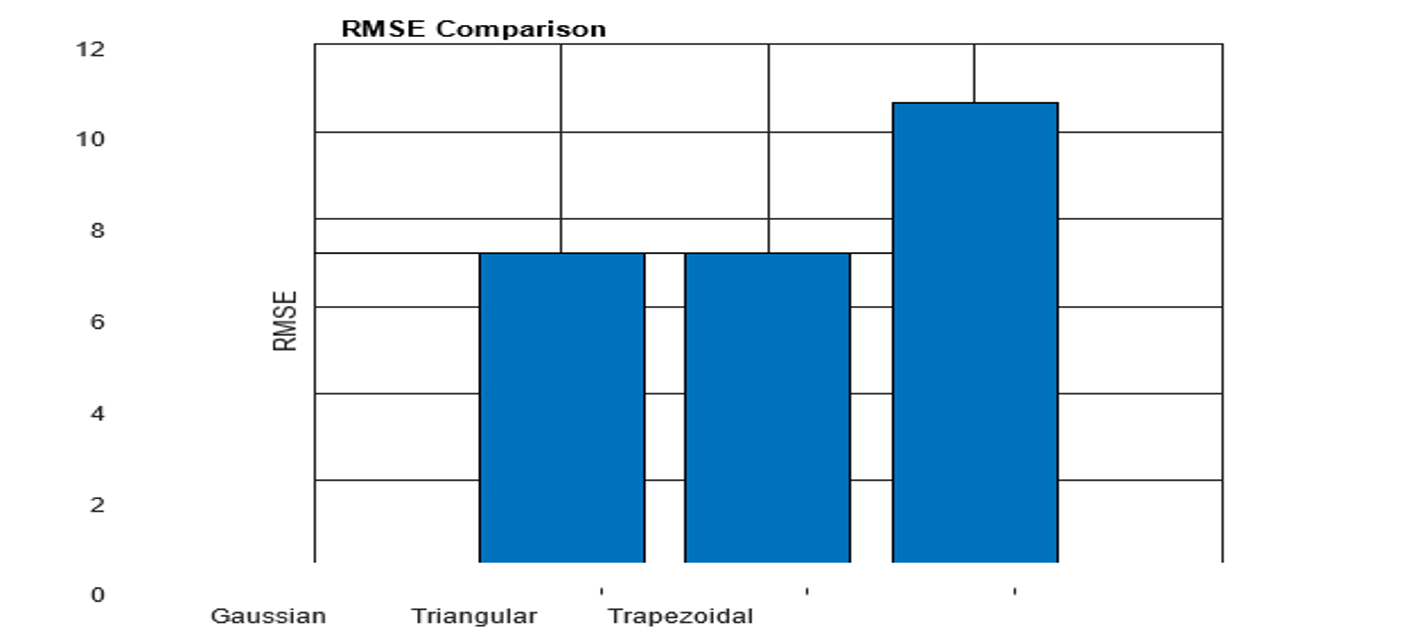
Educational assessment systems conventionally rely on crisp numerical scores that inadequately capture the gradual and uncertain nature of student learning, and while fuzzy inference systems (FIS) have been applied to address this limitation, prior studies rarely compare alternative membership function designs under identical experimental conditions, leaving open the practical question of which membership function type best supports fuzzy-based educational assessment. This study addresses that gap by presenting a comparative evaluation of Gaussian, Triangular, and Trapezoidal membership functions, which were selected because they are among the most widely used membership functions in fuzzy educational assessment and differ in their smoothness, computational simplicity, and plateau characteristics within a Mamdani Fuzzy Inference System (FIS) for assessing student learning achievement. Three fuzzy models were developed using examination score, assignment completion, and class participation as input variables, while learning achievement served as the output variable. A dataset comprising 360 secondary school students was used for model development and validation. Teacher evaluation scores were employed as benchmark values for assessing model performance. The three models were implemented using identical rule bases, inference mechanisms, and defuzzification procedures, differing only in the type of membership function employed. Model performance was evaluated using the Pearson correlation coefficient, root mean square error (RMSE), and mean absolute error (MAE). The results revealed that the Gaussian model achieved the highest correlation with teacher evaluations (r = 0.9623), indicating superior agreement with teacher assessment patterns, whereas the Triangular model produced the lowest RMSE (7.194) and MAE (4.867), demonstrating greater numerical prediction accuracy.
References
Bai, S. M., & Chen, S. M. (2008). Automatically constructing grade membership functions of fuzzy rules for students’ evaluation. Expert Systems with Applications, 35(3), 1408–1414. https://doi.org/10.1016/j.eswa.2007.08.020
Biswas, R. (1995). An application of fuzzy sets in students’ evaluation. Fuzzy Sets and Systems, 74(2), 187–194. https://doi.org/10.1016/0165-0114(95)00063-S
Chen, S. M., & Lee, C. H. (1999). New methods for students’ evaluation using fuzzy sets. Fuzzy Sets and Systems, 104(2), 209–218. https://doi.org/10.1016/S0165-0114(97)00208-X
Doz, D., Cankar, G., & Mohoric, A. (2022). The use of fuzzy logic in evaluating the school grades. Journal of Educational Computing Research, 60(1), 179–204. https://doi.org/10.1177/07356331211030387
Echauz, J. R., & Vachtsevanos, G. J. (1995). Fuzzy grading system. IEEE Transactions on Education, 38(2), 158–165. https://doi.org/10.1109/13.387218
Ertugrul, I. (2006). Fuzzy examination system for engineering education. Journal of Engineering Education, 14, 77–84.
Fourali, C. (1997). Using fuzzy logic in educational measurement: The case of portfolio assessment. Evaluation and Research in Education, 11(3), 129–148. https://doi.org/10.1080/09500799708666933
Gedela, R. V. R., & Bodanki, A. (2021). Fuzzy logic based student evaluation system. International Journal of Computer Applications, 174(20), 36–40.
Jang, J. S. R., Sun, C. T., & Mizutani, E. (1997). Neuro-fuzzy and soft computing: A computational approach to learning and machine intelligence. Prentice Hall.
Karma, S. M., Zachariah, B., Aminu, J., Isaac, S., Yusuf, L., & Ibrahim, Y. K. (2024). Enhanced approach for change of course of study using fuzzy logic. FUDMA Journal of Sciences, 8(2), 323–330. https://doi.org/10.33003/fjs-2024-0802-2369
Mamdani, E. H. (1974). Application of fuzzy algorithms for control of simple dynamic plant. Proceedings of the Institution of Electrical Engineers, 121(12), 1585–1588. https://doi.org/10.1049/piee.1974.0328
MathWorks. (2023). Fuzzy Logic Toolbox user’s guide. The MathWorks, Inc.
Mitra, A., & Gog, V. (2015). Fuzzy logic based evaluation of technical and non-technical skills. International Journal of Engineering and Computer Science, 4(2), 10262–10266.
Nguyen, T., & Walker, E. A. (2018). A first course in fuzzy logic (4th ed.). CRC Press.
Nor, A. S. M., Talib, M., Razali, R., & Ahmad, S. (2021). Fuzzy logic application in comparison of mathematics performance between rural and urban secondary school students. Asian Journal of University Education, 17(3), 1–12.
Ross, T. J. (2010). Fuzzy logic with engineering applications (3rd ed.). Wiley.
Saleh, I., & Kim, S. I. (2009). A fuzzy system for evaluating students’ learning achievement. Expert Systems with Applications, 36(3), 6236–6243. https://doi.org/10.1016/j.eswa.2008.07.088
Subbotin, I. Y., & Bilotski, N. N. (2014). Triangular fuzzy logic model for learning assessment. International Journal of Research in Learning Disabilities, 10(3), 20–28.
Subbotin, I. Y., & Voskoglou, M. G. (2016). Fuzzy assessment methods. Universal Journal of Applied Mathematics, 4(5), 69–73. https://doi.org/10.13189/ujam.2016.040501
Turker, A., & Turanli, N. (2008). Difficulties in the mathematics learning of secondary school students. Procedia Social and Behavioral Sciences, 1(1), 2540–2544. https://doi.org/10.1016/j.sbspro.2009.01.449
Turkmen, H., & Killik, B. (2024). A MATLAB-based fuzzy logic application for secondary school mathematics evaluation using triangular membership functions. Journal of Educational Technology and Science, 27(1), 45–58.
Voskoglou, M. G. (2013). Fuzzy logic as a tool for assessing students’ knowledge and skills. Education Sciences, 3(2), 208–221. https://doi.org/10.3390/educsci3020208
Zadeh, L. A. (1965). Fuzzy sets. Information and Control, 8(3), 338–353. https://doi.org/10.1016/S0019-9958(65)90241-X
Zimmermann, H. J. (2011). Fuzzy set theory and its applications (4th ed.). Springer Science & Business Media.
Downloads
Published
Issue
Section
Categories
License
Copyright (c) 2026 Abubakar Audu, Adeku Ibrahim Musa, Kehinde Rotimi

This work is licensed under a Creative Commons Attribution 4.0 International License.


