
PHENOTYPIC DETECTION OF EXTENDED SPECTRUM BETA-LACTAMASE (ESBL) PRODUCING Escherichia coli FROM LIVESTOCK AND HERDERS IN SOME STATES IN NORTH-EASTERN NIGERIA
DOI:
https://doi.org/10.33003/fjs-2026-1007-5038Keywords:
Phenotypic Detection, Extended Spectrum Beta-Lactamase (ESBL), Escherichia coli, Livestock and HerdersAbstract
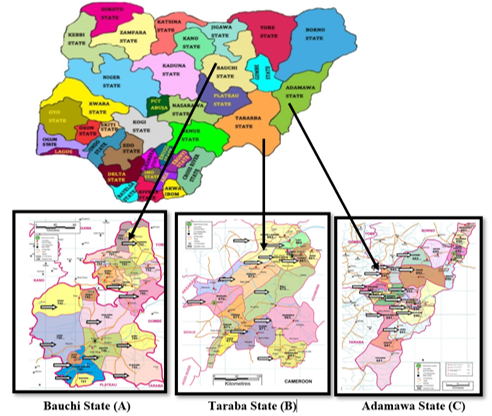
The emergence and dissemination of ESBL producing bacteria of food-animals and humans origin are responsible for numerous infections with challenging treatment and control measures which calls for considerable concern of both Medical and Veterinary practitioners all over the World. Phenotypic methods of ESBL screening are widely used for their simplicity, cost-effectiveness and suitability for routine clinical laboratories. The aim of this study was to isolate MDR E. coli isolates and screen them phenotypically for ESBL production using the Double Disk Synergy Test (DDST). A total of 1152 samples comprising of 384 each from cattle sheep and Herders were collected, processed, inoculated and incubated at 37 oC for 24 hours. One hundred and eighty one (181) samples yielded positive bacterial growths out of which 111 (61.3%) of them were E. coli isolates and 70 (%) were other members of the gram negative bacilli. Out of the 111 E. coli isolates, 91 (81.9%) were multidrug resistant of which 37 (36.3%) were phenotypically detected to be an ESBL producing phenotypes. This study revealed significant difference (P value < 0.05) between the E. coli and other members of the gram negative bacilli isolated. Calves, lambs and young herders below 10 years of age found in closed–contact with livestock as well as those living in an over-crowded and dirty environment were more prevalent to infection by ESBL producing bacteria. Therefore, proper sanitary measures be adopted and maintained in farms where calves and Lambs less than 1 year are kept. Young herders’ below10 years old...
References
Adebayo, J. O. (1998). Geographic location and environmental features of Adamawa State. Nigerian Journal of Regional Geography. 12(2) 45-60
Adebayo, J. O. (1999). Topographic and Socio-economics implications of Adamawa State, Nigerian Journal of Geography, 5(1) 22-35.
Ayi, V. K., Daniel, E. O., Mabel, K. A., Emmanuel A., C., Emmanuel, D. U., Celestine, A., & Juniad, K. (2020). Magnitude and trends of Ruminants, pigs and poultry diseases in Taraba state, Nigeria: 2013-2017: implication public health.3-6
Bradford, P. A. & Bush, K. (2001). Interplay between Beta- Lactamase and new Beta-Lactamase Inhibitors. Nature reviews Microbiology, 14 (7), 455-464.
Centers for Disease Control and Prevention. (CDC, 2013). Antibiotic resistance threats in the United States S Department of Health and Human Services.https://www.cdc.gov/drugresistance, 2013-508 pdf.
Chapman, P. A., Cerdan-Malo, A. T., Ellin, M., Harkin, M. A. and Sayers,A. R. (1997). Longitudinal study of E. coli O157:H7 in beef cattle on Farm in United Kingdom. Epidemiology and infection, 118 (3), 253-261.
Clinical Laboratory Standard Institute [CLSI] (2020). Performance Standards for Antimicrobial Susceptibility Testing: Zone diameter interpretive standards and equivalent minimal inhibitory concentration breakpoints for Enterobactericeae), (Volume 26, Number 3. Table 2A. 16th Informational Supplement, pp. M100- S16.
Come to Nigeria Staff, (2011). Studies on bauchi State. Retrieved from https;//www.url.com
Daga, A. P., Alcantar-Curiel, D., Cuauhtli,M,. Bernstein, C. N., Purdom, E., Dethlefsen, L. (2019). E. coli bloodstream infection in patient at University Hospital: Verulence factors and clinical characteristics. Frowner cell infections 6; 9 -19
EMA & ECDC (2009). The bacterial challenge: Time to react to a call to narrow the gap between multidrug–resistant bacteria in the EU and development of new antimicrobial agents
Food and Agriculture Organization (FAO, 1990). Determination of sample size: Fisheries Technical Paper, 32, Rome, Italy: FAO https://www.fao.org/32/11.pdf.
Friendman, D. K., Daga, A. P., Alcantar-Curiel, D., Cuauhtli, M., Bernstein, C. N., Purdom, E. & Dethlefsen L. (2002). Escherichia coli bloodstream infections in Patient at University Hospital: Verulence factors and Clinical characteristcs. Frontur Cell infections Microbiology 6: 9-191.
Gay, N., LeClaire, A., Laval, M., Miltgen, G., Jego, M., Stephane R., Jaubert J., Belmonte, O. & Cardinale, E. (2018). Risk factors of ESBL producing Enterobacteriaceae occurrence in farms in Reunion, Madagascar and MayotteIslands. Journal of Veterinary Science. 5 (22): 123-132.
Gram, H. C. (1884). Uber die Isolierte Farbung der Schizo-myceten inschnitt-ud Trockenpruparaten (On the isolated staining Schizomycetes in sections and dry preparations). Fortechritte der Medizin, 2,185-189.
Giriyapus, A. S., Namdihal, N. W., Kristia B. V., Pital, A. B & Chandrasekher, M. R (2011). Comparason of disc diffusion methods for the detection of ESBL producing enterobacteriaceae. Journal of Laboratory Physician 3:33-36
Gyles, C. L. (2007). Prevalence of pathogenic strains (O157:H7) of E. coli. Journal of Animal Science, 85(13-suppl), E45-E62.
Hawser, S. P., Bouchillon, S. K., Hoban, D. J., Badal, R. E., Hsueh, P. R. & Paterson, D. L. (2009). Emergence of high level of extended spectrum lactamase producing Gram-negative bacilli in the Asia pacific region. Antimicrobial agent chemotherapy 53: 3280-3284.
Hussein, H. S.(2007). Prevalence and Pathogenicity of E. coli O157:H7 in beef cattle and their products. Journal of Animal Science, 85 (13), E63-E72.
Idris, A. M. and Musa, H. (2021). Topographical influence on Microclimates of the Mambilla plateau region. International Journal of Geography, 9(1), 102-117.
Igbal A., Huovinen, P. S., Huovinen, S. & Jacoby, G. A. (2017). Sequence of PSE-2 ßeta-lactmase. Antimicrobial Agents of Chemotherapy; infectious Diseases. 8: 159-166.
Jarlier, V., Nicolas, M. H. & Fournier, G. (1988). Extended broad-spectrum β-lactamases conferring transferable resistance to newer beta-lactam agents Enterobacteriaceae: Hospital prevalence and susceptibility patterns. Revised. Infectious Disease 10: 867-878.
Jena, J., Veena, K., Sudeepa, K., Prakash, R. and Nagaraj, E. R. (2018). Modified double Disk Synergy Test (DDST) for detection of ESBL productionin clinical isolates. Journal of Laboratory Physicians.14 (5), 187-196.
Kiiru, J., Kariuki, S., Goddeeris, D.M. and Butaye, P. (2013). Prevalence of Escherichia coli in pastoral communities. Journal of Applied Microbiology, 4(2), 231-236,
Lever stein-van Hall, M. A., Dierikx, C. M., Cohen stuart, J., Voets, G. M. & Mevius, D. J. (2011). Dutch patients retail chickens meat and poultry share the same ESBL genes, plasmids and strains. Clinical Microbiology and injection, 17 (6), 873-880.
Magiorakos, A. P., Srinivasan, A., Carey, R. B., Carmeli, Y., Falagas, M. E., Giske, C. G., Rice, L. B., Weber, J. T., and Monnet, D. L. (2012). Multidrug- resistant, extensively drug- resistant and Pandrug-resistant bacteria: an international expert proposal for interim standard definitions for acquired resistance. Clinical Microbiology and infection, 18(3), 268-281.
Manning, S. D., Motiwala, A. S., and Qi, W., Lacher, D. W. and Riley, L. W. (2007). Variation in clades of E. coli O157:H7 associated with disease outbreaks. Proceeding of National Academy of Science, 104(12), 4552-4557.
Mohammed, A., Magashi, A. M., Yushau, M. (2024).Phenotypic detection and antimicrobial susceptibility profile of ESBL producing E. coli from suspected cases of urinary tract infection (UTI) in Kano metropolis, Nigeria. Fudma Journal of Sciences (FJS), 8 (2), 101-105. https://doi.org/10.33003/fjs-2024-0802-2344.
Naveena, J. E. & Joy, W. K. (2014). Laboratory mannual on Principles, procedures and inference in Microbiology. 3: 32-56.
Nguyen, T. T., Tran, T. N., Monnet, D. L. and Le, H. T. (2016). Antimicrobial resistance of E. coli isolates from cattle and sheep in Vietnam. Veterinary Microbiology, 192, 25-31.
Nicolas-Chanoine, M. H., Bolton, G., Duffy, C., Baylis, R. & Sayami, S. (2008). International emergence of E. coli clone O255:H4. ST 13 producing CTX-M-15. Journal of Chemotherapy 61: 273-281.
Ojo, O. A., Adelosoye, A. I. and Ogummodede, O.O. (2010). Prevalence of E. coli O157:H7 in sheep in Nigeria. African Journal of Microbiology Research, 4(20), 2123-2126.
Pehlivanoglu, F., Turutoglu, H., Ozturk, D. & Yardimci, H. (2016). Molecular characterization of ESBL producing E. coli from healthy cattle and sheep in Burdur provence, Turkey Acta Veterinaria-Beograd. 66: 520-533.
Peirano, R. C., Poirel, C., Pujol, M., Ardanuy, C. & Gottberg, A. (2010). Epidemiology and successful control of a large outbreak due to Klebsiella pneumoniae producing extended-spectrum β-lactamases. Antimicrobial Agents Chemotherapy; 42: 53-58.
Ravi, G., A., Revathi, G., Shannon, K. P. & Stapleton, P. D. (2011). An outbreak of extended-spectrum, beta-lactamase-producing Salmonella seftenberg in a burns ward. Journal of Hospital Infections; 40: 295-302
Schmid, A., Perreten, V. & Teuber, M. (2013). Characterization of ESBL producing E. coli from sheep and their environment in Switzerland. Microbial drug resistance, 19 (4), 315-321.
Singal, S. Mathur, T. Khan, S. Upadayay, D. J., Chugh, S. & Gaind, R. (2005). Evaluation of methods for AmpC Bete-lactamases in gram-negative cilical isolates from tertiary healthcare institution. Indian Journal of Medical Microbiology; 120-124.
Tadesse, D. A., Tran, T. N., Muhairwa, A. P., Lupindu A. M., Dambarg, P. and Rosenkrants, J. T.(2019). Antimicrobial resistance profile of E. coli isolates from cattle and sheep in Ethiopia. BioMed Central Veterinary Research, 15 (1), 135-140.
Welch, N. Y., Gouby, A., Neuwirth, C. & Bourg, G. (2002). Epidemiological study by pulsed-field gel electrophoresis of an outbreak of extended- spectrum beta-lactamase producing Klebsiella pneumoniae in a geriatric hospital. Journal of Clinical Microbiology; 32: 301-305.
Woerther, P. L., Burdet, C., Chachaty, E. & Andremont, A. (2013). Trends in human faecal carriage of ESBL in the community: Toward the globalization of CTX-M. Clinical Microbiology reviews, 26 (4), 744-758.
Zeitlyn & Conmell (2003). Recovery of important serotypes of E.coli from diarrheoicand apparently healthy calves in palam valey of Himachal Paradesh. International Journal of cow science; 2 (i) : 34-36.
Downloads
Published
Issue
Section
Categories
License
Copyright (c) 2026 Abdulhamid B. Njobdi, Mahmud Y. Iliyasu, Yunusa A. Umar, Josiah P. Diah, Ahmad F. Umar, Auwalu Uba

This work is licensed under a Creative Commons Attribution 4.0 International License.


