
Synthesis, Characterization and Chemosensing Application of Schiff Base derived from 2-Pyridinecarboxaldehyde and 2-Nitroaniline and its Fe (II) and Cu (II) Complexes
DOI:
https://doi.org/10.33003/fjs-2026-1012-5013Keywords:
Complexes, chemosensor, 2-pyridinecarboxaldehyde, Schiff base, azomethine, 2-nitroanilineAbstract
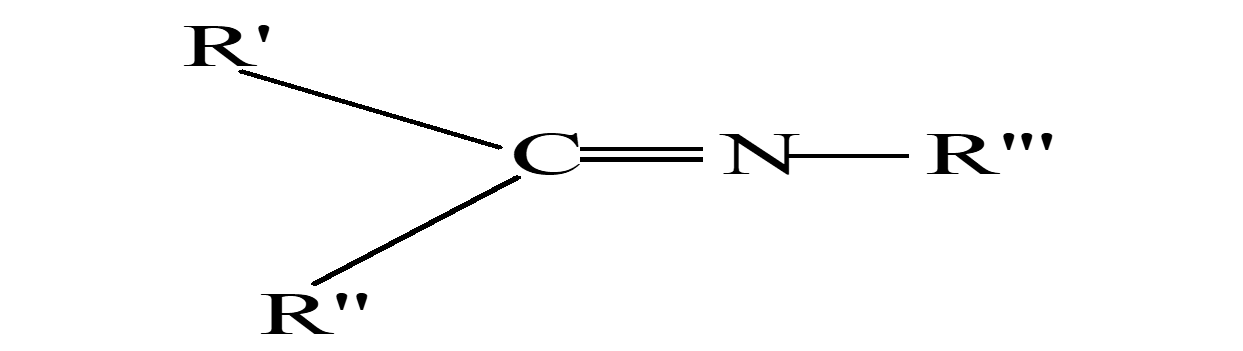
A Schiff base ligand was synthesized by refluxing 2-nitroaniline with 2- pyridinecarboxaldehyde in ethanol for three hours. The resulting ligand was further refluxed with metal (II) chlorides to yield Fe (II) and Cu (II) complexes in good yields, each exhibiting distinct colors. The ligand and its metal complexes were characterized using melting point, decomposition temperature, solubility tests, FTIR spectroscopy, magnetic susceptibility, conductivity measurements, and elemental analysis. Elemental data confirmed a 1:2 metal-to-ligand stoichiometry. The FTIR spectrum of the Schiff base displayed a strong absorption band at 1620 cm⁻¹, attributed to the azomethine (C=N) stretch, which shifted to lower frequencies in the complexes indicating coordination through the azomethine nitrogen. Conductivity studies revealed non-electrolytic behavior, while magnetic susceptibility measurements confirmed their paramagnetic nature. The Schiff base also exhibited potential as a fluorescence chemosensor, showing notable absorption changes at 295 and 395 nm and a visible color transition from light yellow to yellowish-brown, demonstrating high selectivity and sensitivity toward Cr³⁺ and Cd²⁺ ions compared to other analyte. The sensing performance was further evaluated through determination of limit of detection (LOD), which reflects the sensor’s sensitivity, and binding constant (Ka), which indicates the strength of the analyte-sensor interaction. Antimicrobial screening showed that the metal(II) complexes possessed enhanced antibacterial and antifungal activities compare to the Schiff base.
References
Abbas S.A., Munir, M., Fatima, A., Naheed, S. &Ilyas, Z. (2010).Synthesis, Characterization and Biocidal studies of Some Transition Metal Complexes Ccontaining Tetra dentate and bidentate Schiff Base. European Journal of life sciences. 1(2), 37.
Abdullahi Muhammad KABIR Habu Nuhu ALIYU, Abubakar Muhammad JABBI and Sulaiman ISYAKU (2020).Synthesis, characterization and antimicrobial studies of Schiff base derived from 4-methyl-o-phenylenediamie and 2-hydroxnapthaldehyde and its metal (ii) complexes. FUDMA Journal of Sciences (FJS) Vol. 4 No. 2,pp 459 – 465
Abu Taha, Nowsheenah Farooq, Nitu Singh, Athar Adil Hashmi (2025). Recent developments in Schiff base centered optical and chemical sensors for metal ion recognition Journal of Molecular Liquids
Brown, D.H. & Smith, W.E. (1990). Enzyme Chemistry-Impact and Applications. Chapman and Hall, London, 13.
Bharat Bhushan, Md.SerajulHaqueFaizi (2023). A schiff base fluorescent chemosensor for detection of zn2+International journal of creative research thought (IJCRT)
Byeong–Goo, J., Chae–Dyong, R., Hee–Name, C., Ki–Hyung, C. and Yohng–Kook, C. (1996). Synthesis and Characterization of Schiff Base Derived from 2-hydroxyl-1-napthaldehyde and Aliphatic Diamines. Journal of the Korean Chemical Society, 17(8), 687 – 693.
Chandra, S. &Sangeetika, S. (2004). EPR and electronic spectrum studies on copper (II) Complexes of some N-O donor ligands. Journal of Indian Chemistry. Society, 81, 203-206.
Cozzi, P.G. (2004). Metal-Salen Schiff's base complexes in catalysis: practical aspects. Chemical Society Reviews, 33, 410-421.
Da Silva, C.M., Silva, D.L., Modolo, L.V., Alves, R.B., Resende, M.A., Mart C.V.B. & Fátima, A. (2011). Schiff'sBases: A short review of their antimicrobial activities. Journal of Advanced Research, 2, 1–8.
Gehad, G. M., Mohamed, M. O. & Ahmed, M. H. (2005). Metal Complexes of Schiff Bases: Preparation, Characterization, and Biological Activity. Turkish Journalof Chemistry, 30, 361–382.
Khetani, Y.K., Agarwal S.C., Madnawat, S. P. & Ram N. (2015). Synthesis,Characterization and Antimicrobial Studies of Some Transition Metal Complexes of Schiff Bases, Research Journal of Chemical Science, 2(4), 68-71.
Kobayashi and Z.Shen (2015). Schiff base derived from 2-hyroxy naphthalene-1-Carbaldehydeand their metal complexes. J Coord.Chem. Rev; 285, 24
Kajal, A., Bala, S., Kamboj, S., Sharma, N., Saini, V. (2013). Schiff's bases a versatile pharmacophore. Journal of Catalysis, 7(3):206.
Lianlian Yang, Weiju Zhu, Min Fang, Qing Zhang, Cun L (2013). A new carbazole-based Schiff-base as fluorescentchemosensor for selective detection of Fe3+ and Cu2+.Journal of SpectrochimicaActa Part Munde, A. S., Jagdale, S. M., Jadhav, T. K.&Chondhekar, J. Serb.Chem.. Soc. Dalton Trans. 9, 1348, 2009.
Muzammil, K., TRivedi, P. and Khetani, B. (2015). Synthesis and characterization of Schiff base m-nitro analine and their complexes. Research Jounal of chemical science.
Nakamoto, K. (1978). Infrared Spectra and Raman Spectra of Inorganic and Coordination compound, John Wiley & Sons, New York (1978) google scholar
Ogbonda-Chukwu, E.; Abayeh, O. J., and O, Achugasim. (2023).Two facile synthetic methodsfor a schiff base from 4-ethoxyaniline and 2-pyridinecarboxaldehyde. Scientia Africana, Vol.22 (No. 1). Pp 67-https://dx.doi.org/10.4314/sa.v22i1.7.
Rettig W (1988). Photophysical and photochemical switches based on twisted intramolecular charge transfer (TICT) states. Applied Physics B Photophysics and Laser Chemistry; 45:145-149. DOI: 10.1007/BF00695283
Rotkiewicz K, GrellmannKH,Grabowski ZR (1973). Reinterpretation of the anomalous fluorescense of p-n, ndimethylamino- benzonitrile. J Chemical Letters; 19:315- 318. http://doi.org/10.1016/0009-2614(73)80367-7
Pawlica D, Marszaáek M, Mynarczuk G, SieroĔ L, Eilmes J. (2004). New J Chem; 28:1615.
Sani. S and I. T Siraj (2021). Copper (II) and Zinc (II) Complexes Synthesized by Green Mechanochemical Method and their Antimicrobial Studies. J. of Communication in Physical Sciences, 7(2):67-75
Sani,S., Kurawa, M. A., Siraj, I. T.,and Koki, I. B (2019). Mechanochemical Synthesis: a Suitable Synthesis of some Diamines Schiff bases. Bayero Journal of Pure and Applied Sciences, 12(1): 90 – 96
Sani S (2022). Green Synthesis, Characterization and Antimicro bial Studies of Ni(II) and Cu(II) Schiff Base Complexes International Journal of Green Chemistry http://chemical.journalspub.info/index.php?journal=IJGC&page=index
Sani. S and I. T Siraj (2021). Copper (II) and Zinc (II) Complexes Synthesized by Green Mechanochemical Method and their Antimicrobial Studies. Communication in Physical Sciences, 7(2):73-81.
Sani,S., Kurawa, M. A., Siraj, I. T.,and Koki, I. B (2019). Mechanochemical Synthesis: a Suitable Synthesis of some Diamines Schiff bases. Bayero Journal of Pure and Applied Sciences, 12(1): 90 – 96
Suleiman A. K, Sadi A. H, Badamasi .H and Ahmadu M, (2023) Synthesis, Characterization and Antimicrobial Studies of Schiff Base Derived from 2-amino phenol and O-anisaldehyde and Its Co (II), Cu (II) and Zn (II) Complexes. Dutse Journal of Pure and AppliedSciences (DUJOPAS), Vol. 9 No. 2a June
Sikandar Khan, Mian Muhammad, Hamed M. Al-Saidi, Athar AbdulfattahHassanian, Walaa Alharbi, Khadijah H. Alharbi. (2022). Synthesis, characterization and applications of schiff base chemosensor for determination of Cu2+ions. Journal of Saudi Chemical Society.26, 101503
Spinu, M., Sunil, J., Vatsala, P. & Uma, V. (2009). Biologically active Co(II), Ni(II), Cu(II) and Mn(II) Complexes of Schiff Bases derived from Vinyl aniline and Heterocyclic Aldehydes.International Journal of Chem. Tech. Research.,1(2), 225-232.
Yusha’u, M. &Salisu, F.U. (2011).Inhabitory activity of detariummicrocarpum extracts on some Clinical bacterial isolates. Biological and Environmental Science Journal for the Tropics,8(4), 113-117.
Downloads
Published
Issue
Section
Categories
License
Copyright (c) 2026 Abdullahi Muhammad Kabir, Salihu Sani, Ahmad Galadima, Nasiru Sharif

This work is licensed under a Creative Commons Attribution 4.0 International License.


