
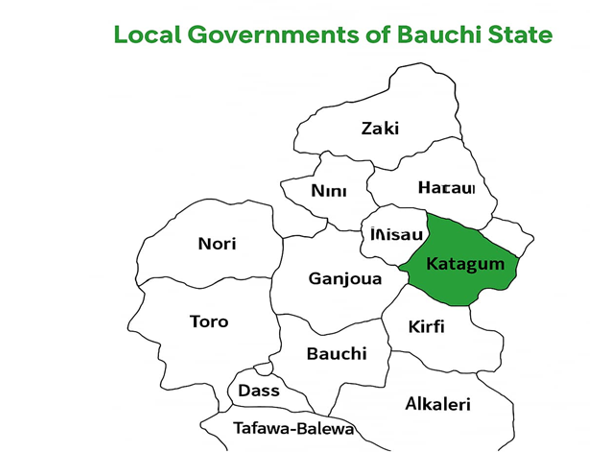
ANALYSIS OF FOOD SECURITY AND POVERTY STATUS AMONG FARMERS IN KATAGUM LOCAL GOVERNMENT AREA OF BAUCHI STATE, NIGERIA
DOI:
https://doi.org/10.33003/fjs-2026-1004-4707Keywords:
Analysis, Food security, Poverty StatusAbstract
This study focused on food security and poverty status of farmers in Katagum LGA. A multi-stage random sampling technique was employed to select 120 household heads across different communities in Katagum LGA. Primary data were collected using a structured questionnaire. Analytical tools employed included descriptive statistics, food security index, FGT Fostor- Greer – Thobecke. The result revealed that: Socio-Economic Characteristics: A majority (70.8%) of the respondents were male, and 37.5% were between the ages of 31–40, indicating a relatively youthful farming population, About 75% of the respondents had formal education, which is essential for technology adoption and improved farming practices, Most farms were small-scale, with 50% of farmers cultivating 1–3 hectares, 41.7% of respondents had more than 10 years of farming experience, but only 29.2% had access to credit, which limits their productivity. Food Security Status: 58.3% of the sampled households were food insecure, while only 41.7% were food secure, the poverty status indicates that 60% of household fall below the food security line, shows that the average food short fall is 28% of the minimum food requirements. Based on these findings, the study concludes that food insecurity and poverty remain widespread among rural farming households, despite their reliance on agriculture. It recommends that government and development agencies should strengthen access to affordable credit, provide input subsidies, expand extension services, improve storage and processing facilities, and invest in rural infrastructure. Such interventions will enhance household food security, reduce poverty levels, and promote sustainable agricultural development in the study area.
References
Aboaba, K., Fadiji, D. M., & Hussayn, J. A. (2020). Determinants of food security among rural households in Nigeria: USDA food insecurity experience-based measurement (FIES) approach. Journal of Agribusiness and Rural Development, 56(2), 113–124. https://doi.org/10.17306/J.JARD.2020.01295 www1.up.poznan.pl
Ademola, A., Adegoroye, O. I., & Aturamu, O. A. (2021). Determinants of food security status and coping strategies to food insecurity among rural crop farming households in Ondo State, Nigeria. European Journal of Nutrition & Food Safety, 13(7), 39–50. https://doi.org/10.9734/ejnfs/2021/v13i730435 EJNFS
Alim, A. S., Ibrahim, S., & Yahaya, A. (2022). Socio-economic determinants of food security status among rural farming families in Jigawa State, Nigeria. Journal of Agricultural Economics, Environment and Social Sciences, 8(1). Jaeess
Awe, F., Azeez, F. A., & Kabir, G. B. (2024). Determinants of food security status among rural households in Okunland of Kogi State, Nigeria. Nigerian Journal of Agriculture and Agricultural Technology, 4(4B), 291–297.
FAO. (2026). Trade reforms and food security: Conceptualizing the linkages. Food and Agriculture Organization of the United Nations. https://www.fao.org/4/y4671e/y4671e06.htm
NJAAT
FAO. (2003). Trade reforms and food security: Conceptualizing the linkages. Food and Agriculture Organization of the United Nations. https://www.fao.org/4/y4671e/y4671e06.htm
Food and Agriculture Organization. (1996). Rome Declaration on World Food Security and World Food Summit Plan of Action. World Food Summit, Rome, 13–17 November 1996. http://www.fao.org/3/w3613e/w3613e00.htm
Iheke, O. R., & Onyemauwa, C. S. (2010). Assessment of food security situation among farming households in Southeastern Nigeria. International Journal of Agricultural Economics and Rural Development, 3(2), 74–83.
Jatto, N. A., Mohammed, M. M., & Adamu, A. (2021). Socio-economic drivers of food security among rural households in Nigeria: Evidence from smallholder maize farmers. Social Indicators Research, 155, 583–599. https://doi.org/10.1007/s11205-020-02590-7
SpringerLink
Jatto, N. A., Mohammed, M. M., & Adamu, A. (2022). Socio-economic drivers of food security among rural households in Nigeria: Evidence from smallholder maize farmers. Social Indicators Research, 160, 1001–1018. https://doi.org/10.1007/s11205-020-02590-7
Letta, M., Montalbano, P., & Paolantonio, A. (2024). Climate immobility traps: A household-level test. [Publication]. arXiv
Luqman, M. M., Zubairu, A. I., & Rukwe, D. T. (2024). Determinants of food security status among farming households in Ardo-Kola LGA of Taraba State, Nigeria. Journal of Arid Agriculture, 25(2), Article 24. Jaaunimaid
Obayelu, A. E. (2010). Classification of households into food security status in the North Central region of Nigeria: An application of the USDA food security model. Journal of Agricultural Science, 2(2), 135–146. https://doi.org/10.5539/jas.v2n2p135
Ogunnaike, M. G., Awotide, D. O., Osinow, O. H., Ilori, A. R., & Osunmakinde, M. A. (2024). Determinants of rural households’ food security status in Ijebu East LGA, Ogun State, Nigeria. [Publication].
Horticultural Society of Nigeria
Ogunniyi, A., Omonona, B. T., Abioye, O., & Olagunju, K. O. (2021). Socio-economic drivers of food security among rural households in Nigeria. Sustainability, 13(6), 3142. https://doi.org/10.3390/su13063142
Ogunniyi, M. O., Omotoso, S. O., Salman, K. K., et al. (2021). Socio-economic drivers of food security among rural households in Nigeria: Evidence from smallholder maize farmers. Social Indicators Research. afchub.org
Oluwole, O. O., Ayegbokiki, A. O., & Adebayo, T. Y. (2024). Analysis of rural households’ food security status in Ogun State, Nigeria. [Publication]. IDEAS/RePEc
Omonona, B. T., & Agoi, G. A. (2007). An analysis of food security situation among Nigerian urban households: Evidence from Lagos State, Nigeria. Journal of Central European Agriculture, 8(3), 397–406.
Owning land, extension, credit access, and adoption of climate-smart varieties improving food security (CSMVs study). 2025 Journal of Arid Agriculture. OUCI
Study on adaptive capacity to climate change and food security using FGT and logit in Oyo State, Nigeria. Ekonomika Poljoprivrede.
Directory of Open Access Journals
Study using FGT and dynamic probit to assess food insecurity transitions among agricultural households in Nigeria. Project MUSE. muse.jhu.edu
Study: Examining the incidence, depth, and severity of food insecurity among rural households in Nigeria using FGT index. Journal of Economics and Sustainable Development.
IISTE
Tone: Technical efficiency, land size, credit, extension affecting food security among agricultural households. MDPI Economics.
World Bank. (2023). What is food security? World Bank. https://www.worldbank.org/en/topic/agriculture/brief/food-security-update/what-is-food-security
Yusuf, S. A., Ayanboye, A. O., Azeez, K. A., & Adesina, M. A. (2022). Food insecurity and its correlates: Empirical evidence from fish farming households in Nigeria. Interdisciplinary Journal of Rural and Community Studies.
pubs.ufs.ac.zaDirectory of Open Access Journals
Downloads
Published
Issue
Section
Categories
License
Copyright (c) 2026 James Saras Zeba, Tugga Simon, Abubakar Adamu

This work is licensed under a Creative Commons Attribution 4.0 International License.


