
INTERACTION OF CROSSES AND STOCKING DENSITY ON BREEDING OF Clarias Gariepinus FROM THREE ECO-REGIONS IN NIGERIA: RIVER NIGER (N), RIVER BENUE (B) AND RIVER HADEJIA (H)
DOI:
https://doi.org/10.33003/fjs-2026-1001-4580Keywords:
Fish, stocking density, breeding of C. gariepinus, River Niger (N), River Benue (B), River Hadejia (H)Abstract
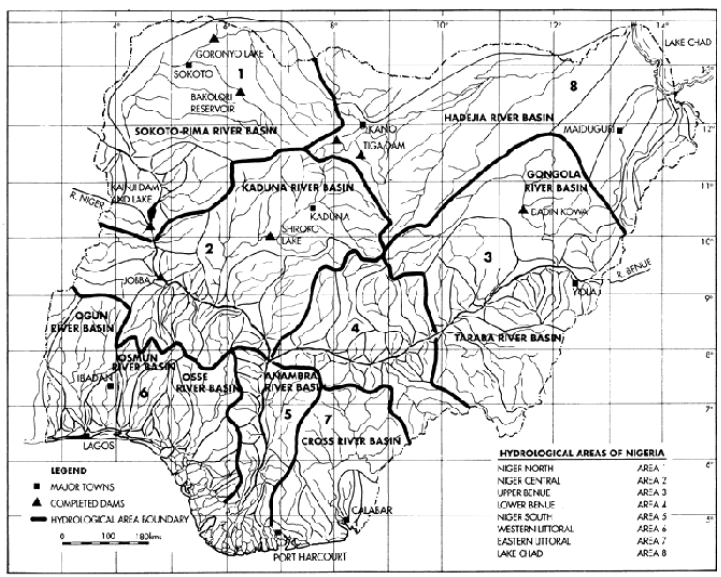
This study determined the Interaction of crosses and stocking density on breeding of C. gariepinus from three eco-regions in Nigeria: River Niger (N), River Benue (B) and River hadejia (H). Interaction of cross and stocking density was significant (p<0.05) in determining the MFW of the progenies. Survival rates for progenies from the crosses irrespective of the stocking density was significantly different (p<0.05). The best survival rate (92.08%) was recorded for the cross ♀N×H♂ while the least (73.33%) was recorded for ♀H×H♂. The interaction of cross and stocking density shows that the highest mean breeding value for body depth was recorded from the cross ♀N×N♂ while the maximum breeding value for this trait at low stocking density was observed from the cross ♀H×H♂. The interaction of cross and stocking density indicates that at high stocking density, the highest mean breeding value occurred in the cross ♀B×N♂ while the maximum breeding value for this trait at low stocking density is shared between the cross ♀B×N♂ and its reciprocal ♀N×B♂. The production of fish in captivity necessitates the use of artificial means to propagate fish species. This ensures the continuous production of fish in the farm hence supply is guaranteed at any time. In captivity, fish may behave differently and gonadal development may be impaired or even cease completely. This brings the need for man to exercise some control over the reproductive process of captive fish. Induced maturation and coordinated spawning is a valuable tool for fish culturists
References
FAO. (2014). The State of World Fisheries and Aquaculture: Opportunities and challenges. Fisheries and Aquaculture Department, FAO.
FAO. (2007). The State of World Fisheries and Aquaculture 2006. FAO Fisheries and Aquaculture Department. Food and Agriculture Organization of the United Nation
CGIAR. (2005). Research & Impact: Areas of Research: Fisheries. Consultative Group on International Agricultural Research. . Retrieved 10th February, from http://www.cgiar.org/impact/research/fisheries.html
Goldface – Irokalibe, I. J. (2008, July 7-9, 2008.). Water Management In Federal And Federal –Type Countries: Nigerian Perspectives Nigerian Perspectives. International conference on water management, Zaragoza, Spain. http://www.forumfed.org/en/global/thematic/water_papers/Joe%20Goldface_en.pdf
ta, E. O. (1993). Inland Fisheries Resources of Nigeria. CIFA Occasional Paper, 20, 120. http://www.fao.org/3/T1230E/T1230E02.htm#ch2
Hughes, R. H., Hughes, J. S., Bernacsek, G. M., IUCN, UNEP, & WCMC. (1992). A Directory of African Wetlands. IUCN. https://books.google.com.ng/books?id=VLjafeXa3gMC
Thomas, D. H. L. (1996). Fisheries Tenure in an African Floodplain Village and the Implications for Management Human Ecology, 24(3), 287-313.
Blache, J., Milton, F., Stauch, A., Iltis, A., & Loubens, G. (1964). Les poissons des bassins du Tchad et du bassin adjacent du Mayo Kebbi: étude systématique et biologique.
Stauch, A. (1966). Le bassin Camerounais de la Benoue et sa peche. IRD Editions.
Matthes, H. (1990). Report on the fishery related aspects of the Hadejia-Nguru Wetlands Conservation Project. Mission Report. A Document of the Hadeji l-N'guru Wetlands Conservation Project.
Powell, J. F. F., Brackett, J., & Battaglia, J. A. (1998). Induced and synchronized spawning of captive broodstock using Ovaplant and Ovaprim. BULLETIN-AQUACULTURE ASSOCIATION OF CANADA, 14-18.
Lin, H. R., & Peter, R. E. (1996). Hormones and spawning in fish. Asian Fisheries Science, 9, 21-34.
Lam, T. J. (1982). Applications of endocrinology to fish culture. Canadian Journal of Fisheries and Aquatic Sciences, 39(1), 111-137.
Lam, T. J. (1983). 2 Environmental influences on gonadal activity in fish. In Fish physiology (Vol. 9, pp. 65-116). Elsevier.
Hayden, B., Pulcini, D., Kelly-Quinn, M., O'Grady, M., Caffrey, J., McGrath, A., & Mariani, S. (2010). Hybridisation between two cyprinid fishes in a novel habitat: genetics, morphology and life-history traits. BMC Evolutionary Biology, 10(1), 1-11.
Park, I. S., Choi, K. C., & Kim, D. S. (1997). Production of hybrid and allotriploid between rainbow trout, Oncorhynchus mykiss and cherry salmon, O. masou Ⅱ. Characteristics of sex ratio and morphometric traits. J Aquacult, 10, 49-54.
Nguenga, D., Teugels, G. G., & Ollevier, F. (2000). Fertilization, hatching, survival and growth rates in reciprocal crosses of two strains of an African catfish Heterobranchus longifilisValenciennes 1840 under controlled hatchery conditions. Aquaculture Research, 31(7), 565-573. https://doi.org/10.1046/j.1365-2109.2000.00468.x
Downloads
Published
Issue
Section
Categories
License
Copyright (c) 2026 Y.Kabir Hassan, Abubakar Garba A., Ikenga Esther.E., Mukoro Juliana E., H Abdul-Azeez, Rafindadi Halimatu.A, Galanbi Abubakar Y.

This work is licensed under a Creative Commons Attribution 4.0 International License.


