
CLINICAL MANAGEMENT OF CANINE PARVOVIRAL ENTERITIS IN A 3-MONTH-OLD LHASA APSO IN ABUJA, FCT, NIGERIA
DOI:
https://doi.org/10.33003/fjs-2025-0912-4165Keywords:
Canine parvovirus, Enteritis, Management, Puppy, AbujaAbstract
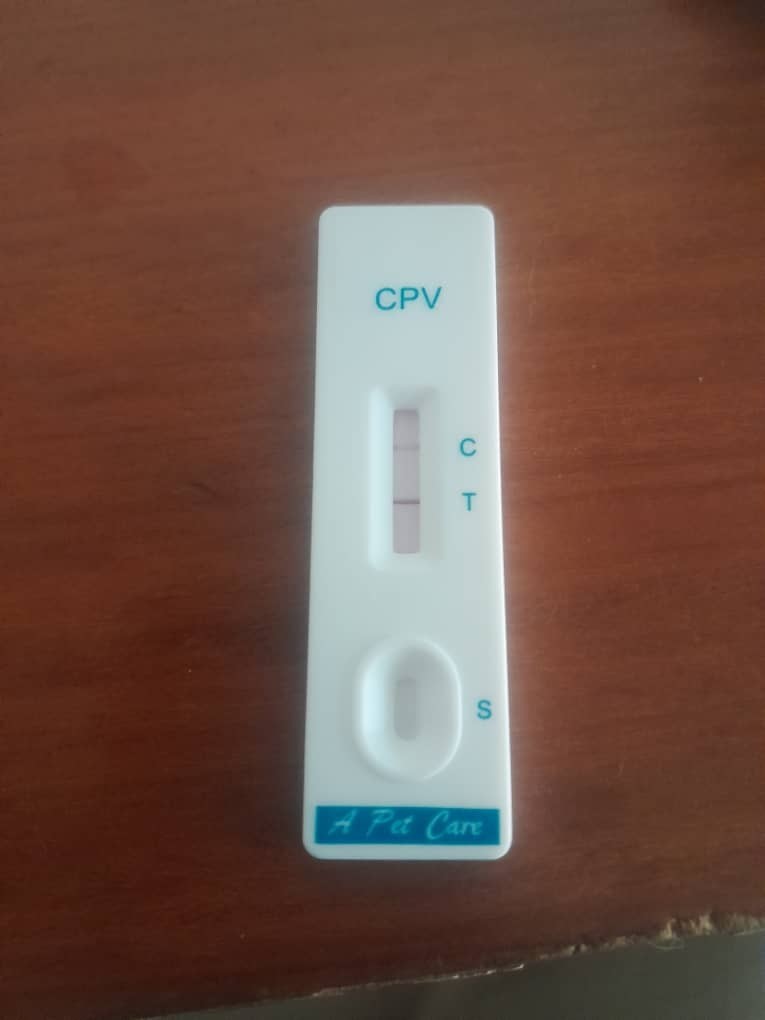
Canine parvovirus (CPV) is a highly contagious, non-enveloped, single-stranded DNA virus of the Parvoviridae family that primarily affects rapidly dividing cells in the intestinal crypts and bone marrow of dogs. This report describes the clinical presentation and successful management of a 3-month-old female Lhasa Apso puppy presented to the Police Veterinary Hospital, Garki, Abuja, with hemorrhagic diarrhea and frothy vomiting. Diagnosis was confirmed using a rapid parvoviral antigen test kit. Hematological findings revealed leukocytosis (18.0 × 10⁹/L) and lymphocytosis (7.3 × 10⁹/L), suggestive of a viral infection. The treatment protocol included fluid therapy, antimicrobial coverage, antiemetics, vitamins, activated charcoal, and oral protectants. Clinical improvement was observed within five days of intensive management, with full recovery and discharge on day five. This case underscores the importance of early diagnosis, aggressive supportive therapy, and strict adherence to vaccination schedules for effective prevention of parvoviral enteritis in puppies.
References
Adeyemo, A. A., Aiki-Raji, C. O., Akinniyi, O. O., & Fagbohun, O. A. (2024). Molecular epidemiology of canine parvovirus in Nigeria. African Journal of Biomedical Research, 27(2), 217–224. https://doi.org/10.4314/ajbr.v27i2.5
Ahmed, K., Abdullah, M., & Rasheed, A. (2021). Epidemiological and therapeutic evaluation of canine parvoviral enteritis in dogs. Veterinary World, 14(5), 1207–1213. Retrieved from https://www.veterinaryworld.org/Vol.14/Issue5/pdf
Decaro, N., Desario, C., Campolo, M., Elia, G., Martella, V., Ricci, D., Lorusso, E., & Buonavoglia, C. (2005). Clinical and virological findings in pups naturally infected by canine parvovirus type 2 Glu-426 mutant. Journal of Veterinary Diagnostic Investigation, 17(2), 133–138. https://doi.org/10.1177/104063870501700206
Elanco. (2024, October 18). Monoclonal antibody treatment boosts puppy survival rates. Animal Feed MEA News. Retrieved from https://www.animalfeedmea.com/2024/10/18/elancos-monoclonal-antibody-treatment-boosts-puppy-survival-rates
Hoelzer, K., & Parrish, C. R. (2010). The emergence of parvoviruses of carnivores. Veterinary Research, 41, 39. https://doi.org/10.1051/vetres/2010011
Keegan, R. M., Holsapple, A., & Sykes, J. (2020). Survival analysis and prognostic indicators for canine parvoviral enteritis in shelter-housed dogs. Journal of the American Veterinary Medical Association, 256(12), 1371–1378. https://doi.org/10.2460/javma.256.12.1371
Pan, S., Man, Y., Xu, X., Ji, J., Zhang, S., Huang, H., Li, Y., Bi, Y., & Yao, L. (2024). Genetic diversity and recombination analysis of canine parvoviruses prevalent in Central and Eastern China, 2020–2023. Microorganisms, 12(11), 2173. https://doi.org/10.3390/microorganisms12112173
Parrish, C. R., Aquadro, C. F., Strassheim, M. L., Evermann, J. F., Sgro, J. Y., & Mohammed, H. O. (1991). Rapid antigenic-type replacement and DNA sequence evolution of canine parvovirus. Journal of Virology, 65(12), 6544–6552. Retrieved from https://journals.asm.org/doi/abs/10.1128/JVI.65.12.6544
Prittie, J. (2004). Canine parvoviral enteritis: A review of diagnosis, management, and prevention. Journal of Veterinary Emergency and Critical Care, 14(3), 167–176. https://doi.org/10.1111/j.1476-4431.2004.0044.x
Pollock, R. V. H., & Carmichael, L. E. (1982). The role of the canine parvovirus in the aetiology of canine viral enteritis. Journal of Small Animal Practice, 23(6), 363–369. Retrieved from https://onlinelibrary.wiley.com/doi/10.1111/j.1748-5827.1982.tb02429.x
Steinel, A., Venter, E. H., Vuuren, M., Parrish, C. R., & Truyen, U. (1998). Antigenic and genetic analysis of canine parvoviruses in Southern Africa. Onderstepoort Journal of Veterinary Research, 65(4), 239–242. Retrieved from https://ojvr.org/index.php/ojvr/article/view/3104
Umar, S., Gao, D., Kim, S., … et al. (2024). Molecular characterization of canine parvovirus type 2 (CPV-2) reveals a high prevalence of the CPV-2c genotype among dogs suffering from diarrhea. Animal Diseases, 4(1), 1–8. https://doi.org/10.1186/s44149-023-00107-6
Veterinary Times. (2024, April). Update on canine parvovirus: CPD GI disorders. The Veterinary Times. Retrieved from https://www.vettimes.com/clinical/small-animal/update-on-canine-parvovirus-cpdgidisorders
Yilmaz, Z., Pratelli, A., & Torun, S. (2005). Distribution of antigen types of canine parvovirus type 2 in dogs with hemorrhagic enteritis in Turkey. Turkish Journal of Veterinary and Animal Sciences, 29, 1073–1076. Retrieved from https://journals.tubitak.gov.tr/veterinary/
Zope, A. M., Kumar, S., & Rao, G. (2023). Clinicopathological and molecular characterization of canine parvovirus infection in dogs. Indian Journal of Veterinary Science and Biotechnology, 19(1), 53–59. Retrieved from https://ijvsbt.org/index.php/IJVSBT/article/view/8882
Downloads
Published
Issue
Section
Categories
License
Copyright (c) 2025 Enid Godwin, Donken I. Ajogi, Simon I. Enem, Sa’adatu I. Abdullahi, Jamila Dauda, Sabuwa A. Muktar, Godwin O. Egwu, Omerah Raphael Attah, Lami Galadima

This work is licensed under a Creative Commons Attribution 4.0 International License.