
ASSESSMENT OF BREASTFEEDING PRACTICES AMONG LACTATING MOTHERS IN NASSARAWA LOCAL GOVERNMENT AREA, KANO STATE
DOI:
https://doi.org/10.33003/fjs-2026-1003-4008Keywords:
Breastfeeding, Exclusive breastfeeding, Lactating mothers, Infant nutrition, Nassarawa LGA, Kano StateAbstract
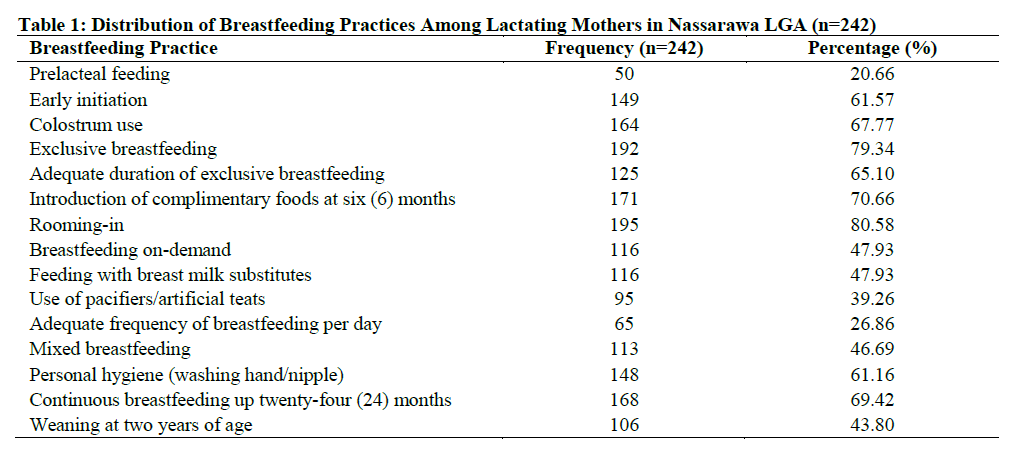
Breastfeeding is a cornerstone of child survival, growth, and development, yet exclusive breastfeeding (EBF) rates in Nigeria remain suboptimal. This cross-sectional study assessed breastfeeding practices among 242 lactating mothers in Nassarawa Local Government Area, Kano State. Data were collected using a semi-structured, interviewer-administered questionnaire and analyzed with SPSS (version 25). Descriptive and inferential statistics, including chi-square tests, were applied at a significance level of p<0.05. Findings revealed that 61.6% of mothers, initiated breastfeeding within the first hour after birth, while 67.8% fed their infants colostrum. Approximately 79.3% practiced exclusive breastfeeding, though only 65.1% sustained it for the recommended six months. Responsive breastfeeding practices were mixed: 80.6% practiced rooming-in, but only 47.9% breastfed on demand. Prelacteal feeding was reported by 21% of mothers, primarily involving water, honey, and herbal preparations, contrary to WHO/UNICEF guidelines. Significant associations were observed between breastfeeding practices and maternal socio-demographic factors, including age, parity, education, income, and occupation. Mothers with higher education and stable occupations were more likely to initiate early breastfeeding, sustain EBF, and avoid harmful practices. Despite relatively high initiation and colostrum use rates, EBF duration remains below the WHO target of 50% coverage by 2025. Cultural norms, socioeconomic conditions, and maternal employment were key barriers. This study underscores the urgent need for targeted interventions to address socio-cultural and economic barriers to optimal breastfeeding. Strengthening community education, healthcare counseling, and workplace breastfeeding support can significantly improve child nutrition outcomes in the study area.
References
References
Abolurin, O. O., Oyelami, O. A., Oseni, S. B., Akinlosotu, M. A., Sodeinde, K. J., & Adekoya, A. O. (2021). Relationship between breastfeeding practices and nutritional status of children aged 6–24 months in South-west Nigeria. Annals of Health Research, 7(2), 179–189.
Adeniyi, O. V., & Omole, O. B. (2018). Barriers to exclusive breastfeeding among mothers in Nigeria: A qualitative study. International Breastfeeding Journal, 13(1), 11.
Adokiya, M. N., Bukari, M., Ndago, J. A., Kuganab-Lem, R. B., Garti, H., Konlan, M. Y., & Ali, Z. (2023). Exclusive breastfeeding among beneficiaries of a nutrition enhancement programme and its associated factors in Ghana. PLoS One, 18(5), e0286546.
Cattaneo, A., & Arendt, M. (2023). Building an Evidence Base for the Protection and Support of Breastfeeding. Journal of Human Lactation, 39(3), 380–384.
Federal Ministry of Health. (2021). National strategy for infant and young child feeding in Nigeria 2021–2025. Abuja, Nigeria.
Huffman, S. L., Piwoz, E. G., Vosti, S. A., & Dewey, K. G. (2014). Babies, soft drinks and snacks: a concern in low‐and middle‐income countries. Maternal & Child Nutrition, 10(4), 562-574.
Kemppinen, L., Mattila, M., Ekholm, E., Huolila, L., Pelto, J., Karlsson, H., & Karlsson, L. (2022). Gestational anemia and maternal antenatal and postpartum psychological distress in a prospective FinnBrain Birth Cohort Study. BMC Pregnancy and Childbirth, 22(1), 704.
Mbada, C. E., Olowookere, A. E., Faronbi, J. O., Oyinlola-Aromolaran, F. C., Faremi, F. A., Ogundele, A. O., & Augustine, O. A. (2013). Knowledge, attitude and techniques of breastfeeding among Nigerian mothers from a semi-urban community. BMC Research Notes, 6(1), 552.
Mbugua, S., et al. (2020). Rooming-in and breastfeeding outcomes in Kenya. Journal of Nursing Research, 28(3), e45.
Mchiza, Z. J., et al. (2020). Breastfeeding frequency and duration among South African mothers. African Journal of Midwifery and Women’s Health, 10(2), 53–60.
National Population Commission. (2013). Nigeria demographic and health survey 2013. Abuja, Nigeria: NPC and ICF International.
Nigeria Population Commission. (2019). Nigeria demographic and health survey 2018. NPC, ICF.
Nist, M. D. (2025). Progress and Challenges in Global Breastfeeding Rates. MCN: The American Journal of Maternal/Child Nursing, 50(1), 55.
Ogbo, F. A., Okoro, A., Olusanya, B. O., Olusanya, J., Ifegwu, I. K., Awosemo, A. O., & Page, A. (2019). Diarrhoea deaths and disability-adjusted life years attributable to suboptimal breastfeeding practices in Nigeria: findings from the global burden of disease study 2016. International Breastfeeding Journal, 14(1), 4.
Prentice, A. M. (2022). Breastfeeding in the modern world. Annals of Nutrition and Metabolism, 78(Suppl. 2), 29-38.
Tadele, N. (2021). Knowledge, Attitude and Practice towards Exclusive Breastfeeding among Lactating Mothers, Mizan Aman Town, Southwestern Ethiopia: Descriptive Cross-sectional Study. Convergence Chronicles, 2(6), 468-479.
Vidović Roguljić, A., & Zakarija-Grković, I. (2020). Infant and Young Child Feeding in Croatian Nursing Programs: A Cross-Sectional Analysis. Croatian Nursing Journal, 4(1), 127-133.
World Health Organization & United Nations Children’s Fund. (2024). Improving the health and wellbeing of children and adolescents: guidance on scheduled child and adolescent well-care visits. WHO.
World Health Organization. (2023). Global gestational weight gain standards project: Study-level eligibility criteria (Phase 1 report).
Wronska, M. D., Coffey, M., & Robins, A. (2022). Determinants of nutrition practice and food choice in UK construction workers. Health Promotion International, 37(5), daac129.
Downloads
Published
Issue
Section
Categories
License
Copyright (c) 2026 Lawan yusuf Sufyanu, Aminu Idi, Zakiyya Ali Baba, Safiya Yakubu, Najib Ahmad Panda, Harisu Saleh, Auwal Magaji Sa’eedu, Aisha Idris Ali, Auwal Sani Gwarzo

This work is licensed under a Creative Commons Attribution 4.0 International License.


