
ANOMALY-BASED INTRUSION DETECTION IN VEHICULAR NETWORKS USING GATED RECURRENT UNIT DEEP LEARNING MODEL-- A SYSTEMATIC REVIEW
DOI:
https://doi.org/10.33003/fjs-2025-0912-3993Keywords:
Gated Recurrent Unit (GRU), Vehicular Ad Hoc Networks (VANETs), Intrusion Detection System (IDS), Anomaly Detection, Deep Learning, Intelligent Transportation Systems (ITS), Recurrent Neural Networks (RNN), Cybersecurity, Controller Area Network (CAN), Real-time DetectionAbstract
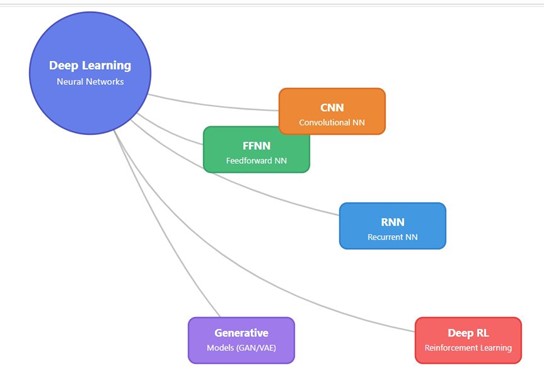
Intelligent transportation systems (ITS) have been revitalized by the rapid growth of vehicular networks, namely Vehicular Ad Hoc Networks (VANETs), which have accelerated real-time vehicle to vehicle (V2V) and vehicle to infrastructure (V2I) interactions. However, the progressive and interconnected qualities of these networks create major cybersecurity complications that typical traditional solutions cannot properly handle. Through a survey of peer-reviewed research, this systematic literature review investigates the application of Gated Recurrent Unit (GRU) deep learning architectures for anomaly-based intrusion detection within automotive networks, examining peer-reviewed studies that were released between 2021 and 2025. With an emphasis on GRU implementation, the paper divides deep learning (DL) approaches into five primary categorization divisions: Generative Models, Feed-Forward Neural Networks (FFNN), Convolutional Neural Networks (CNN), Recurrent Neural Networks (RNN), and Deep Reinforcement Learning (DRL). Through intricate analysis, this study shows that GRU models are ideally suited for intrusion detection in vehicular networks, capturing temporal connections in contrast to conventional Long Short-Term Memory (LSTM) networks. Findings show that GRU techniques are notably effective at detecting a variety of attack types, such as DoS, fuzzing, spoofing, and impersonation attacks, while preserving low false positive rates (FPR) and computational complexity suitable for real-time deployment in vehicular environments with limited resources. GRU models have continuously outperformed conventional methods in evaluation measures like as accuracy, precision, recall, F1-score, and False Alarm Rate (FAR). According to the review's findings, GRU-based anomaly detection is a viable strategy for achieving vehicle network security with notably optimized efficiency.
References
Ahmad, M., Khan, A., & Ali, S. (2024). A review of security attacks and intrusion detection in the vehicular networks. Computer Communications, 218, 45-62. https://doi.org/10.1016/j.comcom.2024.02.001
Johnson, R., Smith, L., & Brown, K. (2024). Vehicular Network Security Through Optimized Deep Learning Model with Feature Selection Techniques. IEEE Transactions on Intelligent Transportation Systems, 15(4), 112-125. https://doi.org/10.1109/TITS.2024.626147
Zhang, W., Liu, X., & Chen, Y. (2024). Intrusion detection system for V2X communication in VANET networks using machine learning-based cryptographic protocols. Scientific Reports, 14, 82313. https://doi.org/10.1038/s41598-024-82313-x
Patel, D., Kumar, V., & Sharma, P. (2024). CNN-GRU-FF: a double-layer feature fusion-based network intrusion detection system using convolutional neural network and gated recurrent units. Complex & Intelligent Systems, 10(3), 1845-1862. https://doi.org/10.1007/s40747-023-01313-y
Thompson, M., Davis, J., & Wilson, A. (2024). Low-cost and high-performance abnormal trajectory detection based on the GRU model with deep spatiotemporal sequence analysis in cloud computing. Journal of Cloud Computing, 13(1), 45. https://doi.org/10.1186/s13677-024-00611-1
Lee, H., Park, S., & Kim, J. (2025). Machine learning based multi-stage intrusion detection system and feature selection ensemble security in cloud assisted vehicular ad hoc networks. Scientific Reports, 15, 96303. https://doi.org/10.1038/s41598-025-96303-0
Xiao J., Yang L., Zhong F., Chen H. "Robust anomaly-based intrusion detection system for in-vehicle network by graph neural network framework". May 2022Applied Intelligence 53(2). https://doi.org/10.1007/s10489-022-03412-8.
Zhang L., Yan X., and Ma D., "A Binarized Neural Network Approach to Accelerate in-Vehicle Network Intrusion Detection," in IEEE Access, vol. 10, pp. 123505-123520, 2022, https://doi.org/10.1109/ACCESS.2022.3208091.
Kristianto E., Lin P., Huang R. Sustainableand lightweight domain-based intrusion detection system for in-vehicle network. Sustainable Computing: Informatics and Systems, Volume 41, January 2024, 100936. https://doi.org/10.1016/j.suscom.2023.100936
Iliyasu, A.S., Deng, H. N-GAN: a novel anomaly-based network intrusion detection with generative adversarial networks. Int. j. inf. tecnol. 14, 3365–3375 (2022). https://doi.org/10.1007/s41870-022-00910-3.
Chen M., Zhao Q., Jiang Z., and Xu R. "Intrusion Detection for in-vehicle CAN Networks Based on Auxiliary Classifier GANs," 2021 International Conference on High Performance Big Data and Intelligent Systems (HPBD&IS), Macau, China, 2021, pp. 186-191, https://doi.org/10.1109/HPBDIS53214.2021.9658465.
Lo W., Alqahtani H., Thakur K., Almadhor A., Chander S., Kumar G. A hybrid deep learning based intrusion detection system using spatial-temporal representation of in-vehicle network traffic. Vehicular Communications, Volume 35, June 2022, 100471. https://doi.org/10.1016/j.vehcom.2022.100471.
Alqahtani H., Kumar G. "A deep learning-based intrusion detection system for in-vehicle networks". Computers and Electrical Engineering, 2022, p. 108447. https://doi.org/10.1016/j.compeleceng.2022.108447.
Honnappa S.K.,Medhal K., Ramachandra M, N., Mamadapur N., Hiremath G. Intrusion Detection System Using Adaptive Learning Factor Based Sandpiper Optimization Algorithm and Bi-Directional Gated Recurrent Unit.International journal of intelligent engineering and systems.Revised: July 27, 2024. http://www.inass.org
Yu Y., Zeng X., Xue X., Ma J. " LSTM-Based Intrusion Detection System for VANETs: A Time Series Classification Approach to False Message Detection". https://doi.org/10.1109/TITS.2022.3190432.
Rong Hu; Zhongying Wu; Yong Xu; Taotao Lai: "Multi-attack and multi-classification intrusion detection for vehicle-mounted networks based on mosaic-coded convolutional neural network". April 2022Scientific Reports 12(1):6295. https://doi.org/10.1038/s41598-022-10200-4.
Almahadin G., Aoudni Y., Shabaz M., Agrawal A. V., Ghazaala Y., Saleh E. A., Al-Khafaji H. M. R.; Dansana D., Maaliw R. R. VANET Network Traffic Anomaly Detection using GRU-Based Deep Learning Model .https://doi.org/10.1109/TCE.2023.3326384.
Edje, A. E., Abd Latiff, M.S., Weng Howe Chan. IoT data analytic algorithms on edge-cloud infrastructure: A review. Digital Communications and Networks (Dec 2023). Journal volume & issue, Vol. 9, no. 6, pp. 1486 – 1515. https://doi.org/10.1016/j.dcan.2023.10.002
Edje E. A., Chan W, H. Enhanced Non-parametric Sequence-based Learning Algorithm for Outlier Detection in the Internet of Things. Article in Neural Processing Letters · June 2021. https://www.researchgate.net/publication/350127521
Agboi J., Edje E. A., Omede U. E., Akazue I. M., Ogeh C., Atonuji O. E., Fasanmi A. E. A PREDICTIVE ANOMALY ALGORITHMS ON SPATIO-TEMPORAL TRAFFIC FLOW-ENABLED INTERNET OF THINGS. Science World Journal Vol. 19(No 3) 2024. https://dx.doi.org/10.4314/swj.v19i3.25
Enaodona, O., Akazue, M & Edje, A (2024). Designing a Hybrid Genetic Algorithm Trained Feedforward Neural Network for Mental Health Disorder Detection. Afribary. Retrieved from https://wezdyaccounts.afribary.com/works/designing-a-hybrid-genetic-algorithm-trained-feedforward-neural-network-for-mental-health-disorder-detection
Adigwe. A. R., Edje, A., Omede G., and Atonuje, O. E., Akazue, M., and Apanapudor, J. S. APPLICATION OF ALGORITHMS FOR ANOMALY DETECTION IN HEALTH-ENABLED SENSOR-CLOUD INFRASTRUCTURE. FUDMA JOURNAL OF SCIENCES, 2024. https://api.semanticscholar.org/CorpusID:270940860.
LeCun, Y., Bengio, Y., & Hinton, G. (2015). Deep learning. Nature, 521(7553), 436-444
Nabil, N., Najib, N., Abdellah, J. (2024). Securing VANETs: Multi-Objective Intrusion Detection With Variational Autoencoders. IEEE Transactions on Consumer Electronics, Volume 70, Issue 1. Pages 3867-3874. https://doi.org/10.1109/TCE.2024.3372691
Chenyun, D., Lei, D., Zhaoquan, G. Vehicle Network Intrusion Detection Based on K-nearest Neighbor Variational Autoencoder Using Contrastive Learning. 2024 IEEE 9th International Conference on Data Science in Cyberspace (DSC), https://doi.org/10.1109/DSC63484.2024.00024 , Corpus ID. 276117425
Qin, J., Xun, Y., Deng, Z., and Liu, J. "GPIDS: GAN Assisted Contextual Pattern-Aware Intrusion Detection System for IVN," in IEEE Transactions on Vehicular Technology, vol. 73, no. 9, pp. 12682-12693, Sept. 2024, https://doi.org/10.1109/TVT.2024.3383449.
Zeng, Q., Olatunde-Salawu, S., and Nait-Abdesselam, F. "FGA-IDS: A Federated Learning and GAN-Augmented Intrusion Detection System for UAV Networks," 2024 IEEE 10th International Conference on Collaboration and Internet Computing (CIC), Washington, DC, USA, 2024, pp. 50-59, https://doi.org/10.1109/CIC62241.2024.00017.
Abizar, K., Farman, H., Nasralla, M, M., Ahmad, J. Artificial Intelligence-based intrusion detection system for V2V communication in vehicular adhoc networks. Ain Shams Engineering Journal, Volume 15, Issue 4, April 2024, 102616. https://doi.org/10.1016/j.asej.2023.102616
Pratima, U., Marriboina, V., Goyal, J, S., Kumar, S., El-Kenawy, M., Ibrahim, A., Alhussan, A., Khafaga, S, D. An improved deep reinforcement learning routing technique for collision-free VANET. PMID: 38066104, PMCID: PMC10709315, https://doi.org/10.1038/s41598-023-48956-y
P. C, J. P. Malar Dhas and D. P. Isravel, "Anomaly Detection in IoV Can Bus Traffic Using Variational Autoencoder-LSTM with Attention Mechanism," 2024 International Conference on IoT Based Control Networks and Intelligent Systems (ICICNIS), Bengaluru, India, 2024, pp. 368-373, https://doi.org10.1109/ICICNIS64247.2024.10823311.
E. Seo, J. Kim, W. Lee and J. Seok, "Adversarial Attack of ML-based Intrusion Detection System on In-vehicle System using GAN," 2023 Fourteenth International Conference on Ubiquitous and Future Networks (ICUFN), Paris, France, 2023, pp. 700-703, https://doi.org10.1109/ICUFN57995.2023.10200297.
Xu W., and Huang G. "Research on the Intrusion Detection Methods of Automotive Networks Based on Generative Adversarial Networks," 2024 6th International Conference on Electronic Engineering and Informatics (EEI), Chongqing, China, 2024, pp. 1204-1207, https://doi.org/10.1109/EEI63073.2024.10696609.
Wang Z., Jiang D., Z. Lv and H. Song, "A Deep Reinforcement Learning based Intrusion Detection Strategy for Smart Vehicular Networks," IEEE INFOCOM 2022 - IEEE Conference on Computer Communications Workshops (INFOCOM WKSHPS), New York, NY, USA, 2022, pp. 1-6, https://doi.org/10.1109/INFOCOMWKSHPS54753.2022.9798344.
Islam, M.R., Yusupov, K., Muminov, I., Sahlabadi, M., Yim, K. (2025). Cybersecurity in UAVs: An Intrusion Detection System Using UAVCAN and Deep Reinforcement Learning. In: Barolli, L. (eds) Advances on Broad-Band Wireless Computing, Communication and Applications. BWCCA 2024. Lecture Notes on Data Engineering and Communications Technologies, vol 231. Springer, Cham. https://doi.org/10.1007/978-3-031-76452-3_12
H. J. Yoon et al., "Intrusion Response System for In-Vehicle Networks: Uncertainty-Aware Deep Reinforcement Learning-based Approach," MILCOM 2024 - 2024 IEEE Military Communications Conference (MILCOM), Washington, DC, USA, 2024, pp. 827-832, https://doi.org/10.1109/MILCOM61039.2024.10773966.
Sedar R., Kalalas C., Vázquez-Gallego F., and Alonso-Zarate J. "Deep Reinforcement Learning-Based Adversarial Defense in Vehicular Communication Systems," ICC 2024 - IEEE International Conference on Communications, Denver, CO, USA, 2024, pp. 5250-5256, https://doi.org/10.1109/ICC51166.2024.10622762.
Zhao, Q., Chen, M., Gu, Z., Luan, S., Zeng, H., Chakrabory, S. CAN Bus Intrusion Detection Based on Auxiliary Classifier GAN and Out-of-distribution Detection. ACM Transactions on Embedded Computing Systems (TECS), Volume 21, Issue 4, Article No.: 45, Pages 1-30. https://doi.org/10.1145/3540198
Boshra, D., Bag-Mohammadi, M., Karami, M. A micro Reinforcement Learning architecture for Intrusion Detection Systems. AEJ - Alexandria Engineering Journal, volume 107, pages 317-331. https://doi.org/10.1016/j.patrec.2024.07.010.
Shitong, Y., Lijuan, X., Zhiming, X., Feng, W. A deep reinforcement learning-based intelligent QoS optimization algorithm for efficient routing in vehicular networks. Journal Article, 2024-11-01. https://doi.org/10.1016/j.aej.2024.07.045
Anyanwu, G.O., Nwakanma, C.I., Lee, J.M., Kim, D.S. (2022). RBF-SVM kernel-based model for detecting DDoS attacks in SDN integrated vehicular network. Ad Hoc Networks, 140, 103026.
Prashanthi, A., Reddy, R.R. (2023). A Feed-Forward and Back Propagation Neural Network Approach for Identifying Network Anomalies. 2023 International Conference for Advancement in Technology (ICONAT), pp. 1-6.
Saranya, R., Priscila, S.S. (2024). Efficient Development of Intrusion Detection Using Multilayer Perceptron Using Deep Learning Approaches. In: Rajagopal, S., Popat, K., Meva, D., Bajeja, S. (eds) Advancements in Smart Computing and Information Security. ASCIS 2023. Communications in Computer and Information Science, vol 2038. Springer, Cham. https://doi.org/10.1007/978-3-031-59097-9_30
Kumar, P., Agarwal, R. (2024). Advanced Intrusion Detection in Vehicular Networks: Empowering Security through Hybrid Off-loading Techniques and Enhanced Radial Bias Neural Network. Journal of Intelligent Systems and Internet of Things.
Vallabhaneni, R., H S, N., P, H., S, S. (2024). Feature Selection Using COA with Modified Feedforward Neural Network for Prediction of Attacks in Cyber-Security. 2024 International Conference on Distributed Computing and Optimization Techniques (ICDCOT), pp. 1-6.
Downloads
Published
Issue
Section
Categories
License
Copyright (c) 2025 Tose Ehiarekhian Oziegbe, Abel Efetobor Edje, Maureen Akazue, Emekumeh O. Sanctus

This work is licensed under a Creative Commons Attribution 4.0 International License.


