
Appraisal of Crisis Management Strategies Adopted by Shipping Companies in the Strait of Hormuz (2015 to 2025)
DOI:
https://doi.org/10.33003/fjs-2026-1011-5466Keywords:
Strait of Hormuz, Crisis Management, Shipping Companies, Maritime Security, Risk Assessment, Voyage Planning, Qualitative ResearchAbstract
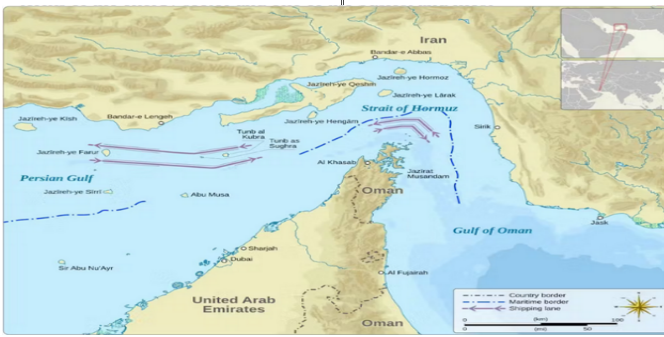
This study appraises crisis management strategies adopted by shipping companies operating in the Strait of Hormuz between 2015 and 2025, a critical global maritime chokepoint responsible for about 20% to 21% of global petroleum transit. While existing studies largely emphasize the geopolitical and security significance of the corridor, limited attention has been given to how shipping companies design and implement crisis management strategies in response to operational disruptions. This study addresses this gap by examining company level crisis management practices among major operators including Maersk, MSC Mediterranean Shipping Company, COSCO Shipping, Euronav, Frontline Ltd, and Bahri. A qualitative research design was adopted, using semi-structured interviews with maritime professionals supported by documentary sources, and the data were analyzed through thematic analysis. The findings reveal that shipping companies employ integrated crisis management systems comprising preventive, real time response, and adaptive strategies. Intelligence driven risk assessment, scenario based voyage planning, crew preparedness, centralized control centres, multi-channel communication systems, and naval coordination strengthen operational responsiveness, while post incident reviews and protocol revisions promote organizational learning and continuous improvement. However, geopolitical instability, rising operational costs, human fatigue, and weak stakeholder coordination reduce the overall effectiveness of these strategies. The study contributes to maritime crisis management literature by providing empirical evidence on company level practices and concludes that effective crisis management depends on stronger integration of technology, human capacity, and institutional coordination to enhance resilience and operational continuity in high risk maritime corridors.
References
Braun, V., & Clarke, V. (2006). Using thematic analysis in psychology. Qualitative Research in Psychology, 3(2), 77–101.
Bueger, C. (2015). What is maritime security? Marine Policy, 53, 159–164. https://doi.org/10.1016/j.marpol.2014.12.005
Creswell, J. W., & Poth, C. N. (2018). Qualitative inquiry and research design: Choosing among five approaches (4th ed.). Sage.
Encyclopaedia Britannica. (2025). Strait of Hormuz. Encyclopaedia Britannica.
Guest, G., Bunce, A., & Johnson, L. (2006). How many interviews are enough? An experiment with data saturation. Field Methods, 18(1), 59–82. https://doi.org/10.1177/1525822X05279903
International Energy Agency. (2023). World energy outlook 2023. International Energy Agency.
International Maritime Organization. (2020). Reports on maritime security incidents in the Strait of Hormuz. International Maritime Organization.
International Maritime Organization. (2023). Maritime security and safety report. International Maritime Organization.
Kraska, J. (2011). Maritime power and the law of the sea. Oxford University Press.
Notteboom, T., Pallis, A. A., & Rodrigue, J. P. (2021). Port economics, management and policy. Routledge.
Nowell, L. S., Norris, J. M., White, D. E., & Moules, N. J. (2017). Thematic analysis: Striving to meet trustworthiness criteria. International Journal of Qualitative Methods, 16, 1–13. https://doi.org/10.1177/1609406917733847
Saunders, B., Sim, J., Kingstone, T., Baker, S., Waterfield, J., Bartlam, B., Burroughs, H., & Jinks, C. (2018). Saturation in qualitative research: Exploring its conceptualization and operationalization. Quality & Quantity, 52(4), 1893–1907. https://doi.org/10.1007/s11135-017-0574-8
Sheffi, Y. (2015). The power of resilience: How the best companies manage the unexpected. MIT Press.
U.S. Energy Information Administration. (2024). World oil transit chokepoints. U.S. Department of Energy.
United Nations Conference on Trade and Development. (2024). Review of maritime transport 2024. United Nations.
Verschuur, J., Koks, E. E., & Hall, J. W. (2020). Global supply chain shocks from maritime disruptions. Nature Communications, 11, Article 2412. https://doi.org/10.1038/s41467-020-16145-7
Yin, R. K. (2018). Case study research and applications: Design and methods (6th ed.). Sage.
Downloads
Published
Issue
Section
Categories
License
Copyright (c) 2026 Ismaila Hadi, Abubakar Baballe Abubakar, Murtala Sidi, Mohammed Sirajo Moriki, Mohammed Ibrahim Maikano, Mansur Abdulhameed Pada, Imrana Abdurrahman

This work is licensed under a Creative Commons Attribution 4.0 International License.


