
Physicochemical Properties of Soya Beans Milk (Dage), Sold and Consumed within Kano State Metropolis
DOI:
https://doi.org/10.33003/fjs-2026-1011-5465Keywords:
Dage, Anti-Nutrients, Anti-Oxidants, Heavy Metal, Physiochemical Properties, Street–HawkedAbstract
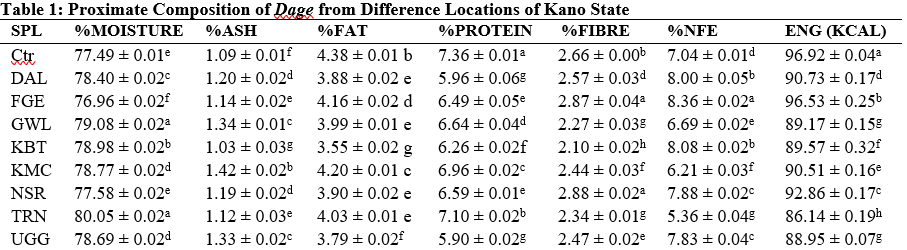
The study was carried out to evaluate the physicochemical properties, proximate composition, anti-oxidant properties and anti-nutritional content, micro and macro elements concentrations, and sensory acceptability of soybean milk ("dage") sold within kano State metropolises, Nigeria. The drinks were analyzed for (Physico-chemical (pH, total titratable acidity, Brix and turbidity) anti-nutritional (Phyate, and oxalate), anti-oxidant (flavonoid), proximate (moisture, fat, protein, ash, crude fiber, carbohydrate and total energy contents), Macro-element (calcium, iron, potassium, and magnesium). Micro elements (cadmium, nickel and lead). The results showed significant variations in moisture (76.96–80.05 %), protein (5.90–7.36%), fat (3.55–4.38%), and fibre (2.10–2.88%) contents. Anti-oxidants analysis revealed presence of flavonoids (0.22–0.59 mg/100L) while anti-nutrients contents; phytates (148.15–289.83 mg/100L), and oxalates (15.94–31.05 mg/100L). Physicochemical properties indicated acidic pH (3.78–4.98) and varying viscosity (415.00–840.50 mPa·s). Macro-element analysis showed presence of calcium, iron, potassium, and magnesium, Micro-elements (cadmium, nickel, lead) were detected at low levels. Sensory evaluation indicated the control sample had the highest overall acceptability (8.35/10). In conclusion, this study underscores the need for quality control measures in traditional "dage" production to enhance safety, nutritional value, and consumer acceptability.
References
Anya, V. C., Ugboma, C. J., & Nrior, R. R. (2024). Sensory and nutritional evaluation of soy yoghurt fermented with indigenous lactic acid bacteria. Microbiology Research International, 12(4), 110–115.
Anyanwu, N. C. J. (2019). Microbiological and comparative analysis of indigenous and semi- industrial fermented milk drinks (Fura da Nono and Fura da Yoghurt) sold in Nigeria’s capital. International Journal of Bioassays, 8.
Adelekan, A., Arisa, N., Alamu, A., Adebayo, Y. & Popoola, G. (2014). Production and acceptability of fruits enhanced zobo drink. Food Science and Technology Letters, 5, 46.
Adejuyitan J. A, Olanipekun B. F and Moyinwin O (2014). A Production and evaluation of cheese-like product from the blend of soy milk and coconut milk. Archives of Applied Science Research, 6 (4):263-266.
ADEOLA, A. & AWORH, C. 2010. Development and sensory evaluation of an improved beverage from Nigeria’s tamarind (Tamarindus indica L.) fruit. African Journal of Food, Agriculture, Nutrition and Development, 10.
Alı, W., Ahmad, M., İftakhar, F., … Qureshi, M. (2020). Nutritive potentials of Soybean and its significance for humans health and animal production: A Review. Eurasian Journal of Food Science and Technology, 4(1), 41-53.
Anal,A.K.; Perpetuini, G.; Petchkongkaew, A.; Tan, R.; Avallone, S.; Tofalo, R.; Waché, Y. Food safety risks in traditional fermented food from South-East Asia. Food Cont. 2019, 109, 106922.
AOAC (2012). Association of official analytical chemist. Official Methods of Analysis of the Analytical Chemist International, 18th Ed. Gathersburg, MD USA;
Arnarson, A. (2017). 8 Signs and Symptoms of Protein Deficiency. Healthline. Pp.
BANKOLE, Y., TANIMOLA, A., ODUNUKAN, R. & SAMUEL, D. 2013. Preservation of zobo drink (calyces of Hibiscus sabdariffa) using kolanut. Academic Journal of Interdisciplinary Studies, 2, 17-17.
Belobrajdic, D. P., James-Martin, G., Jones, D., & Tran, C. D. (2023). Soy and gastrointestinal health: a review. Nutrients, 15(8), 1959.
Delgado-Andrade, C., Olías, R., Haro, A., Marín-Manzano, M. C., Benavides, L., Clemente, A., & Seiquer, I. (2025). Analyses of Antioxidant Properties, Mineral Composition, and Fatty Acid Profiles of Soy-Based Beverages Before and After an In Vitro Digestion Process. Antioxidants, 14(4), 411.
Ezekiel, C. N., Ayeni, K. I., Misihairabgwi, J. M., Somorin, Y. M., Chibuzor‐Onyema, I. E., Oyedele, O. A., Abia, W. A., Sulyok, M., Shephard, G. S. & Krska, R. 2018. Traditionally processed beverages in Africa: a review of the mycotoxin occurrence patterns and exposure assessment. Comprehensive Reviews in Food Science and Food Safety, 17, 334-351.
FAO/WHO/UNU. (2003). Protein and amino acid requirements in human nutrition.WHO Press, 150.
Faour-Klingbeil, D., & CD Todd, E. (2020). Prevention and control of foodborne diseases in Middle-East North African countries: Review of national control systems. International journal of environmental research and public health, 17(1), 70.
Felberg, I., Carrão-Panizzi, M. C., Deliza, R., de Freitas, S. C., Santiago, M. C. P. A., Stephan, M. P., & Antoniassi, R. (2024). Effect of soybean cultivars on the nutrients and consumer acceptance of soymilk. Food and Nutrition Sciences, 15(158), 807–826.
Ferruzzi, M. G., Tanprasertsuk, J., Kris-Etherton, P., Weaver, C. M. & Johnson, E. J. (2020). Perspective: The role of beverages as a source of nutrients and phytonutrients. Advances in Nutrition, 11, 507-523.
Flieger, J., Flieger, W., Baj, J. & Maciejewski, R. (2021). Antioxidants: Classification, natural sources, activity/capacity measurements, and usefulness for the synthesis of nanoparticles. Materials, 14, 4135.
Goldhaber, S. B. (2003). Trace element risk assessment: essentiality vs. toxicity. Regulatory toxicology and pharmacology, 38, 232-242.
Güzeler, N., & Yıldırım, Ç. (2016). The utilization and processing of soybean and soybean products. Journal of Agricultural Faculty of Uludag University, Volume: 30, 546-553
Harris, G. K., & Marshall, M. R. (2017). Ash analysis. Food analysis, 287-297.
Ignatius S, Mandala W, Indah K (2010). Development of low aflatoxin soy corn milk: optimization of soybean and sweet corn ratio and its stability during storage. International Journal of Food, Nutrition and Public Health, Vol. 3(2):161-170
Ijah , U.J.J., Auta, H.S., Aduloju, M.O. and Aransiola, S.A. (2014). Microbiological, Nutritional, and Sensory quality of Bread produced from wheat and potato flour blends international journal of food Science, article ID 671701, 1-6.
Kamble, R. E., Pawar, V. S., & Veer, S. J. (2021). Health benefits of soybean and soybean based food products: A study. The Pharma Innovation Journal, 10(8), 1135-1138.
Kigigha, L., Samson, G., Izah, S. & Aseibai, E. (2018). Microbial assessment of zobo drink sold in some locations in Yenagoa metropolis, Nigeria. EC Nutrition, 13, 470-476.
Liu, S., Zhang, M., Feng, F., & Tian, Z. (2020). Toward a “green revolution” for soybean. Molecular plant, 13(5), 688-697.
Messina, M., Rogero, M. M., Fisberg, M., & Waitzberg, D. (2017). Health impact of childhood and adolescent soy consumption. Nutrition Reviews, 75(7), 500-515. PMid:28838083. http://dx.doi.org/10.1093/nutrit/nux016
Mohd Nawawee, N. S., Abu bakar, N. F. & Zulfakar, S. S. (2019). Microbiological safety of street-vended beverages in Chow Kit, Kuala Lumpur. International journal of environmental research and public health, 16, 4463
Moore, Sarah. Why is Moisture Content Analysis of Food Important. News-Medical. Retrived on August 20, 2020 from http://www.news-medical.net/life-science/Why-is-Moisture-Content-Analysis-of-Food-Important.aspx.
Mossie, T., Biratu, K., Yifred, H., Silesh, Y., & Tesfaye, A. (2024). Stability analysis and nutritional quality of soybean (Glycine max (L). Merrill.) genotypes for feed in southwestern Ethiopia. Heliyon, 10(7).
Neeta J. Patil (2015): Development of Soya Cheese. International Journal of Engineering Research and Technology (IJERT). Vol. 4 Issue 11, November-2015.
Nkama, I., Agarry, O. & Akoma, O. (2010). Sensory and nutritional quality characteristics of powdered Kunun-zaki: A Nigerian fermented cereal beverage. African Journal of Food Science, 4, 364-370.
Nowak, D. & Gośliński, M. (2020). Assessment of antioxidant properties of classic energy drinks in comparison with fruit energy drinks. Foods, 9, 56.
Oboh, H. A. & Okhai, E. 2012. Antioxidant and free radical scavenging abilities of some indigenous Nigerian drinks. Nigerian Journal of Basic and Applied Sciences, 20, 21-26`
Okur, H. H., Yıldırım, H. K., Yousefvand, A., et al. (2025). Production of fermented soy and soy/cow milk products with probiotic Lacticaseibacillus rhamnosus GG strain. Food and Bioprocess Technology, 18, 5736–5748. https://doi.org/10.1007/s11947-025-03804-x
Oluwakemisola, D. P. (2025). Effect of fermentation time on the nutritional composition of soybean-based yoghurt: A review. Asian Journal of Science, Technology, Engineering, and Art, 3(4), 1418–1435.
Onwuka. G, I. (2018). Food Analysis and Instrumentation, Theory and practice. Micheal Okpara University of Agriculture, Umudike. Pp 134
Pattar, A. S. Studies on extraction of Tamarind pulp and value addition. University of Horticultural Sciences, Bagalkot.
Rahaman, M. M., Sharmin, S., Atolani, O., Adeyemi, O. S. & Islam, M. T. Protective Effect of Naturally-Derived Antioxidants Against Acetaminophen-Induced Hepatotoxicity: A Review. Acta Biologica Marisiensis, 3, 36-47
Rai, R., Kharel, N., and Tamang, J. P. (2014). HACCP model of kinema, a fermented soybean food. Journal of Scientific and Industrial Research, 73, 588–592.
Peng, X., Yue, Q., Chi, Q., Liu, Y., Tian, T., Dai, S., Yu, A., Wang, S., Wang, H., & Tong, X. (2023). Microbial diversity and flavor regularity of soy milk fermented using Kombucha. Foods, 12(4), 884. https://doi.org/10.3390/foods12040884
Saha, A., & Mandal, S. (2019). Nutritional benefit of soybean and its advancement in research. Sustainable Food Production, 5(1), 6-16.
Samtiya, M., Aluko, R. E. & dhewa, T. (2020). Plant food anti-nutritional factors and their reduction strategies: An overview. Food Production, Processing and Nutrition, 2, 1-14.
Scade J (1975). Cereals. Oxford University Press, London.
Siddig, E. A. M., and Barka, M. K. B. (2015). Evaluation and Implementation of Hazard Analysis and Critical Control Points System (HACCP) in Stirred Yoghurt Plant. Sudan University of Science and Technology.
SlavinJL (2005). Dietary fibre and body weight. Nutrition Journal 21, 411-418.
Soile, R. (2011). Carbohydrate intake in children– associations with dietary intakes, growth, Serum lipids, and dental health, the strip project. Review of the literature 2:12-41.
Voora, V.; Larrea, C.; Bermudez, S. (2020). Global Market Report: Soybeans; International Institute for Sustainable Development: Winnipeg, MB, Canada, 2020.
Downloads
Published
Issue
Section
Categories
License
Copyright (c) 2026 Abdullahi Muhammad Bello, Adamu Abdullahi Shehu, Zakari Nuhu Lambu, Mustapha Yusuf Dauda, Aliyu Abdullahi Maru, Sani Muhammad Ibrahim

This work is licensed under a Creative Commons Attribution 4.0 International License.


