
SOLVENT-DEPENDENT ANTIBACTERIAL, PHYTOCHEMICAL AND ANTIOXIDANT ACTIVITIES OF Zingiber officinale RHIZOME FROM KAURA LOCAL GOVERNMENT AREA OF SOUTHERN KADUNA, NIGERIA
DOI:
https://doi.org/10.33003/fjs-2026-1005-4980Keywords:
Zingiber officinale, antibacterial activity, antioxidant activity, phytochemicals, DPPH assayAbstract
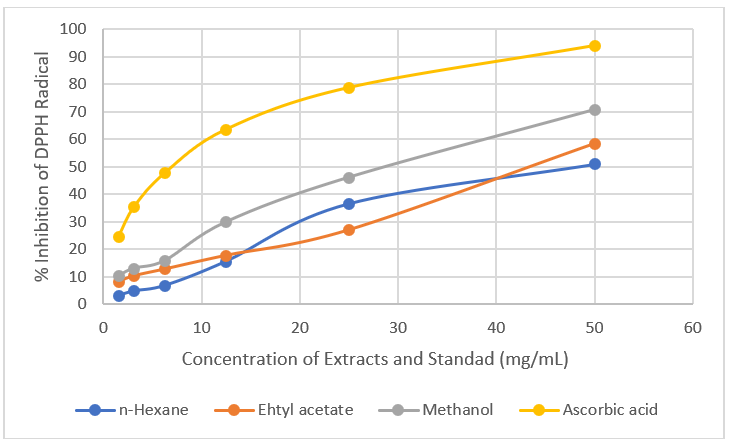
The increasing prevalence of antimicrobial resistance and oxidative stress–related disorders has stimulated interest in medicinal plants as sources of bioactive compounds. This study evaluated the antibacterial, phytochemical, and antioxidant activities of Zingiber officinale rhizome extracts obtained from Kaura Local Government Area of Southern Kaduna, Nigeria. Powdered rhizomes were extracted using n-hexane, ethyl acetate, and methanol by cold maceration. Antibacterial activity against Staphylococcus aureus, Enterococcus faecalis, Escherichia coli, and Pseudomonas aeruginosa was determined using the agar well diffusion method, while minimum inhibitory concentration (MIC) and minimum bactericidal concentration (MBC) were evaluated using broth dilution assays. Phytochemical screening and antioxidant activity were assessed using standard qualitative methods, total phenolic and flavonoid content determination, and the DPPH radical scavenging assay. The methanol extract exhibited the strongest antibacterial activity, producing inhibition zones of 13.00–18.00 mm at 50 mg/mL, with S. aureus showing the highest susceptibility (MIC = 12.5 mg/mL). Phytochemical analysis revealed the presence of alkaloids, flavonoids, phenols, terpenoids, glycosides, and saponins. The methanol extract showed the highest total phenolic content (1907.67 mg GAE/100 g), whereas the ethyl acetate extract had the highest flavonoid content (207.33 mg QE/100 g). Antioxidant evaluation demonstrated concentration-dependent radical scavenging activity, with the methanol extract exhibiting the strongest activity (IC₅₀ = 30.12 µg/mL). These results highlight the potential of Z. officinale from Southern Kaduna as a natural source of antibacterial and antioxidant compounds.
References
Ahmed, N., Karobari, M. I., Yousaf, A., Mohamed, R. N., Arshad, S., Basheer, S. N. Yean, C. Y. (2022). The antimicrobial efficacy against selective oral microbes, antioxidant activity and preliminary phytochemical screening of Zingiber officinale. Infection and Drug Resistance, 2773-2785.
Alfuraydi, A. A., Aziz, I. M., Almajhdi, F. N. (2024). Assessment of antioxidant, anticancer, and antibacterial activities of the rhizome of ginger (Zingiber officinale). Journal of King Saud University-Science, 36(3): 103112.
Anwar, S., Almatroudi, A., Allemailem, K. S., Jacob Joseph, R., Khan, A. A., Rahmani, A. H. (2020). Protective effects of ginger extract against glycation and oxidative stress-induced health complications: An in vitro study. Processes, 8(4): 468.
Ashraf, M. V., Khan, S., Misri, S., Gaira, K. S., Rawat, S., Rawat, B., Ahmad, S. (2024). High-altitude medicinal plants as promising source of phytochemical antioxidants to combat lifestyle-associated oxidative stress-induced disorders. Pharmaceuticals, 17(8): 975.
Ayustaningwarno, F., Anjani, G., Ayu, A. M., Fogliano, V. (2024). A critical review of Ginger’s (Zingiber officinale) antioxidant, anti-inflammatory, and immunomodulatory activities. Frontiers in nutrition, 11: 1364836.
Ballester, P., Cerdá, B., Arcusa, R., García-Muñoz, A. M., Marhuenda, J., Zafrilla, P. (2023). Antioxidant activity in extracts from Zingiberaceae family: cardamom, turmeric, and ginger. Molecules, 28(10): 4024.
Bashir, S. F., Gurumayum, S., Kaur, S. (2015). In vitro antimicrobial activity and preliminary phytochemical screening of methanol, chloroform, and hot water extracts of ginger (Zingiber officinale). In Vitro, 8(1): 176-180.
Bulakarima, A. U., Sharma, V. K., Singh, S., Isa, M. A., Dudha, N. (2025). Investigating the antibacterial and antioxidant properties of Zingiber officinale (ginger) extracts. Cuestiones de Fisioterapia, 54(3): 4449-4470.
Donadio, G., Mensitieri, F., Santoro, V., Parisi, V., Bellone, M. L., De Tommasi, N., Dal Piaz, F. (2021). Interactions with microbial proteins driving the antibacterial activity of flavonoids. Pharmaceutics, 13(5): 660.
Edo, G. I., Onoharigho, F. O., Jikah, A. N., Ezekiel, G. O., Essaghah, A. E. A., Ekokotu, H. A. Owheruo, J. O. (2024). Evaluation of the physicochemical, phytochemical and anti-bacterial potential of Zingiber officinale (ginger). Food Chemistry Advances, 4: 100625.
Foti, M. C. (2007). Antioxidant properties of phenols. Journal of Pharmacy and Pharmacology, 59(12): 1673-1685.
Hazir, S., Keskin, N. (2020). Investigation of antimicrobial effect of honey. Journal of Biological Science, 5(3): 325-328.
Ivanović, M., Makoter, K., Islamčević Razboršek, M. (2021). Comparative study of chemical composition and antioxidant activity of essential oils and crude extracts of four characteristic Zingiberaceae herbs. Plants, 10(3): 501.
Kaurinovic, B., Vastag, D. (2019). Flavonoids and phenolic acids as potential natural antioxidants. Antioxidants, 2(1): 1-14.
Koparde, A. A., Mallick, M. N., Panwar, N., Khan, A., Kumar, A., Patra, D., Thelly, M. T. (2024). An experimental study on Phytochemical screening and evaluation of Antimicrobial Properties of Zingiber officinale (Ginger). Frontiers in Health Informatics, 13(3).
Makhafola, T. J., Elgorashi, E. E., McGaw, L. J., Verschaeve, L., Eloff, J. N. (2016). The correlation between antimutagenic activity and total phenolic content of extracts of 31 plant species with high antioxidant activity. BMC Complementary and Alternative Medicine, 16(1): 490.
Mann, C., Markham, L. (2018). A new method for determining the minimum inhibitory concentration of essential oils. Journal of Applied Microbiology, 8(4), 53-65.
Mao, Q. Q., Xu, X. Y., Cao, S. Y., Gan, R. Y., Corke, H., Beta, T., Li, H. B. (2019). Bioactive compounds and bioactivities of ginger (Zingiber officinale Roscoe). Foods, 8(6): 185.
Nourbakhsh, F., Lotfalizadeh, M., Badpeyma, M., Shakeri, A., Soheili, V. (2022). From plants to antimicrobials: Natural products against bacterial membranes. Phytotherapy Research, 36(1): 33-52.
Nwosu, L. C., Edo, G. I., Ozgor, E. (2022). The phytochemical, proximate, pharmacological, GC-MS analysis of Cyperus esculentus (Tiger nut): A fully validated approach in health, food and nutrition. Food Bioscience, 4: 1-7.
Piluzza, G., Bullitta, S. (2011). Correlations between phenolic content and antioxidant properties in twenty-four plant species of traditional ethnoveterinary use in the Mediterranean area. Pharmaceutical biology, 49(3): 240-247.
Raeisi, M., Hooshmand, F., Gheraati, M., Aman Mohammadi, M., Mehdinejad, N. (2025). Comparative analysis of antibacterial activity and chemical composition of essential oils from Salix aegyptiaca male inflorescences and leaves. Medical Laboratory Journal, 19(4): 35-40.
Sulastri, E., Zubair, M. S., Anas, N. I., Abidin, S., Hardani, R., Yulianti, R. (2018). Total Phenolic, Total Flavonoid, Quercetin Content and Antioxidant Activity of Standardized Extract of Moringa oleifera Leaf from Regions with Different Elevation. Pharmacognosy journal, 23(6): S104-S108.
Sulieman, A. M. E., Ibrahim, S. M., Alshammari, M., Abdulaziz, F., Idriss, H., Alanazi, N. A. H., Badraoui, R. (2024). Zingiber officinale uncovered: Integrating experimental and computational approaches to antibacterial and phytochemical profiling. Pharmaceuticals, 17(11): 1551.
Takaidza, S., Mtunzi, F., Pillay, M. (2018). Analysis of the phytochemical contents and antioxidant activities of crude extracts from Tulbaghia species. Journal of Traditional Chinese Medicine, 38(2): 272-279.
Tohma, H., Gülçin, İ., Bursal, E., Gören, A. C., Alwasel, S. H., Köksal, E. (2017). Antioxidant activity and phenolic compounds of ginger (Zingiber officinale Rosc.) determined by HPLC-MS/MS. Journal of food measurement and characterization, 11(2): 556-566.
Yit, K. H., Zainal-Abidin, Z. (2024). Antimicrobial potential of natural compounds of Zingiberaceae plants and their synthetic analogues: a scoping review of in vitro and in silico approaches. Current Topics in Medicinal Chemistry, 24(13): 1158-1184.
Zouine, N., El Ghachtouli, N., El Abed, S., Koraichi, S. I. (2024). A comprehensive review on medicinal plant extracts as antibacterial agents: Factors, mechanism insights and future prospects. Scientific African, 26: e02395.
Downloads
Published
Issue
Section
Categories
License
Copyright (c) 2026 Isah A. Jaafaru, Shuaibu B. Sanusi, Nura Mohammed, Aisha Usman, Shitu M. Lawal, Ahmad Muhammad

This work is licensed under a Creative Commons Attribution 4.0 International License.


