
COMPARATIVE IN Silico ADMET ANALYSIS OF BERBERINE AND PIPERINE: A RATIONALE FOR COMBINATORIAL THERAPY TO OVERCOME P-GLYCOPROTEIN-MEDIATED EFFLUX
DOI:
https://doi.org/10.33003/fjs-2026-1006-4852Keywords:
Berberine, Piperine, P-Glycoprotein, ADMET, Bioavailability, Combinatorial TherapyAbstract
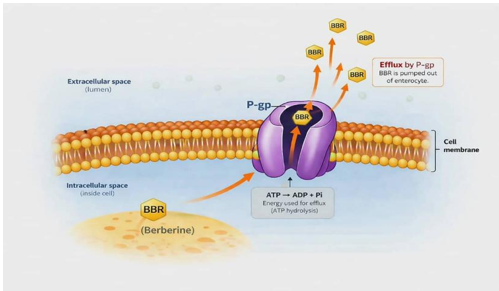
Berberine, a bioactive isoquinoline alkaloid, exhibits diverse pharmacological activities including antimicrobial and anticancer effects; however, its clinical application is limited by poor oral bioavailability, largely attributed to efflux by P-glycoprotein (ABCB1). This study evaluates the pharmacokinetic and drug-likeness properties of berberine using in silico tools (SwissADME, ADMETLab, and pkCSM) to rationalize its limitations and support combinatorial therapeutic strategies. Predicted physicochemical parameters were consistent across platforms, with berberine demonstrating favorable drug-like properties, including moderate lipophilicity (logP 2.5–3.1), high gastrointestinal absorption, and compliance with Lipinski’s rule of five. Despite these favorable attributes, berberine was consistently predicted to be a P-glycoprotein substrate, explaining its reduced intracellular accumulation and systemic availability. Additionally, berberine showed inhibitory potential toward CYP3A4, suggesting possible drug–drug interaction implications. These findings highlight that while berberine possesses strong drug-like characteristics, its therapeutic efficacy is compromised by efflux-mediated limitations. Therefore, co-administration with P-glycoprotein inhibitors such as piperine presents a promising strategy to enhance its bioavailability and pharmacological effectiveness. This study provides a computational basis for the rational design of combinatorial formulations targeting efflux transport mechanisms.
Downloads
Published
Issue
Section
Categories
License
Copyright (c) 2026 Desmond Ikem, Stephen Buzugbe, Philppine Okubor, Ozioma Michael

This work is licensed under a Creative Commons Attribution 4.0 International License.


