
INTEGRATIVE IN SILICO ANALYSIS OF COMMERCIAL SOAP INGREDIENTS REVEALS POTENTIAL MODULATORS OF HUMAN MELANOGENESIS PATHWAYS
DOI:
https://doi.org/10.33003/fjs-2026-1006-4705Keywords:
Bioinformatics; Melanogenesis; Soap ingredients; Skin pigmentation; Computational toxicologyAbstract
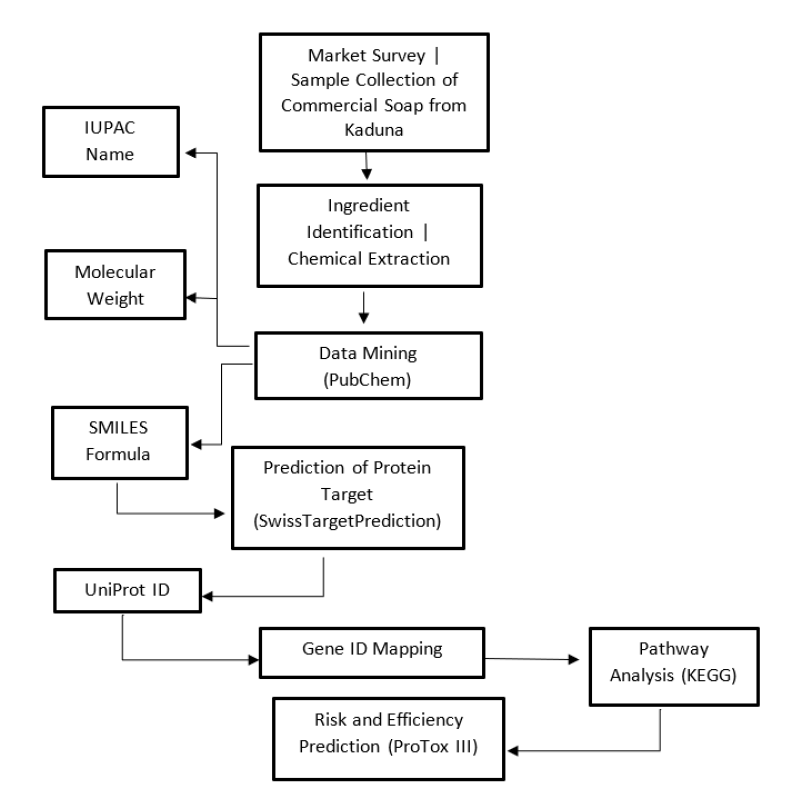
Commercial soaps widely sold in African markets contain diverse chemical ingredient that may interact with biological pathways in the skin. However, the potential molecular effects of these compounds on melanogenesis and skin physiology remain insufficiently explored, particularly in populations with darker skin types. This study applied an integrative bioinformatics approach to evaluate the chemical composition of commonly used soaps sold in Kaduna markets and to predict their potential interactions with proteins involved in pigmentation regulation and skin signaling pathways. A total of fifteen (15) commercial soap products, comprising both locally manufactured and imported brands, were surveyed. Ingredient profiling identified forty-three (43) unique compounds including surfactants, fatty acids, fragrances, preservatives, pigments, and conditioning agents. Chemical structures of the identified compounds were retrieved from the PubChem database and subjected to target prediction analysis using SwissTargetPrediction. Sixteen compounds generated predicted protein targets, yielding 375 potential human protein interactions associated with enzymes, receptors, kinases, and oxidoreductases involved in skin biology. Pathway enrichment analysis using the KEGG database revealed significant associations with melanogenesis, tyrosine metabolism, MAPK signaling, PI3K–Akt signaling, and Wnt signaling pathways. These pathways play critical roles in melanocyte regulation, pigment synthesis, and cellular responses to environmental stress. In addition, toxicity and safety profiling using ProTox-3.0 indicated that most compounds fall within low to moderate predicted toxicity classes, although a few ingredients demonstrated potential irritation or sensitization alerts.
Downloads
Published
Issue
Section
Categories
License
Copyright (c) 2026 Stephen A James, Maryam Lawal

This work is licensed under a Creative Commons Attribution 4.0 International License.


