
VALORIZATION OF AVOCADO SEED RESIDUE AS BIOMASS FOR BIOSYNGAS PRODUCTION VIA OPTIMIZED STEAM GASIFICATION PROCESS USING BOX-BEHNKEN DESIGN (BBD) APPROACH
DOI:
https://doi.org/10.33003/fjs-2026-1004-4626Keywords:
Avocado Seed Residue, Optimization, Steam Gasification, Biosyngas, BBDAbstract
ABSTRACT
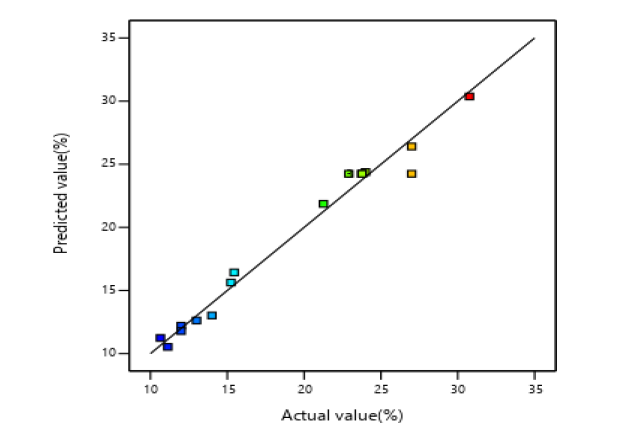
Sustainable conversion of agricultural residues into renewable fuels is critical for addressing global energy and environmental challenges. This study investigates the potential of avocado seed residue (ASR), a lignocellulosic by-product of oil extraction, as a feedstock for biosyngas production via optimized steam gasification using Box-Behnken design (bbd) approach.The physicochemical and elemental compositions of ASR were assessed using standard analytical procedures, which revealed favorable properties for biosyngas production. Gasification experiments were conducted in a laboratory-scale bubbling fluidized bed reactor, and process optimization was performed using the Box-Behnken Design approach. The effects of temperature, steam-to-biomass ratio (S/B), and particle size on hydrogen (H₂), carbon monoxide (CO), and methane (CH₄) yields were systematically analyzed and indicated a strong influence on the yields. Analysis of variance (ANOVA) confirmed the significance and predictive accuracy of the quadratic models (p < 0.0001, R² > 0.97). Maximum yields of 30.76 vol% H₂, 11.35 vol% CO, and 11.00 vol% CH₄ were achieved at 900 °C, S/B ratio of 0.6, and particle size of 2.5 mm, with a very close agreement between predicted and experimental values (deviation <2%), which further confirms the reliability of the developed models. The findings demonstrated that ASR is a promising feedstock for efficient biosyngas generation, and that RSM-BBD provides a reliable technique for optimizing gasification parameters for maximum yield of biosyngas from the avocado seed residue.
References
Abdullah, B., Muhammad, S. A., Shokravi, Z., Ismail, S., Kassim, K. A., Mahmood, A. N., & Aziz, M. M. (2019). Fourth-generation biofuel: A review on risks and mitigation strategies. Renewable and Sustainable Energy Reviews, 107, 37–50. https://doi.org/10.1016/j.rser.2019.02.018
Abubakar, M. Ali, Hadiza, Shuaibu & Haruna, Ibrahim (2026). Statistical evaluation and optimisation of biodiesel production from Gmelina arborea leaf biomass using calcium hydroxide catalysis under mild conditions. FUDMA Journal of Sciences, 10(2), 94 – 101. DOI: https://doi.org/10.33003/fjs-2026-1003-4746
Adeyemi, A. O., Chiamaka, O., & Oluwatomisin, M. O. (2020). CO₂ emissions and environmental implications in Nigeria. International Journal of Energy Economics and Policy, 10(3), 317–324. https://doi.org/10.32479/ijeep.8050
Adeyemi, A. O., Chiamaka, O., & Oluwatomisin, M. O. (2020). CO₂ emissions and environmental implications in Nigeria. International Journal of Energy Economics and Policy, 10(3), 317–324. https://doi.org/10.32479/ijeep.8050
Ajorloo, M., Ghodrat, M., Scott, J., & Strezov, V. (2022). Recent advances in thermodynamic analysis of biomass gasification: A review on numerical modelling and simulation. Journal of Energy Institute, 102, 395–419. https://doi.org/10.1016/j.joei.2022.05.003
Antonio, M., Vincenzo, L., Simeone, C., & Dino, M. (2018). Biofuels production by biomass gasification: A review. Energies, 11(811), 1–32. https://doi.org/10.3390/en11040811
Anukam, A. I., Mamphweli, S. N., Reddy, P., & Okoh, O. O. (2016). Characterization and the effect of lignocellulosic biomass value addition on gasification efficiency. Energy Exploration & Exploitation, 34(6), 865–880. https://doi.org/10.1177/0144598716665010
Aqsha, A., Tijani, M. M., Moghtaderi, B., & Mahinpey, N. (2017). Catalytic pyrolysis of straw biomasses (wheat, flax, oat and barley) and the comparison of their product yields. Journal of Analytical and Applied Pyrolysis, 125, 201–208. https://doi.org/10.1016/j.jaap.2017.03.022
Bayetero, C. M., Yépez, C. M., Cevallos, I. B., & Rueda, E. H. (2022). Effect of the use of additives in biodiesel blends on the performance and opacity of a diesel engine. Materials Today: Proceedings. Advances in Mechanical Engineering Trends, 49, 93–99. https://doi.org/10.1016/j.matpr.2021.07.478
Betene, A. D. O., Betene, F. E., Martoïa, F., Dumont, P. J., Atangana, A., & Noah, P. M. A. (2020). Physico-chemical and thermal characterization of some lignocellulosic fibres: Ananas comosus (AC), Neuropeltis acuminatas (NA) and Rhecktophyllum camerunense (RC). Journal of Minerals and Materials Characterization and Engineering, 8(4), 205–222.
Bijoy, D., Atmadeep, B., & Amitava, D. (2020). Kinetic modeling of biomass gasification and tar formation in a fluidized bed gasifier using equivalent reactor network (ERN). Fuel, 280, 1-15. https://doi.org/10.1016/j.fuel.2020.118582
Bychkov, A. L., Denkin, A. I., Tikhova, V. D., & Lomovsky, O. I. (2017). Prediction of higher heating values of plant biomass from ultimate analysis data. Journal of Thermal Analysis and Calorimetry, 130(3), 1399–1405. https://doi.org/10.1007/s10973-017-6350-0
Bychkov, A. L., Denkin, A. I., Tikhova, V. D., & Lomovsky, O. I. (2014). Prediction of higher heating values of lignocellulose from elemental analysis. Chemistry of Plant Raw Material, (3), 99–104. https://doi.org/10.14258/jcprm.1403099
Chel-Guerrero, L., Barbosa-Martín, E., Martínez-Antonio, A., González-Mondragón, E. & Betancur-Ancona, D. (2016). Some physicochemical and rheological properties of starch isolated from avocado seeds. Int. J. Biol. Macromol. 86, 302–308.
Chinedu, M. Nwachukwu, A. & Toffolo, E.W. (2020). Biomass-based gas use in the Swedish iron and steel industry – Supply chain and process integration considerations. Renewable Energy, 146, 2797-2811, https://doi.org/10.1016/j.renene.2019.08.100
Danish, M., Naqvi, M., Farooq, U., & Naqvi, S. (2015). Characterization of South Asian agricultural residues for potential utilization in future energy mix. Energy Procedia, 75, 2974–2980. https://doi.org/10.1016/j.egypro.2015.07.604
Ezealigo, U. S., Ezealigo, B. N., Kemausuor, F., Achenie, L. E. K., & Onwualu, A. P. (2021). Biomass valorization to bioenergy: Assessment of biomass residues’ availability and bioenergy potential in Nigeria. Sustainability, 13, 13806. https://doi.org/10.3390/su132413806
Font Palma, C. (2023). Modelling of tar formation and evolution for biomass gasification: A review. Applied Energy, 111, 129–141. https://doi.org/10.1016/j.apenergy.2013.04.082
Gagliano, A., Nocera, F., Bruno, M., & Cardillo, G. (2017). Development of an equilibrium-based model of gasification of biomass by Aspen Plus. Energy Procedia, 111, 1010–1019. https://doi.org/10.1016/j.egypro.2017.03.264
Gillespie, G. D., Everard, C. D., Fagan, C. C., & McDonnell, K. P. (2013). Prediction of quality parameters of biomass pellets from proximate and ultimate analysis. Fuel, 111, 771–777. https://doi.org/10.1016/j.fuel.2013.05.002
Halim, N. H. A., Saleh, S., & Samad, N. A. F. A. (2019). Optimization of oil palm empty fruit bunch gasification temperature and steam to biomass ratio using response surface methodology. IOP Conference Series: Materials Science and Engineering, 702, 012006. https://doi.org/10.1088/1757-899X/702/1/012006
Hamad, M. A., Radwan, A. M., Heggo, D. A., & Moustafa, T. (2016). Hydrogen rich gas production from catalytic gasification of biomass. Renewable Energy, 85, 1290–1300. https://doi.org/10.1016/j.renene.2015.07.082
Hou J., & Zhang J. Robust optimization of the efficient syngas fractions in entrained flow coal gasification using Taguchi method and response surface methodology. International Journal of Hydrogen Energy, 2017, 42(8): 4908-4921. https://doi.org/10.1016/j.ijhydene.2017.01.027
Inayat, M. , S.A. Sulaiman, J.C. Kurnia, Catalytic co-gasification of coconut shells and oil palm fronds blends in the presence of cement, dolomite, and limestone: parametric optimization via Box Behnken Design, J. Energy Inst. 92 (2019) 871–882, https://doi.org/10.1016/j.joei.2018.08.002.
Inayat, M., Sulaiman, S. A., Bhayo, B. A., & Shahbaz, M. (2020). Application of response surface methodology in catalytic co-gasification of palm wastes for bioenergy conversion using mineral catalysts. Biomass and Bioenergy, 132, 105418. https://doi.org/10.1016/j.biombioe.2019.105418
Jibrin, M. A. S., & Olanrewaju, B. M. (2025). Response surface methodology (RSM): A computational approach for optimization of biodiesel production parameters from different feedstocks. International Journal of Modelling & Applied Science, 8(9), 22–41. https://doi.org/10.70382/caijmasr.v8i9.027
Marcos, F., Carolina, S., Claudia, E.V., Felipe, A., Hugo, V. & Jaime, O.V. (2019). Avocado oil: characteristics, properties, and applications. Molecules, 24, 217. doi:10.3390/molecules24112172
Marwan, A.S., Muhammad, S. H., Faisal, A.S.A., Alyaa, A., Norli, I., Mohd, O. A., & Mardiana, I.A. (2021). A review on non-edible oil as a potential feedstock for biodiesel: physicochemical properties and production technologies. Royal Society of Chemistry, 11, 25018-25037, doi:10.1039/D1RA04311K
Minerva, C. G., María, D.C. Y Eulogio, C. (2020). Avocado-Derived biomass as a source of bioenergy and bioproducts: A review. Appl. Sci. 10 (8195), 1-29, doi:10.3390/app10228195
Muhammad, S., Al-Ansari, T., Inayat, M., Sulaiman, S. A., Parthasarathy, P., & McKay, G. (2020). A critical review on the influence of process parameters in catalytic co-gasification: Current performance and challenges for a future prospectus. Renewable and Sustainable Energy Reviews, 134, 110382. https://doi.org/10.1016/j.rser.2020.110382
Naveenkumar, R. & Baskar, G. (2021). Process optimization, green chemistry balance, and technoeconomic analysis of biodiesel production from castor oil using a heterogeneous nanocatalyst. Bioresour. Technol. 320, 124347. https://doi.org/10.1016/j.biortech.2020.124347
Prakash, A., Akshat, T. & Andrew, H. (2022). Mini review of catalytic reactive flash volatilization of biomass for hydrogen-rich syngas production. Energy and Fuels, 36(9), 4640-4652, https://doi.org/10.1021/acs.energyfuels.2c00268
Preeti, Mohod, A. G., Khandetod, Y. P., Dhande, K. G., & Sawant, P. A. (2024). Physico-chemical characterization of coconut shell (Cocos nucifera). International Journal of Advanced Biochemistry Research, 8(3), 118–122. https://doi.org/10.33545/26174693.2024.v8.i3Sb.703
Sango, T., Cheumani Yona, A. M., Duchatel, L., Marin, A., Kor Ndikontar, M., Joly, N., & Lefebvre, J.-M. (2018). Stepwise multiscale deconstruction of banana pseudo–stem (Musa acuminata) biomass and morpho–mechanical characterization of extracted long fibers for sustainable applications. Industrial Crops and Products, 122, 657–668. https://doi.org/10.1016/j.indcrop.2018.06.05
Savannah, B. (2021). Climate, environmental, and health impacts of fossil fuels. Environmental and Energy Study Institute (EESI). Retrieved from https://www.eesi.org/fuels.htm
Seçer, A., & Hasanoglu, A. (2020). Evaluation of the effects of process parameters on co-gasification of Çan lignite and sorghum biomass with response surface methodology: An optimization study for high yield hydrogen production. Fuel, 259, 116230. https://doi.org/10.1016/j.fuel.2019.116230
Serrano, C., Monedero, E., Lapuerta, M., & Portero, H. (2011). Effect of moisture content, particle size and pine addition on quality parameters of barley straw pellets. Fuel Processing Technology, 92, 699–706. https://doi.org/10.1016/j.fuproc.2010.11.031
Downloads
Published
Issue
Section
Categories
License
Copyright (c) 2026 Jibrin Mohammed, Kabiru S. Madaki, Jafar A. Ibrahim

This work is licensed under a Creative Commons Attribution 4.0 International License.


