
EVALUATION OF SERUM ELECTROLYTE AND LIPID PROFILE ALTERATIONS IN MALE WISTAR RATS ADMINISTERED ALMOND (Terminalia catappa) AND CASHEW NUT (Anacardium occidentale) OILS
DOI:
https://doi.org/10.33003/fjs-2026-1003-4616Keywords:
Lipid profile, Electrolyte balance, Terminalia catappa oil, Anacardium occidentale oilAbstract
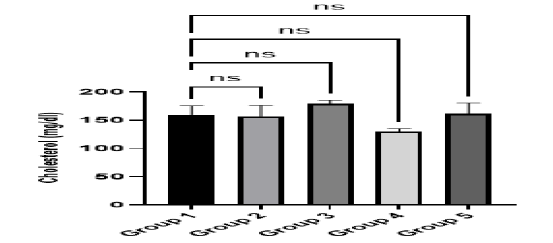
Natural plant oils rich in unsaturated fatty acids and bioactive compounds are increasingly explored as safer alternatives to conventional dietary lipids due to their cardiometabolic benefits. This study evaluated the effects of almond (Terminalia catappa) and cashew nut (Anacardium occidentale) oils on serum electrolyte balance and lipid profiles in healthy male Wistar rats. Twenty rats (135–160 g) were randomly assigned into five groups (n = 4): control, T. catappa (200 and 400 mg/kg), and A. occidentale (200 and 400 mg/kg). Oils were administered orally for 28 days, after which serum samples were analyzed for lipid parameters and electrolytes using spectrophotometric methods.Results showed no significant changes (p > 0.05) in total cholesterol, HDL-C, triglycerides, and VLDL-C across treated groups compared with control. Notably, T. catappa at both doses and A. occidentale at 400 mg/kg significantly reduced serum LDL-C (p < 0.05), suggesting potential cardioprotective properties. Serum sodium, chloride, phosphorus, and bicarbonate levels remained within normal physiological ranges, indicating preserved electrolyte and acid–base homeostasis. However, significant potassium elevation was observed with A. occidentale at 400 mg/kg (p < 0.05).In conclusion, short-term administration of T. catappa and A. occidentale oils is largely metabolically safe in healthy rats, with minimal impact on serum lipids and electrolytes. The LDL-C reduction, particularly with T. catappa, highlights cardioprotective potential, while potassium elevation with high-dose cashew oil warrants further investigation. These findings support both oils as safe dietary or therapeutic lipid sources.
References
Ahmed, M. M., Andleeb, S., Saqib, F., Hussain, M., Khatun, M. N., Ch, B. A., & Rahman, H. (2016). Diuretic and serum electrolyte regulation potential of aqueous methanolic extract of Solanum surattense fruit validates its folkloric use in dysuria. BMC Complementary and Alternative Medicine, 16, Article 166. https://doi.org/10.1186/s12906-016-1148-3
Andreadou, I., Schulz, R., Badimon, L., Adameová, A., Kleinbongard, P., Lecour, S., Nikolaou, P. E., Falcão-Pires, I., Vilahur, G., Woudberg, N., Heusch, G., & Ferdinandy, P. (2020). Hyperlipidaemia and cardioprotection: Animal models for translational studies. British Journal of Pharmacology, 177(23), 5287–5311. https://doi.org/10.1111/bph.14931
Arshad, M. T., Ali, M. K. M., Maqsood, S., Ikram, A., Hossain, M. S., Aljameel, A. I., Al-Farga, A., & Gnedeka, K. T. (2025). Dietary phytochemicals in cardiovascular disease prevention and management: A comprehensive review. Food Science & Nutrition, 13(9), e70872. https://doi.org/10.1002/fsn3.70872
Bathina, S., & Das, U. N. (2023). Role of mitochondrial dysfunction in cellular lipid homeostasis and disease. Discovery Medicine, 35(178), 653–663. https://doi.org/10.24976/Discov.Med.202335178.64
Castelli, W.P., Doyle, J.T., Gordon, T., Hames, C.G., Hjortland, M.C., Hulley, S.B., Kagan, A.and Zukel, W.J. (1977). HDL-Cholesterol and other lipids in coronary heart disease: the co operative lipoprotein phenotyping study. Circulation, 55(5):767-772.
Chen, D., Lu, F., Cheng, B., & Wang, B. (2025). Initial serum chloride is associated with all-cause mortality in critically ill patients with acute kidney injury. Renal Failure, 47(1), Article 2536731. https://doi.org/10.1080/0886022X.2025.2536731
Domingues, N., Pires, J., Milosevic, I., & Raimundo, N. (2025). Role of lipids in interorganelle communication. Trends in Cell Biology, 35(1), 46–58. https://doi.org/10.1016/j.tcb.2024.04.008
Eilam, Y., Pintel, N., Khattib, H., Shagug, N., & Taha, R., Avni, D. (2022). Regulation of cholesterol metabolism by phytochemicals derived from algae and edible mushrooms in non-alcoholic fatty liver disease. International Journal of Molecular Sciences, 23(22), 13667. https://doi.org/10.3390/ijms232213667
Ellman, G.L. (1959) Tissue sulfhydryl groups. Archives of Biochemistry and Biophysics 82, 70–77.
Epstein, M., & Lifschitz, M. D. (2016). Potassium homeostasis and dyskalemias: The respective roles of renal, extrarenal, and gut sensors in potassium handling. Kidney International Supplements, 6(1), 7–15. https://doi.org/10.1016/j.kisu.2016.01.006
Friedewald, W.T., Levy, R.I. and Fredrickson, D.S. (1972). Estimation of the concentration of low density lipoprotein cholesterol in plasma, without use of the preparative ultracentrifuge. Clinical Chemistry, 18: 499-502.
Fossati, P. and Prencipe, L. (1982). Serum triglycerides in determined colorimetrically with an enzyme that produces hydrogen peroxide. Clinical Chemistry, 28(10): 2077-2080.
Kittiskulnam, P., Srijaruneruang, S., Chulakadabba, A., Thokanit, N. S., Praditpornsilpa, K., Tungsanga, K., & Eiam-Ong, S. (2020). Impact of Serum Bicarbonate Levels on Muscle Mass and Kidney Function in Pre-Dialysis Chronic Kidney Disease Patients. American journal of nephrology, 51(1), 24–34. https://doi.org/10.1159/000504557
Meneguelli TS, Kravchychyn ACP, Wendling AL, Dionísio AP, Bressan J, Martino HSD, Tako E, Hermsdorff HHM. Cashew nut (Anacardium occidentale L.) and cashew nut oil reduce cardiovascular risk factors in adults on weight-loss treatment: a randomized controlled three-arm trial (Brazilian Nuts Study). Front Nutr. 2024 Jun 26;11:1407028. doi: 10.3389/fnut.2024.1407028. PMID: 38988854; PMCID: PMC11234893.
Orsavova, J., Misurcova, L., Ambrozova, J. V., Vicha, R., & Mlcek, J. (2015). Fatty Acids Composition of Vegetable Oils and Its Contribution to Dietary Energy Intake and Dependence of Cardiovascular Mortality on Dietary Intake of Fatty Acids. International journal of molecular sciences, 16(6), 12871–12890. https://doi.org/10.3390/ijms160612871
Ouimet, M., Barrett, T. J., & Fisher, E. A. (2019). HDL and Reverse Cholesterol Transport. Circulation research, 124(10), 1505–1518. https://doi.org/10.1161/CIRCRESAHA.119.312617
Özcan MM. A review on some properties of almond: ımpact of processing, fatty acids, polyphenols, nutrients, bioactive properties, and health aspects. J Food Sci Technol. 2023 May;60(5):1493-1504. doi: 10.1007/s13197-022-05398-0. Epub 2022 Feb 21. PMID: 37033309; PMCID: PMC10076465.
Parhofer, K. G., & Laufs, U. (2019). The Diagnosis and Treatment of Hypertriglyceridemia. Deutsches Arzteblatt international, 116(49), 825–832. https://doi.org/10.3238/arztebl.2019.0825
Prasad, N., & Bhadauria, D. (2013). Renal phosphate handling: Physiology. Indian journal of endocrinology and metabolism, 17(4), 620–627. https://doi.org/10.4103/2230-8210.113752
Quoc L. P. T. (2023). Terminalia spp.: A Potential Material and Its Limitations in Medicine. The Malaysian journal of medical sciences : MJMS, 30(6), 172–174. https://doi.org/10.21315/mjms2023.30.6.17
Rodríguez-Negrete, E. V., Morales-González, Á., Madrigal-Santillán, E. O., Sánchez-Reyes, K., Álvarez-González, I., Madrigal-Bujaidar, E., Valadez-Vega, C., Chamorro-Cevallos, G., Garcia-Melo, L. F., & Morales-González, J. A. (2024). Phytochemicals and Their Usefulness in the Maintenance of Health. Plants (Basel, Switzerland), 13(4), 523. https://doi.org/10.3390/plants13040523
Santos, O. ., Soares, S. ., Dias, P. ., Duarte, S. ., Santos, M. ., Nascimento, F. ., & Teixeira-Costa, B. . (2022). Chemical-functional composition of Terminalia catappa oils from different varieties. Grasas Y Aceites, 73(2), e454. https://doi.org/10.3989/gya.0102211
Shrimanker I, Bhattarai S. Electrolytes. [Updated 2023 Jul 24]. In: StatPearls [Internet]. Treasure Island (FL): StatPearls Publishing; 2025 Jan-. Available from: https://www.ncbi.nlm.nih.gov/books/NBK541123/
Silva, B. d. L. d. A., Vasconcelos, M. A. d. S., Batista, K. S., Lima, M. d. S., Batista, F. R. d. C., Cavalcante, H. C., Toscano, L. d. L. T., Silva, A. S., D’Oliveira, A. B., Alves, A. F., & Aquino, J. d. S. (2024). Hepatoprotective, Lipid-Lowering and Antioxidant Effects of Mangaba Powder (Hancornia speciosa) Administered to Rats Fed a High-Fat Diet. Foods, 13(23), 3773. https://doi.org/10.3390/foods13233773
Souleymane Zio, Bakary Tarnagda, Souleymane Sankara, François Tapsoba, Cheikna Zongo, Aly Savadogo, Nutritional and therapeutic interest of most widely produced and consumed plant oils by human: A review, Applied Food Research, Volume 5, Issue 2, 2025, 101093, ISSN 2772-5022, https://doi.org/10.1016/j.afres.2025.101093.
Swarup S, Ahmed I, Grigorova Y, et al. Metabolic Syndrome. [Updated 2024 Mar 7]. In: StatPearls [Internet]. Treasure Island (FL): StatPearls Publishing; 2025 Jan-. Available from: https://www.ncbi.nlm.nih.gov/books/NBK459248/
Tabansi, D., Dahiru, D., Patrick, A. T., & Jahng, W. J. (2023). Anti-Atherosclerosis and Anti-Hyperlipidemia Functions of Terminalia catappa Fruit. ACS omega, 8(39), 35571–35579. https://doi.org/10.1021/acsomega.3c00685
Titze J. (2014). Sodium balance is not just a renal affair. Current opinion in nephrology and hypertension, 23(2), 101–105. https://doi.org/10.1097/01.mnh.0000441151.55320.c3
Wagner C. A. (2024). The basics of phosphate metabolism. Nephrology, dialysis, transplantation : official publication of the European Dialysis and Transplant Association - European Renal Association, 39(2), 190–201. https://doi.org/10.1093/ndt/gfad188
Zhou, H., Li, T., Li, J., Zheng, D., Yang, J., & Zhuang, X. (2024). Linear association of compound dietary antioxidant index with hyperlipidemia: a cross-sectional study. Frontiers in nutrition, 11, 1365580. https://doi.org/10.3389/fnut.2024.1365580
Downloads
Published
Issue
Section
Categories
License
Copyright (c) 2026 ogochukwu Tracy Njideaka; Samuel Ogheneovo Asagba, Helen Kadiri

This work is licensed under a Creative Commons Attribution 4.0 International License.


