
COMPUTATIONAL MODELING OF ENVIRONMENTAL AND ATMOSPHERIC FLOWS: AIR POLLUTION DISPERSION, URBAN WIND DYNAMICS, AND CLIMATE APPLICATIONS
DOI:
https://doi.org/10.33003/fjs-2026-1003-4615Keywords:
Air Pollution Dispersion, Atmospheric Stability, Climate Applications, Computational Fluid Dynamics, Numerical Simulation, Turbulence Modeling, Urban Canopy Model, Urban Wind DynamicsAbstract
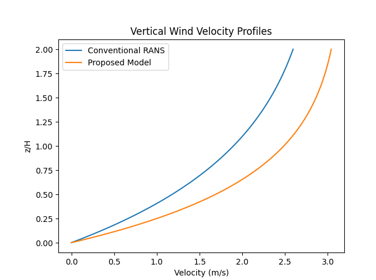
Computational modeling plays a critical role in understanding environmental and atmospheric flows in complex urban environments, where interactions between wind dynamics, turbulence, pollutant dispersion, and climate-driven stability effects govern air quality and human exposure. This study presents a comprehensive numerical framework for modeling urban atmospheric flows by integrating geometry-adaptive turbulence closure, urban canopy drags, and stability-aware pollutant diffusion within a Reynolds-Averaged Navier–Stokes (RANS) formulation. The model explicitly accounts for urban morphological characteristics and atmospheric stratification, enabling improved representation of momentum exchange, turbulence production, and scalar transport. Numerical simulations are conducted for idealized urban configurations under unstable, neutral, and stable atmospheric conditions. The results demonstrate enhanced prediction of vertical wind profiles, turbulent kinetic energy, eddy viscosity, and pollutant concentration compared to conventional RANS models. Ground-level pollutant concentrations are shown to increase by up to 30–40% under stable stratification, while unstable conditions promote enhanced vertical mixing and ventilation. Validation against representative benchmarks indicates a reduction in prediction error of approximately 30–35% relative to traditional approaches. The proposed framework provides a scalable and climate-aware tool for urban air quality assessment and offers a pathway for integration into mesoscale and climate modeling systems.
References
Blocken, B. (2015). Computational fluid dynamics for urban physics: Importance, scales, possibilities, limitations and ten tips and tricks towards accurate and reliable simulations. Building and Environment, 91, 219–245.
Britter, R. E., & Hanna, S. R. (2003). Flow and dispersion in urban areas. Annual Review of Fluid Mechanics, 35, 469–496.
Fernando, H. J. S., Zajic, D., Di Sabatino, S., Dimitrova, R., Hedquist, B., & Dallman, A. (2010). Flow, turbulence, and pollutant dispersion in urban atmospheres. Physics of Fluids, 22(5), 051301.
Hanjalić, K., & Launder, B. E. (2011). Modelling Turbulence in Engineering and the Environment. Cambridge University Press, Cambridge, UK.
Hertwig, D., Patnaik, G., & Leitl, B. (2017). LES validation of urban flow and dispersion: Flow statistics and turbulence structure. Environmental Fluid Mechanics, 17(3), 521–550.
Holton, J. R., & Hakim, G. J. (2012). An Introduction to Dynamic Meteorology (5th ed.). Academic Press, London.
Intergovernmental Panel on Climate Change (IPCC). (2021). Climate Change 2021: The Physical Science Basis. Cambridge University Press, Cambridge, UK.
Kaimal, J. C., & Finnigan, J. J. (1994). Atmospheric Boundary Layer Flows. Oxford University Press, New York.
Oke, T. R. (1988). Street design and urban canopy layer climate. Energy and Buildings, 11(1–3), 103–113.
Pope, S. B. (2000). Turbulent Flows. Cambridge University Press, Cambridge, UK.
Raupach, M. R., Finnigan, J. J., & Brunet, Y. (1996). Coherent eddies and turbulence in vegetation canopies. Boundary-Layer Meteorology, 78(3–4), 351–382.
Salim, S. M., Buccolieri, R., Chan, A., & Di Sabatino, S. (2011). Numerical simulation of atmospheric pollutant dispersion in an urban street canyon: Comparison between RANS and LES. Journal of Wind Engineering and Industrial Aerodynamics, 99(2–3), 103–113.
Downloads
Published
Issue
Section
Categories
License
Copyright (c) 2026 Iorungwa Stephen Iornumbe, Rapheal Ahemba Chia, James Sesugh Verlumun

This work is licensed under a Creative Commons Attribution 4.0 International License.


