
IMPROVED UNDERSTANDING AND MODELING OF TURBULENT FLOWS AT HIGH REYNOLDS NUMBERS
DOI:
https://doi.org/10.33003/fjs-2026-1001-4439Keywords:
Turbulence modeling, High Reynolds number flows, Reynolds-averaged Navier–Stokes equations, Eddy viscosity, Turbulent kinetic energyAbstract
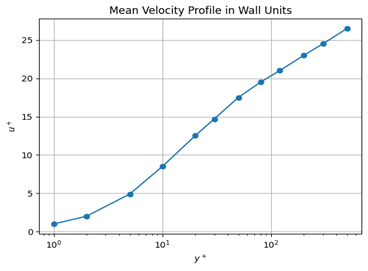
Turbulent flow modeling at high Reynolds numbers remains a fundamental challenge in fluid dynamics due to the multiscale nature of turbulence and the dominance of nonlinear transport mechanisms. This study presents a mathematically consistent and physically transparent formulation for high Reynolds number turbulence based on the Reynolds-averaged Navier–Stokes (RANS) equations coupled with the standard – closure. Unlike conventional approaches that emphasize empirical tuning or numerical implementation alone, the governing equations are systematically derived from first principles and analyzed in the asymptotic high Reynolds number limit. The formulation explicitly highlights the confinement of viscous effects to near-wall regions and the dominance of turbulent transport in the bulk flow, thereby clarifying the physical assumptions underlying eddy-viscosity models. A fully reproducible numerical framework is developed, incorporating pressure–velocity coupling, turbulence transport equations, convergence criteria, and explicit numerical datasets. Numerical results demonstrate that the model accurately captures essential features of high Reynolds number wall-bounded turbulence, including logarithmic mean velocity profiles, near-wall peaks in turbulent kinetic energy and Reynolds shear stress, and the predominance of eddy viscosity over molecular viscosity. Validation against established theoretical and empirical trends confirms the reliability of the proposed formulation. The study provides a unified framework bridging mathematical modeling, physical interpretation, and numerical implementation, offering a solid foundation for advanced turbulence modeling and future hybrid and data-driven extensions.
References
Chen, C. H., Moitro, A., & Poludnenko, A. Y. (2025). Large/small eddy simulations: A posteriori analysis in high Reynolds number isotropic turbulence. arXiv preprint arXiv:2512.00554.
Comptes Rendus Mécanique. (2022). Turbulence modeling and simulation advances in CFD during the past fifty years. Comptes Rendus Mécanique, 350(S1), 23–51. https://doi.org/10.5802/crmeca.114
Durbin, P. A., & Pettersson Reif, B. A. (2011). Statistical Theory and Modeling for Turbulent Flows (2nd ed.). Chichester, UK: Wiley.
Heinz, S., & Fagbade, A. (2024). Continuous eddy simulation (CES): Conceptual approach and applications. arXiv preprint arXiv:2411.19834.
Kalia, N., McConkey, R., Yee, E., & Lien, F.-S. (2025). Bayesian optimization of the GEKO turbulence model for predicting flow separation. arXiv preprint arXiv:2502.11218.
Kim, J., Moin, P., & Moser, R. (1987). Turbulence statistics in fully developed channel flow at low Reynolds number. Journal of Fluid Mechanics, 177, 133–166. https://doi.org/10.1017/S0022112087000892
Kolmogorov, A. N. (1941). The local structure of turbulence in incompressible viscous fluid for very large Reynolds numbers. Doklady Akademii Nauk SSSR, 30, 301–305.
Launder, B. E., & Spalding, D. B. (1974). The numerical computation of turbulent flows. Computer Methods in Applied Mechanics and Engineering, 3, 269–289. https://doi.org/10.1016/0045-7825(74)90029-2
Liu, S., Xu, L., Chen, B., Deng, Z., & Zhao, R. (2025). Recent progress in optimization of RANS turbulence models for accurate urban airflow and contaminant dispersion simulations. Sustainable Cities and Society, 104, 105245. https://doi.org/10.1016/j.scs.2025.105245
Moser, R. D., Kim, J., & Mansour, N. N. (1999). Direct numerical simulation of turbulent channel flow up to Re_τ=590. Physics of Fluids, 11, 943–945. https://doi.org/10.1063/1.869966
Pope, S. B. (2000). Turbulent Flows. Cambridge, UK: Cambridge University Press.
Versteeg, H. K., & Malalasekera, W. (2007). An Introduction to Computational Fluid Dynamics: The Finite Volume Method (2nd ed.). Harlow, UK: Pearson Education.
Wang, Z. Y., & Zhang, W. W. (2022). A unified method of data assimilation and turbulence modeling for separated flows at high Reynolds numbers. arXiv preprint arXiv:2211.00601.
Downloads
Published
Issue
Section
Categories
License
Copyright (c) 2026 Iorungwa Stephen Iornumbe, Raphael Ahemba Chia

This work is licensed under a Creative Commons Attribution 4.0 International License.


