
SCREENING, THERMAL CYCLING AND CONTAINER COMPATIBILITY ANALYSIS OF INORGANIC PHASE CHANGE MATERIALS (PCMS) FOR HIGH TEMPERATURE (200 TO 400OC) THERMAL ENERGY STORAGE IN SOLAR COOKERS
DOI:
https://doi.org/10.33003/fjs-2026-1004-4592Keywords:
Aluminium, Stainless Steel, health hazard, chemical stability, cycling stabilityAbstract
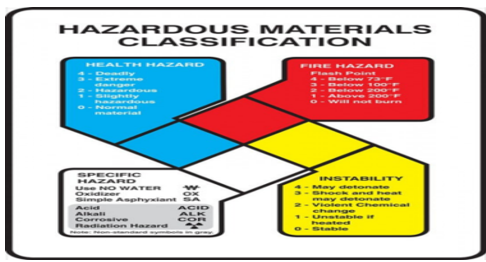
Solar energy offers clean and sustainable pathway for cooking; however, the inability of conventional solar cookers to operate beyond daylight hours severely limits their practical deployment. Integrating thermal energy storage (TES) based on phase change materials (PCMs) can overcome this limitation by storing excess solar heat and releasing it during periods without solar radiation. The identification of safe, efficient, and economically viable PCMs is therefore critical for advancing solar cooking technologies. This study systematically evaluates inorganic PCMs for latent heat TES in solar cookers. Twenty-nine candidate materials were pre-screened using health hazard classification (NFPA classes 0–2), latent heat capacity (>100 J g⁻¹), and economic considerations. Four materials—NaNO₃, KNO₃, NaNO₃/KNO₃ (solar salt), and NaCl/KCl—met the initial criteria. Thermo physical assessment excluded NaCl/KCl due to its high melting temperature (≈630 °C), unsuitable for cooking applications. The remaining PCMs were characterized using Fourier Transform Infrared Spectroscopy (FTIR) and Differential Scanning Calorimetry (DSC) to determine chemical stability and phase transition properties. Thermal reliability and container compatibility were evaluated through 100 heating–cooling cycles of solar salt in contact with stainless steel and aluminum. Solar salt retained 88.3% of its initial latent heat storage capacity and structural integrity, demonstrating strong thermal stability. Compatibility tests indicate that stainless steel is suitable as a storage container, whereas aluminum exhibits adverse interactions with the PCM. Overall, NaNO₃/KNO₃ (solar salt) emerges as a safe, cost-effective, and thermally stable PCM for long-term TES in solar cookers, enabling operation beyond daylight hours and enhancing practicality of solar cooking systems.
References
Chen, G. and Wan, L., (2011), Research and application of thermal storage with phase change materials, pp250–253.
Faidah, A. S. (2009) Fast thermal cycling of acetanilide and magnesium chloride hexahydrate for indoor solar cooking, Energy Convers. Manag., 50(12): 3104–3111, doi: 10.1016/j.enconman.2009.08.020.
Foong, C. W., Nydal, O. J., and Løvseth, J. (2011) Investigation of a small scale double-reflector solar concentrating system with high temperature heat storage, Appl. Therm. Eng., 31(10): 1807–1815, doi: 10.1016/j.applthermaleng.2011.02.026
Gasia, J., Martin, M., Barreneche, C., and Cabeza, L. F. (2017) Phase Change Material Selection for Thermal Processes Working under Partial Load Operating Conditions in the Temperature Range between 120 and 200 °C, Applied sciences, 7(7), 722; https://doi.org/10.3390/app7070722
Gomez, J. C. (2011) High-Temperature Phase Change Materials (PCM) Candidates for Thermal Energy Storage (TES) Applications, Milestone Report NREL/TP-5500-51446, Prepared under Task No. CP09.2201, Contract No. DE-AC36-08GO28308
Haillot, D. , Bauer, T., Kröner, U., and Tamme, R., (2011), Thermochimica Acta Thermal analysis of phase change materials in the temperature range 120 – 150 ◦ C, Thermochim. Acta, 513(1–2): 49–59, doi: 10.1016/j.tca.2010.11.011
Jason Lonergan, Vitaliy Goncharov, Michaella Swinhart, Kyle Makovsky, Mark Rollog, Bruce McNamara, Richard Clark, Derek Cutforth, Christopher Armstrong, Xiaofeng Guo, Patricia Paviet, (2023), Thermodynamic investigation of the NaCl-KCl salt system from 25 to 950 °C, Journal of Molecular Liquids, Volume 391, Part A,122591,ISSN 0167-7322, https://doi.org/10.1016/j.molliq.2023.122591.
Jriri, T., Rogez, J., Bergman, C. and Mathieu, J. C. (1995), Thermodynamic study of the condensed phases of NaNO3, KNO3 and CaNO3 and their transitions,” Thermochim. Acta, 266: 147–161, doi: 10.1016/0040-6031(95)02337-2.
Kenisarin, M. M. (2009), High-temperature phase change materials for thermal energy storage, 14: 955–970, doi: 10.1016/j.rser.2009.11.011.
Lomonaco, A., Haillot, D., Pernot, E., Franquet, E., and Bédécarrats, J. (2015), Solar Energy Materials & Solar Cells Sodium nitrate thermal behavior in latent heat thermal energy storage : A study of the impact of sodium nitrite on melting temperature and enthalpy, Sol. Energy Mater. Sol. Cells, 149: 81–87, doi: 10.1016/j.solmat.2015.12.043.
Majó, M., Svobodova-Sedlackova, A., Fernández, A. I., Calderón, A., & Barreneche, C. (2024). Thermal cycling test of solar salt in contact with sustainable solid particles for concentrating solar power (CSP) plants. Energies, 17(10), 2349.
Maldonado, J. M., Fullana-Puig, M., Martín, M., Solé, A., Fernández, A. G., de Gracia, A., and Cabeza, L. F. (2018), Phase Change Material Selection for Thermal Energy Storage at High Temperature Range between 210 ◦ C and 270 °C, Energies, 11(4): 86, https://doi.org/10.3390/en11040861
Miro, L., Barreneche, C., Ferrer, G., Solé, A., Martorell, I., & Cabeza, L. F. (2016). Health hazard, cycling and thermal stability as key parameters when selecting a suitable phase change material (PCM). Thermochimica acta, 627: 39-47..
Mofijur, M., Meurah, T., Mahlia, Silitonga, I., S., Ong, H. C., Silakhori, M., Hassan, M. H., Putra, N, and Ashrafur-Rahman, S.M. (2019) , Phase change materials (PCM) for solar energy usages and storage: An overview, Energies, 12(16): 1–20, doi: 10.3390/en12163167
Mohamed, S. A., Al-Sulaiman, F. A., Ibrahim, N. I., Zahir, Md. H., Al-Ahmed, A., Saidur, R., Yilbas, B.S., and Sahin, A.Z. (2017), A review on current status and challenges of inorganic phase change materials for thermal energy storage systems, Renew. Sustain. Energy Rev., 70: 1072–1089, doi: 10.1016/j.rser.2016.12.012.
Muhammad, M. D. (2018). Review of PCMS and heat transfer enhancement methods applied in parabolic trough solar plants thermal storage systems. Nigerian Journal of Technology, 37(1), 96-107.
Nazir, H., Batool, M., Francisco J., Osorio, B., Isaza-Ruiz, M., Xu, X., Vignarooban, K., Phelan, P., Arunachala, I., Kennan, M. (2018), International Journal of Heat and Mass Transfer Recent developments in phase change materials for energy storage applications : A review, Int. J. Heat Mass Transf., 129: 491–523, doi:10.1016/j.ijheatmasstransfer.2018.09.126.
Omara, A. A. M., Abuelnuor, A. A. A., Mohammed, H. A. and Habibi, D. (2020) Improving solar cooker performance using phase change materials : A comprehensive review, Sol. Energy, vol. 207: 539–563, doi: 10.1016/j.solener.2020.07.015.
Orozco, M. A., Acurio, K., Vásquez-Aza, F., Martínez-Gómez, J., & Chico-Proano, A. (2021). Thermal storage of nitrate salts as phase change materials (PCMs). Materials, 14(23):7223.
Michelsm H., and Pitz-paal, R.(2006), Cascaded latent heat storage for parabolic trough solar power plants, 81: 829–837, doi: 10.1016/j.solener.2006.09.008.
Patel, J. H., Darji, P. H. and Qureshi, M. N. (2017), Phase Change Material with Thermal Energy Storage System and its Applications: A Systematic Review, Indian J. Sci. Technol., 10(13):1–10, doi: 10.17485/ijst/2017/v10i13/112365.
Pavón-Moreno MC, Lopez-Paneque A, Gallardo JM, Paul A, Díaz-Gutierrez E, Prieto C. (2025), Critical Assessment of Migration Strategies for Corrosion in Molten Salts. Materials (Basel). 2025 Aug 13;18(16):3804. doi: 10.3390/ma18163804. PMID: 40870122; PMCID: PMC12387699.
Ruotong Xu, Cancan Zhang, Guoqiang Wang, Yuting Wu, Yuanwei Lu, (2025), Molten salt stress corrosion of metal alloys - An updated review, Solar Energy Materials and Solar Cells, Volume 282, 113379, ISSN 0927-0248, https://doi.org/10.1016/j.solmat.2024.113379.
D. Sergeev, G. Nénert, D. Rapp, F. Beckstein, M. Schöneich, M. Müller, J. Gertenbach, (2025), Comprehensive analysis of thermophysical properties of the NaNO3–KNO3 mixture with metastable phases, Journal of Materials Research and Technology, Volume 36, Pages 561-569, ISSN 2238-7854, https://doi.org/10.1016/j.jmrt.2025.03.128.
Saeed, R. M. R. (2016), Thermal characterization of phase change materials for thermal energy storage, Masters Theses. 7521. https://scholarsmine.mst.edu/masters_theses/7521
Tianying Zhang, Tieying Wang, Kaichen Wang, Chao Xu, Feng Ye, (2021), Development and characterization of NaCl-KCl/Kaolin composites for thermal energy storage, Solar Energy, Volume 227,Pages 468-476, ISSN 0038-092X, https://doi.org/10.1016/j.solener.2021.09.020.
Umar A. B., Gupta M. K., and Buddhi D. (2021), Thermal Cycle Testing of a few Selected Inorganic Salts as Latent Heat Storage Materials for High- Temperature Thermal Storage, International Journal of Engineering Trends and Technology, 69(8): 17-25, https://doi.org/10.14445/22315381/IJETT-V69I8P203
Usman, A., Garba, M. M., Danmallam, I. M., & Salihu, S. (2023). CORRELATION OF PHASE CHANGE MATERIALS ON INTEGRATED SOLAR WATER HEATING SYSTEMS. FUDMA JOURNAL OF SCIENCES, 6(6), 7-14. https://doi.org/10.33003/fjs-2022-0606-1126
Xiao, J., Huang, J., Zhu, P., Wang, C., and Li, X., (2014), Thermochimica Acta Preparation , characterization and thermal properties of binary nitrate salts / expanded graphite as composite phase change material, Thermochim. Acta, 587: 52–58, doi: 10.1016/j.tca.2014.04.021.
Xu, B., Li, P., and Chan, C., (2015) Application of phase change materials for thermal energy storage in concentrated solar thermal power plants : A review to recent developments, Applied Energy, 160: 286–307, https://doi.org/10.1016/j.apenergy.2015.09.016
Downloads
Published
Issue
Section
Categories
License
Copyright (c) 2026 Binta Zakari Bello, Muhammad Sani Yapeto, Mubarak Danladi Muhammad, Abdulkareem S Ahmed, Isa Garba

This work is licensed under a Creative Commons Attribution 4.0 International License.


