
ANTIBACTERIAL ACTIVITY OF ALLIUM SATIVUM (GARLIC) AGAINST NEISSERIA GONORRHOEAE AND TREPONEMA PALLIDUM
DOI:
https://doi.org/10.33003/fjs-2026-1001-4542Keywords:
Allium sativum, Garlic, Neisseria gonorrhoeae, Treponema pallidum, Antibacterial activity, Minimum Inhibitory Concentration (MIC), GC-MS, PhytochemicalsAbstract
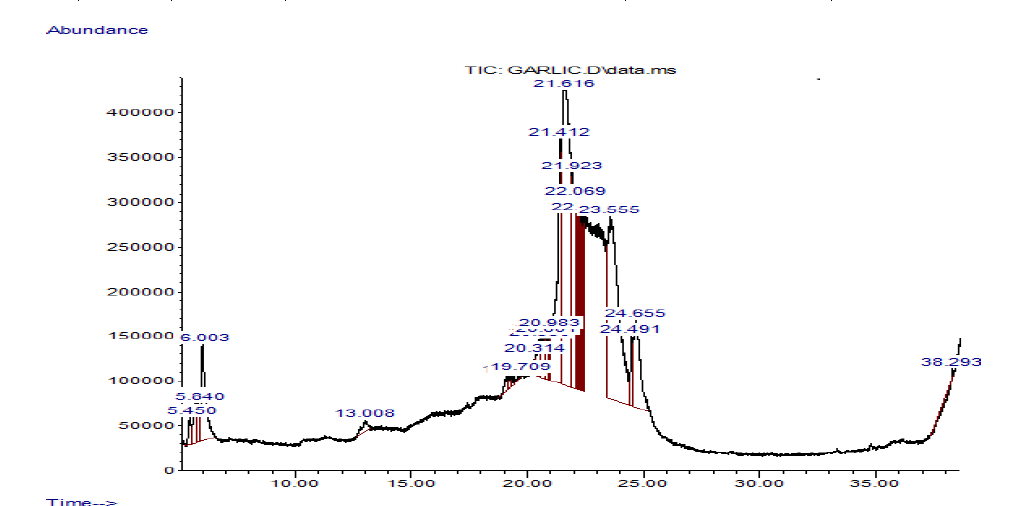
The emergence of multidrug-resistant strains of Neisseria gonorrhoeae and Treponema pallidum, the causative agents of gonorrhea and syphilis, necessitates the search for novel therapeutic agents . Allium sativum (garlic) has a long history of use in traditional medicine for its broad-spectrum antimicrobial properties. This study aimed to investigate the in vitro antibacterial activity of garlic extracts against clinical isolates of N. gonorrhoeae and T. pallidum. Fresh garlic juice was extracted and its phytochemical constituents were analyzed using Gas Chromatography-Mass Spectrometry (GC-MS). The antibacterial activity was evaluated using the agar well diffusion method (6 mm well diameter) to determine the zones of inhibition, and the broth dilution method was used to determine the Minimum Inhibitory Concentration (MIC). Concentrations of 25, 50, 75, and 100 mg/mL were tested. GC-MS analysis revealed 27 bioactive compounds. The major constituents were n-Hexadecanoic acid (25.72%), Oleic Acid (21.56%), and Hexadecanoic acid, ethyl ester (10.87%). The garlic extract demonstrated significant dose-dependent antibacterial activity against both pathogens. The highest zone of inhibition (16 mm) was observed at 100 mg/mL for N. gonorrhoeae. The MIC results indicated that the extract completely inhibited the growth of N. gonorrhoeae at 75 mg/mL and T. pallidum at 100 mg/mL. The findings confirm that Allium sativum possesses potent antibacterial activity against Neisseria gonorrhoeae and Treponema pallidum. It represents a promising candidate for developing alternative or adjunctive therapies against these antibiotic-resistant sexually transmitted infections.
References
Ankri, S., & Mirelman, D. (1999). Antimicrobial properties of allicin from garlic. Microbes and Infection, 1(2), 125–129. https://doi.org/10.1016/S1286-4579(99)80003-3
Bauer, A. W., Kirby, W. M., Sherris, J. C., & Turck, M. (1966). Antibiotic susceptibility testing by a standardized single disk method. American Journal of Clinical Pathology, 45(4), 493–496.
Bayan, L., Koulivand, P. H., & Gorji, A. (2014). Garlic: A review of potential therapeutic effects. Avicenna Journal of Phytomedicine, 4(1), 1–14.
Block, E. (2010). Garlic and other alliums: The lore and the science. Royal Society of Chemistry.
Borlinghaus, J., Albrecht, F., Gruhlke, M. C., Nwachukwu, I. D., & Slusarenko, A. J. (2014). Allicin: Chemistry and biological properties. Molecules, 19(8), 12591–12618. https://doi.org/10.3390/molecules190812591
Centers for Disease Control and Prevention. (2019). Sexually transmitted disease surveillance 2018. U.S. Department of Health and Human Services.
Cos, P., Vlietinck, A. J., Berghe, D. V., & Maes, L. (2006). Anti-infective potential of natural products: How to develop a stronger in vitro 'proof-of-concept'. Journal of Ethnopharmacology, 106(3), 290–302. https://doi.org/10.1016/j.jep.2006.04.003
Cowan, M. M. (1999). Plant products as antimicrobial agents. Clinical Microbiology Reviews, 12(4), 564–582. https://doi.org/10.1128/CMR.12.4.564
Cox, D. L., & Radolf, J. D. (2001). The outer membrane of Treponema pallidum. In Pathogenic treponema: Molecular and cellular biology. Caister Academic Press.
Cutler, R. R., & Wilson, P. (2004). Antibacterial activity of a new, stable, aqueous extract of allicin against methicillin-resistant Staphylococcus aureus. British Journal of Biomedical Science, 61(2), 71–74. https://doi.org/10.1080/09674845.2004.11732650
Deresse, D. (2010). Antibacterial effect of garlic (Allium sativum) on Staphylococcus aureus: An in vitro study. Asian Journal of Medical Sciences, 2(2), 62–65.
Desbois, A. P., & Smith, V. J. (2010). Antibacterial free fatty acids: Activities, mechanisms of action and biotechnological potential. Applied Microbiology and Biotechnology, 85(6), 1629–1642. https://doi.org/10.1007/s00253-009-2355-3
Gibbons, S. (2004). Anti-staphylococcal plant natural products. Natural Product Reports, 21(2), 263–277. https://doi.org/10.1039/B212695H
Hemaiswarya, S., Kruthiventi, A. K., & Doble, M. (2008). Synergism between natural products and antibiotics against infectious diseases. Phytomedicine, 15(8), 639–652. https://doi.org/10.1016/j.phymed.2008.06.008
Hook, E. W., III. (2017). Syphilis. The Lancet, 389(10078), 1550–1557. https://doi.org/10.1016/S0140-6736(16)32411-4
Huang, C. B., Alimova, Y., Myers, T. M., & Ebersole, J. L. (2011). Short- and medium-chain fatty acids exhibit antimicrobial activity for oral microorganisms. Archives of Oral Biology, 56(7), 650–654. https://doi.org/10.1016/j.archoralbio.2011.01.011
Iberl, B., Winkler, G., & Knobloch, K. (1990). Products of allicin transformation: Ajoenes and dithiins, characterization and their determination by HPLC. Planta Medica, 56(2), 202–211. https://doi.org/10.1055/s-2006-960926
Jaber, M. A., & Al-Mossawi, A. A. (2007). Susceptibility of some multiple resistant bacteria to garlic extracts. African Journal of Biotechnology, 6(6), 771–776.
Kaur, P., Kumar, N., & Shivan, T. N. (2011). Phytochemical screening and antimicrobial activity of the plant extracts of Mimosa pudica L. against selected microbes. Journal of Medicinal Plants Research, 5(22), 5356–5359.
Lanzotti, V., Scala, F., & Bonanomi, G. (2014). Compounds from Allium species with cytotoxic and antimicrobial activity. Phytochemistry Reviews, 13(4), 769–791. https://doi.org/10.1007/s11101-014-9366-0
Lawson, L. D., & Hughes, B. G. (1992). Characterization of the formation of allicin and other thiosulfinates from garlic. Planta Medica, 58(4), 345–350. https://doi.org/10.1055/s-2006-961482
Liu, Q., Meng, X., Li, Y., Zhao, C.-N., Tang, G.-Y., & Li, H.-B. (2017). Antibacterial and antifungal activities of spices. International Journal of Molecular Sciences, 18(6), 1283. https://doi.org/10.3390/ijms18061283
McGaw, L. J., Jäger, A. K., & van Staden, J. (2002). Antibacterial effects of fatty acids and related compounds from plants. South African Journal of Botany, 68(4), 417–423. https://doi.org/10.1016/S0254-6299(15)30367-7
Nikado, H. (2003). Molecular basis of bacterial outer membrane permeability revisited. Microbiology and Molecular Biology Reviews, 67(4), 593–656. https://doi.org/10.1128/MMBR.67.4.593-656.2003
Nweze, E. I., & Eze, E. E. (2009). Justification for the use of Ocimum gratissimum L. in herbal medicine and its interaction with disc antibiotics. BMC Complementary and Alternative Medicine, 9, 37. https://doi.org/10.1186/1472-6882-9-37
Ohnishi, M., Golparian, D., Shimuta, K., Saika, T., Hoshina, S., Iwasaku, K., Nakayama, S., Kitawaki, J., & Unemo, M. (2011). Is Neisseria gonorrhoeae initiating a future era of untreatable gonorrhea? Detailed characterization of the first strain with high-level resistance to ceftriaxone. Antimicrobial Agents and Chemotherapy, 55(7), 3538–3545. https://doi.org/10.1128/AAC.00325-11
Packer, J., Naz, T., Larger, M. T., & Penders, B. (2016). The rise of the medicinal plant industry: A global overview. Journal of Ethnopharmacology, 183, 1–5. https://doi.org/10.1016/j.jep.2016.02.022
Pankey, G. A., & Sabath, L. D. (2004). Clinical relevance of bacteriostatic versus bactericidal mechanisms of action in the treatment of Gram-positive bacterial infections. Clinical Infectious Diseases, 38(6), 864–870. https://doi.org/10.1086/381972
Radolf, J. D., & Kumar, S. (2018). The Treponema pallidum outer membrane. Current Topics in Microbiology and Immunology, 415, 1–38. https://doi.org/10.1007/82_2017_44
Rouse, M. S., Rotger, M., Piper, K. E., Steckelberg, J. M., Scholz, M., Andrews, J., & Patel, R. (2007). In vitro and in vivo evaluations of the activities of lauric acid monoester formulations against Staphylococcus aureus. Antimicrobial Agents and Chemotherapy, 51(10), 3655–3659. https://doi.org/10.1128/AAC.00601-07
Shafer, W. M., & Qu, X. (2013). The Neisseria gonorrhoeae cell envelope: A target for novel therapeutics. Current Drug Targets, 14(4), 431–440. https://doi.org/10.2174/1389450111314040004
Stamm, L. V. (2010). Global challenge of antibiotic-resistant Treponema pallidum. Antimicrobial Agents and Chemotherapy, 54(2), 583–589. https://doi.org/10.1128/AAC.01095-09
Sun, C. Q., O'Connor, C. J., & Robertson, A. M. (2003). Antibacterial actions of fatty acids and monoglycerides against Helicobacter pylori. FEMS Immunology & Medical Microbiology, 36(1–2), 9–17. https://doi.org/10.1016/S0928-8244(03)00008-7
Tsao, S. M., & Yin, M. C. (2001). In-vitro antimicrobial activity of four diallyl sulphides occurring naturally in garlic and Chinese leek oils. Journal of Medical Microbiology, 50(7), 646–649. https://doi.org/10.1099/0022-1317-50-7-646
Unemo, M., & Shafer, W. M. (2014). Antimicrobial resistance in Neisseria gonorrhoeae in the 21st century: Past, evolution, and future. Clinical Microbiology Reviews, 27(3), 587–613. https://doi.org/10.1128/CMR.00010-14
Ventola, C. L. (2015). The antibiotic resistance crisis: Part 1: Causes and threats. P&T, 40(4), 277–283.
Zheng, C. J., Yoo, J. S., Lee, T. G., Cho, H. Y., Kim, Y. H., & Kim, W. G. (2005). Fatty acid synthesis is a target for antibacterial activity of unsaturated fatty acids. FEBS Letters, 579(23), 5157–5162. https://doi.org/10.1016/j.febslet.2005.08.028
Downloads
Published
Issue
Section
Categories
License
Copyright (c) 2026 Abubakar Nawaf, Surajo Sandamu Hafiz

This work is licensed under a Creative Commons Attribution 4.0 International License.


