
SPECIES COMPOSITION AND RELATIVE ABUNDANCE OF EXOPHILIC MOSQUITOES FROM KANO STATE NORTHWEST-NIGERIA
DOI:
https://doi.org/10.33003/fjs-2026-1002-4444Keywords:
Exophilic,- Kano, Mosquitoes, Species composition, Relative abundanceAbstract
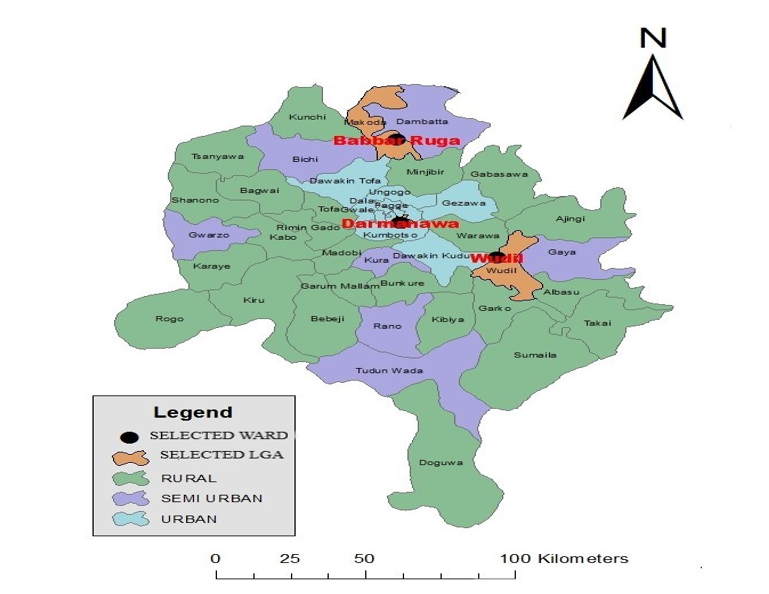
Exophilic mosquito populations play a key role in mosquito borne diseases transmission dynamics. Factors like climate change, urbanization and deforestation are increasing abundance while interventions target endophilic mosquitoes, potentially shifting more transmission to exophilic species. Study on exophilic mosquito species composition and relative abundance was carried out in some parts of Kano State. The exophilic mosquitoes were collected once monthly for the period of twelve months from different sites including Darmanawa in Tarauni LGA, Babban Gura in Makoda LGA and Unguwar Fulani in Wudil LGA using cardboard boxes placed in an undisturbed area of two randomly selected households from 6 pm to 8 am. The mosquitoes species collected were identified morphologically to species level with the aid of reported taxonomic guides. A total of 520 mosquitoes were collected which wer identified into 17 species across 5 genera. Higher significant (p <0.05) species composition were observed among Culex quinquefasciatus (32.1%), Culex pipiens (28.7%) and Anopheles gambiae (16.9%) respectively. The relative abundance of exophilic mosquitoes was significant influenced by month ( F= 2.481, p > 0.05), species (F = 1.35, p > 0.05), site (F =1.715, p > 0.05) and season (F =1.181, p > 0.05). Exophilic mosquito populations is diverse with peak of the collection in October and Darmanawa site had the highest number of mosquitoes.
Downloads
Published
Issue
Section
Categories
License
Copyright (c) 2026 Jibril Muhammad Abdullahi, Mustapha Dogara Musa, Abdulazeez Adeniy Kamoru, Babalola Balogun Joshua

This work is licensed under a Creative Commons Attribution 4.0 International License.


