NEPHROPROTECTIVE EFFECTS OF Alstonia boonei AGAINST ASPIRIN-INDUCED RENAL ALTERATIONS IN ALBINO RATS
DOI:
https://doi.org/10.33003/fjs-2026-1002-4358Keywords:
Alstonia boonei, Renal Function, Aspirin, Kidney Histology, Nephrotoxicity, Medicinal PlantsAbstract
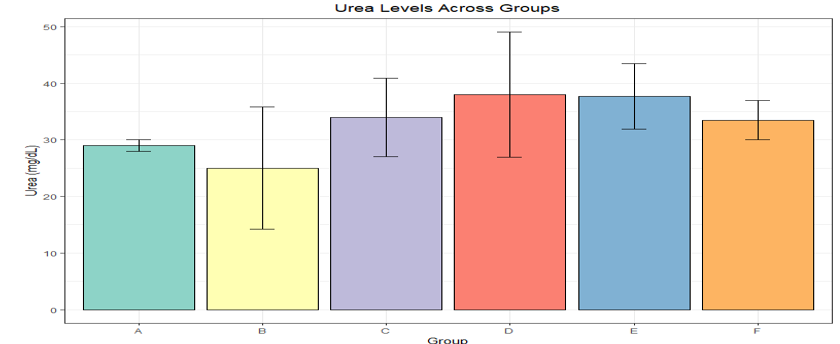
The kidneys play a critical role in maintaining fluid and electrolyte balance and are vulnerable to pharmacological stress. Aspirin is widely used for its analgesic and anti-inflammatory properties; however, concerns regarding its renal safety persist Alstonia boonei is a medicinal plant reported to possess antioxidant and organ-supportive properties. This study evaluated the renal safety and supportive effects of A. boonei during aspirin administration in albino rats. Thirty rats were randomly assigned to six groups: control, aspirin only (10 mg/kg), A. boonei only (1000 mg/kg), and aspirin combined with A. boonei (1000, 1500, or 2000 mg/kg) for 14 days. Body weight, kidney weight, renal biochemical markers, and kidney histology were assessed. All groups exhibited normal weight gain, indicating absence of overt systemic toxicity. Aspirin administration was associated with reduced kidney weights relative to controls, suggesting mild structural sensitivity, while extract-treated and co-treated groups showed partial preservation of kidney mass, particularly at moderate extract doses. Renal biochemical indices remained stable, with serum urea ranging from 25.00 ± 10.82 to 38.00 ± 11.02 mg/dL, creatinine from 0.83 ± 0.15 to 1.05 ± 0.15 mg/dL, sodium from 137.33 ± 0.88 to 140.33 ± 1.45 mmol/L, and potassium from 3.90 ± 0.10 to 4.07 ± 0.15 mmol/L across groups, showing no statistically significant differences. Histology showed preserved glomerular and tubular architecture across groups. Low dose aspirin did not cause overt renal toxicity, while A. boonei was renally safe. Co-administration, particularly at moderate doses, supported renal structural and biochemical stability during aspirin exposure.
References
Adesina, A. F., Apata, J. T., Babalola, O. O., Otuechere, C. A., Adekola, M. B., Ogunleye, G. S., & Asaolu, F. (2025). Hepatoprotective activity of Alstonia boonei (De Wild) stem bark in isoniazid-induced Wistar rats: Antioxidant, anti-inflammatory and in silico evaluations. Pharmacological Research - Modern Chinese Medicine, 14, Article 100558. https://doi.org/10.1016/j.prmcm.2024.100558
Allameh, A., Niayesh-Mehr, R., Aliarab, A., Sebastiani, G., & Pantopoulos, K. (2023). Oxidative Stress in Liver Pathophysiology and Disease. Antioxidants (Basel, Switzerland), 12(9), 1653. https://doi.org/10.3390/antiox12091653
Arif, H., & Aggarwal, S. (2023, July 5). Salicylic acid (aspirin). In StatPearls. StatPearls Publishing. Retrieved [2024, December 6], from https://www.ncbi.nlm.nih.gov/books/NBK519032/
Berumen, J., Baglieri, J., Kisseleva, T., & Mekeel, K. (2021). Liver fibrosis: Pathophysiology and clinical implications. WIREs mechanisms of disease, 13(1), e1499. https://doi.org/10.1002/wsbm.1499
Borgne-Sanchez, A., & Fromenty, B. (2025). Mitochondrial dysfunction in drug-induced hepatic steatosis: Recent findings and current concept. Clinics and Research in Hepatology and Gastroenterology, 49(3), Article 102529. https://doi.org/10.1016/j.clinre.2025.102529
Chen, Y., Mei, Y.Q., Hou, L., & Li, K.J. (2025). Therapeutic potential of plant-derived natural products against drug-induced liver injury. Frontiers in Pharmacology,16:1652860. doi: 10.3389/fphar.2025.1652860. PMID: 40959446; PMCID: PMC12434476.
Elshaer, A. & Lizaola-Mayo, B.C. (2024). Evaluating the Role of Aspirin in Liver Disease: Efficacy, Safety, Potential Benefits and Risks. Life (Basel). 14(12):1701. doi: 10.3390/life14121701. PMID: 39768407; PMCID: PMC11679757.
Gonfa, Y. H., Bachheti, A., Semwal, P., Rai, N., Singab, A. N., & Bachheti, R. K. (2024). Hepatoprotective activity of medicinal plants, their phytochemistry, and safety concerns: a systematic review. Zeitschrift fur Naturforschung. C, Journal of biosciences, 80(3-4), 61–73. https://doi.org/10.1515/znc-2024-0116
Hassan, M., Kansky, B., Sudhakar, H., El-Feki, I., Nguyen, T., & Lopera, S. (2025). Detection to prediction: Biomarkers in severe drug-induced liver injury. American Journal of Clinical and Medical Research, 5(6), 971. https://doi.org/10.71010/AJCMR.2025-e224
Hora, S. & Wuestefeld, T. (2023). Liver Injury and Regeneration: Current Understanding, New Approaches, and Future Perspectives. Cells, 12(17):2129. doi: 10.3390/cells12172129. PMID: 37681858; PMCID: PMC10486351.
Hu, Q., Zhang, S., Liu, J., Liu, Y., Chen, X., & Wang, J. (2025). A review: Hepatoprotective compounds and its mechanism of medicine-food homology resources. Agricultural Products Processing and Storage, 1, Article 5. https://doi.org/10.1007/s44462-025-00009-5
Huang, C. H., Wang, C. L., Wu, V. C., Hsieh, Y. C., Wu, C. L., Zeng, Z. F., Huang, Y. T., Hsu, C. W., Chien, R. N., & Chang, S. H. (2025). Association of aspirin use alone with mortality and liver-related events in MASLD: a multi-institutional three-year study. Annals of medicine, 57(1), 2573146. https://doi.org/10.1080/07853890.2025.2573146
Jiang, Z.-W., Wang, Y.-S., Tan, W.-L., Feng, B., Zhang, M.-C., Liao, H.-Q., Wan, J., Chen, X., & Xie, Z.-Q. (2025). Combined use of aspirin and statins is associated with increased risk of metabolic dysfunction–associated steatotic liver disease: A study from National Health and Nutrition Examination Survey. Gastroenterology Research and Practice, 2025, Article 9931208. https://doi.org/10.1155/grp/9931208
Kim, S. R., Park, J. W., Choi, Y. J., Sonn, S. K., Oh, G. T., Lee, B. H., & Chang, T. S. (2023). Mitochondrial H2O2 Is a Central Mediator of Diclofenac-Induced Hepatocellular Injury. Antioxidants (Basel, Switzerland), 13(1), 17. https://doi.org/10.3390/antiox13010017
Kobayashi, T., Iwaki, M., Nogami, A., & Yoneda, M. (2023). Epidemiology and Management of Drug-induced Liver Injury: Importance of the Updated RUCAM. Journal of clinical and translational hepatology, 11(5), 1239–1245. https://doi.org/10.14218/JCTH.2022.00067S
Li, C., Zhang, Q., Chen, Z., Hu, W., & Liu, F. (2025). Food plants as adjuvant medicines: a review of protective effects and clinical potential in alcoholic liver disease. Frontiers in pharmacology, 16, 1586238. https://doi.org/10.3389/fphar.2025.1586238
Liao, Y., Lv, F., Quan, T., Wang, C., & Li, J. (2024). Flavonoids in natural products for the therapy of liver diseases: progress and future opportunities. Frontiers in pharmacology, 15, 1485065. https://doi.org/10.3389/fphar.2024.1485065
McGill, M. R., & Jaeschke, H. (2018). Biomarkers of drug-induced liver injury: progress and utility in research, medicine, and regulation. Expert review of molecular diagnostics, 18(9), 797–807. https://doi.org/10.1080/14737159.2018.1508998
Mishra, N. M., Chouhan, K., Prasad, S., Ghatuary, S., & More, P. (2025). A comprehensive review on phytochemical and pharmacological properties of Alstonia scholaris. International Journal of Innovations in Science Engineering and Management, 4(3), 401–407. https://doi.org/10.69968/ijisem.2025v4i3401-407
Okpashi, V. E., Uroko, R. I., Ogana, J., Agbafor, A., & Nwuke, C. P. (2022). Effect of Alstonia boonei stem bark extracts on the activity of liver marker enzymes in rats induced by CCl4. Baghdad Science Journal, 19(5), Article 7. https://doi.org/10.21123/bsj.2022.6107
Olanlokun, J. O., Olowofolahan, A. O., Bodede, O., Adegbuyi, A. T., Prinsloo, G., Steenkamp, P., & Olorunsogo, O. O. (2021). Anti-Inflammatory Potentials of the n-Hexane Fraction of Alstonia boonei Stem Bark in Lipopolysaccharide-Induced Inflammation in Wistar Rats. Journal of inflammation research, 14, 3905–3920. https://doi.org/10.2147/JIR.S304076
Organisation for Economic Co-operation and Development (OECD). (2022, June 30). Test No. 425: Acute Oral Toxicity: Up-and-Down Procedure. OECD Guidelines for the Testing of Chemicals, Section 4. https://www.oecd.org/en/publications/2022/06/test-no-425-acute-oral-toxicity-up-and-down-procedure_g1gh2953.html
Sharma, S., & Goyal, S. (2022). A comprehensive review on phytochemical and pharmacological profile of Alstonia scholaris (L.) R. Br. International Journal of Pharmaceutical Research and Applications, 7(2), 574–579. https://doi.org/10.35629/7781-0702574579
Skat-Rørdam, J., Lykkesfeldt, J., Gluud, L. L., & Tveden-Nyborg, P. (2025). Mechanisms of drug induced liver injury. Cellular and molecular life sciences: CMLS, 82(1), 213. https://doi.org/10.1007/s00018-025-05744-3
Taiwo, J. E., Shemishere, U. B., & Omoregie, E. S. (2019). Assessment of hepatoprotective effect of extracts of Alstonia boonei leaf in isoniazid and rifampicin co-treated rats. World Journal of Biomedicine and Pharmaceutical Sciences, 3, 1–6. http://www.brsfoundation.org/wjbps
Uroko, R., Sangodare, R., Onyeabo, C., Agbafor, A., Uchenna, O., Nwuke, C., & Asadu, C. (2020). Investigation of antioxidant compositions and antioxidative activities of ethanol extract of Alstonia boonei stem bark. Nigerian Journal of Pharmaceutical Research, 16(1), 71–80. https://doi.org/10.4314/njpr.v16i1.8
Villanueva-Paz, M., Morán, L., López-Alcántara, N., Freixo, C., Andrade, R. J., Lucena, M. I., & Cubero, F. J. (2021). Oxidative Stress in Drug-Induced Liver Injury (DILI): From Mechanisms to Biomarkers for Use in Clinical Practice. Antioxidants (Basel, Switzerland), 10(3), 390. https://doi.org/10.3390/antiox10030390
Visagie, J. L., Aruwajoye, G. S., & van der Sluis, R. (2024). Pharmacokinetics of aspirin: Evaluating shortcomings in the literature. Expert Opinion on Drug Metabolism & Toxicology, 20(8), 727-740. https://doi.org/10.1080/17425255.2024.2386368
Wang, L., Shao, Z., Wang, X., Lu, W., & Sun, H. (2025). Xenobiotic-induced liver injury: Molecular mechanisms and disease progression. Ecotoxicology and Environmental Safety, 303, Article 118854. https://doi.org/10.1016/j.ecoenv.2025.118854
Wang, S., Sun, M., Tang, M., Yang, Z., Shan, J., & Yang, C. (2025). Aspirin attenuates liver fibrosis via autophagy induction. Journal of Cellular and Molecular Medicine, 29, e70696. https://doi.org/10.1111/jcmm.70696
Downloads
Published
Issue
Section
Categories
License
Copyright (c) 2026 Efosa Bolaji Odigie, Blessing Emosho Ogeyemhe

This work is licensed under a Creative Commons Attribution 4.0 International License.