
COMPARATIVE ANALYSIS OF THE TRANSMISSION COEFFICIENTS OF THE 1D RECTANGULAR POTENTIAL BARRIER FOR Ge, Si, GaAs & Al0.37Ga0.63As
DOI:
https://doi.org/10.33003/fjs-2026-1002-4293Keywords:
Barrier Potential, Tunneling, Transmission CoefficientAbstract
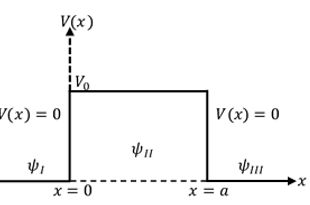
Python programming is used in the comparative analysis of the transmission coefficients, T, as function of barrier width, “a”, barrier height “V0”, and particle energy “E”. These variables are chosen in pairs of various combinations, while keeping one of the variables a constant. Four semiconductor materials types [Germanium (Ge), Silicon (Si), Gallium Arsenide (GaAs) and Aluminum Gallium Arsenide (Al0.37Ga0.63As)] are chosen and the idealized 1D rectangular single-barrier potential is used as the model. Results show that increasing the particle energy enhances tunneling probability, leading to peaks of 0.79, 0.55, 0.46 and 0.36 at energies 0.50eV for Ge, 0.88eV for Si, 1.19eV for GaAs and 1.69eV for Al0.37Ga0.63As respectively which may indicate resonance. Moreover, irrespective of the choice of (E, Vo) for each material, the transmission coefficient typically decreases exponentially with the increase in the barrier width. This study further reveals that intrinsic semiconductor materials (Ge, Si) support higher tunneling, whereas semiconductor heterostructures (GaAs, Al0.37Ga0.63As) suppress transmission. There is a hierarchy of tunneling efficiency across the materials i.e. , which may serve as a pointer in the design of devices such as resonant tunneling diodes, quantum cascade lasers, and tunneling transistors.
References
Abdulrida, M. C. (2019), The dependence of resonant tunneling transmission coefficient on well width and barriers number of GaN/Al0.3Ga0.7N nanostructured system. Iraqi Journal of Physics, 11(21): 108-115.
Ban, S. L., Hasbun, J. E., & Liang, X. X. (2000), A novel method for quantum transmission across arbitrary potential barriers, Journal of Luminescence, 87: 369-371.
Duan, Z., Luo, W., & Xu, X. (2023), Transmission coefficient in double barrier quantum tunneling effect, Theoretical and Natural Science, 25: 192-197.
Griffiths, D. J., & Schroeter, D. F. (2018), Introduction to quantum mechanics (3rd ed.), Cambridge University Press.
Grushko, N. S., & Potanakhina, L. N. (2004), Effect of electric fields on the transmission of a double heterostructure based on GaN with a quantum well, Russian physics journal, 47(11): 1091-1099.
Kashyap, V., & Saxena, K. (2021), Basic of Quantum Mechanics, Discovery Publishing House.
Kittel, C., & McEuen, P. (2018), Introduction to solid state physics (p. 190), John Wiley & Sons.
Mukherjee, S., Karmakar, R., & Deyasi, A. (2011), Theoretical computation of transmission coefficient of double quantum well triple barrier structure in presence of electric field, International Journal of Soft Computing and Engineering, 1: 41-44.
Phillips, A. C. (2013), Introduction to quantum mechanics (p. 94-98), John Wiley & Sons.
Shahinyan, H., Ghazaryan, L., & Babajanyan, A. (2024), Numerical Solutions of Certain Time-Independent Quantum Mechanics Problems by Using the Python Environment, Armenian Journal of Physics, 17(3).
Supriadi, B., Ridlo, Z. R., Nugroho, C. I. W., Arsanti, J., & Septiana, S. (2019, April), Tunnelling effect on triple potential barriers GaN, SiC and GaAs, In Journal of Physics: Conference Series, 1211 (1): 012034, IOP Publishing.
Vikas Kashyap & Kapil Saxena, (2021), Basic of Quantum Mechanics (First Edition), Published by Namit Wasan, Discovery Publishing House Pvt. Ltd.
Yadav, M. K., Pandey, B. P., & Kumar, D. (2020), Effect of Barrier Thickness and Height on the Transmission Coefficient of GaAs/Ga1–xAlxAs Quantum Cascaded Laser (QCL), Advanced Science, Engineering and Medicine, 12(1): 95-99.
Downloads
Published
Issue
Section
Categories
License
Copyright (c) 2026 Patrick Akusu, Hammed Adeniyi Lawal, Peter Fakan, CO Akusu

This work is licensed under a Creative Commons Attribution 4.0 International License.


