
Phytochemical Profiling and in Vitro Antitrypanosomal Efficacy of the Aqueous Leaf Extract of Combretum glutinosum (L.) Against Trypanosoma brucei
DOI:
https://doi.org/10.33003/fjs-2026-1009-4994Keywords:
Aqueous extract, Antitrypanosomal, ombretum glutinosum, Phytochemicals, Trypanosoma bruceiAbstract
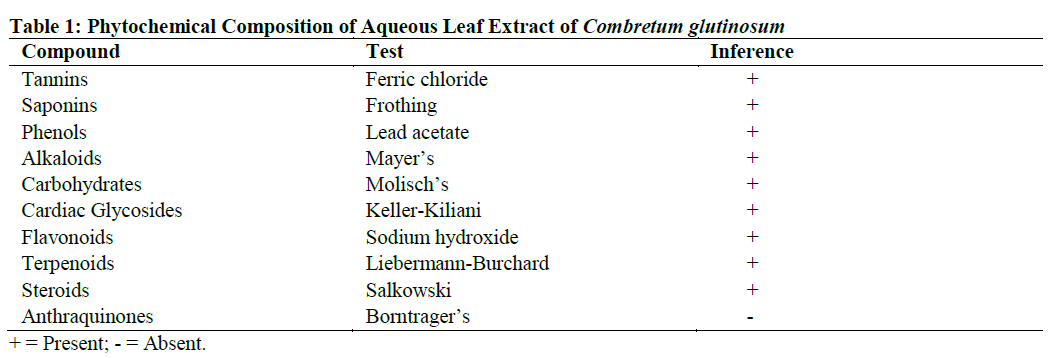
African trypanosomiasis, a severely neglected tropical disease, is persistently plagued by a limited arsenal of therapeutic options that are frequently associated with high toxicity and emerging resistance. This study systematically investigated the phytochemical composition and the in vitro antitrypanosomal potential of an aqueous leaf extract of Combretum glutinosum against Trypanosoma brucei. Fresh leaves were collected, shade-dried, and extracted via maceration in distilled water. Qualitative phytochemical analysis confirmed the presence of diverse secondary metabolites, including tannins, saponins, phenols, alkaloids, carbohydrates, cardiac glycosides, flavonoids, terpenoids, and steroids, while anthraquinones were absent. The antitrypanosomal activity was rigorously evaluated using a 96-well microtiter plate assay across a broad concentration range of 31.25–500 mg/mL. Parasite motility was monitored microscopically at 5-minute intervals over a 60-minute incubation period. The aqueous extract demonstrated a pronounced, concentration-dependent trypanocidal effect. Complete cessation of parasite motility was achieved at 45 minutes for the highest concentration (500 mg/mL), at 55 minutes for 250 mg/mL, and at 60 minutes for 125 mg/mL. Lower concentrations (62.5 and 31.25 mg/mL) exhibited progressively reduced efficacy. Assay validity was confirmed using diminazene diaceturate as the positive control and phosphate-buffered saline as the negative control. These compelling results indicate that C. glutinosum harbours bioactive constituents with promising antitrypanosomal activity, thereby scientifically validating its ethnomedicinal use and underscoring its potential as a valuable source of novel trypanocidal lead compounds for future drug development.
References
Adjanohoun, E. J., Ahyi, M. R. A. and Ake-Assi, L. (1996). Contribution to ethnobotanical and floristic studies in Western Africa. Science and Technology Development, 3, 1–34.
Atawodi, S. E. (2015). Comparative in vitro trypanocidal activities of petroleum ether, chloroform, methanol and aqueous extracts of some Nigerian savannah plants. African Journal of Biotechnology, 4: 177–182.
Bizimana, N., Tietjen, U. and Zessin, K.-H. (2016). Evaluation of medicinal plants from Mali for their in vitro and in vivo trypanocidal activity. Journal of Ethnopharmacology, 103: 350–356.
Brain, K. R. and Turner, T. D. (2005). The practical evaluation of phytopharmaceuticals. Wright-Scientechnica.
Dickie, E. A., Giordani, F., Gould, M. K., Mäser, P., Burri, C., Mottram, J. C., Rao, S. and Barrett, M. P. (2020). New drugs for human African trypanosomiasis: A twenty first century success story. Tropical Medicine and Infectious Disease, 5(1): 29. https://doi.org/10.3390/tropicalmed5010029.
Eze, A. A., Nweze, N. E. and Okafor, F. C. (2024). Recent advances in plant-derived compounds against African trypanosomiasis (2020–2024). Phytochemistry Reviews, 23: 345–367.
Fairlamb, A. H. and Horn, D. (2018). Melarsoprol resistance in African trypanosomiasis. Trends in Parasitology, 34(6): 481–492.
Herbert, W. J. and Lumsden, W. H. R. (1976). Trypanosoma brucei: A rapid matching method for estimating the host's parasitemia. Experimental Parasitology, 40: 427–431.
Hoet, S., Stévigny, C. and Block, S. (2007). Alkaloids from Cryptolepis sanguinolenta as potential antitrypanosomal agents. Journal of Natural Products, 70: 1360–1363.
Ibrahim, M. A., Mohammed, A. and Isah, M. B. (2018). Phytochemical and antitrypanosomal studies of Combretum glutinosum leaves. Journal of Ethnopharmacology, 220: 234–241.
Kasilo, O. M., Trapsida, J.-M. and Mwikisa, C. (2015). An overview of the traditional medicine situation in the African Region. WHO African Health Monitor, 14: 7–15.
Mbaya, A. W. and Ibrahim, U. I. (2021). In vivo and in vitro activities of medicinal plants on haemic and humoral trypanosomes: A review. International Journal of Pharmacology, 7: 1–11.
Nekoei, S., Khamesipour, F., Habtemariam, S., de Souza, W., MohammadiPour, P. and Hosseini, S. R. (2022). The anti-Trypanosoma activities of medicinal plants: A systematic review of the literature. Veterinary Medicine and Science, 8: 2738–2772. https://doi.org/10.1002/vms3.912.
Ogbadoyi, E. O., Abdulganiy, A. O. and Adama, T. Z. (2007). In vivo trypanocidal activity of Annona senegalensis Pers. leaf extract against Trypanosoma brucei brucei. Journal of Ethnopharmacology, 112: 85–89.
Osório, A. L., Madruga, C. R., Desquesnes, M., Soares, C. O., Ribeiro, L. R. and Costa, S. C. (2008). Trypanosoma (Duttonella) vivax: Its biology, epidemiology, pathogenesis, and introduction in the New World – A review. Memorias do Instituto Oswaldo Cruz, 103(1): 1–13. https://doi.org/10.1590/s0074-02762008000100001.
Simarro, P. P., Cecchi, G. and Franco, J. R. (2012). Estimating and mapping the population at risk of sleeping sickness. PLoS Neglected Tropical Diseases, 6: e1859.
Tagoe, D. N. A., Nyarko, A. K. and Anning, A. K. (2023). Antitrypanosomal phytochemicals: Mechanisms and prospects for drug development. Frontiers in Pharmacology, 14: 1129265.
World Health Organization (WHO). (2022). Human African trypanosomiasis (sleeping sickness). Fact Sheets.
Downloads
Published
Issue
Section
Categories
License
Copyright (c) 2026 Raihana Idris Abdullahi, Madu Clark Hadiza, Nafiu Muhammad Ibrahim, Ibrahim Suleiman, Adama Yahaya, Abdullahi Mijinyawa, Yunusa A. Wada

This work is licensed under a Creative Commons Attribution 4.0 International License.


