
DOSE-DEPENDENT EFFECTS OF ORAL ADMINISTRATION OF ORANGE JUICE ON EPIDIDYMAL SPERM RESERVE AND SEMEN QUALITY IN ADULT MALE RABBITS
DOI:
https://doi.org/10.33003/fjs-2026-1005-4974Keywords:
Citrus sinensis, Epididymal sperm reserve, Male fertility, Semen quality, RabbitsAbstract
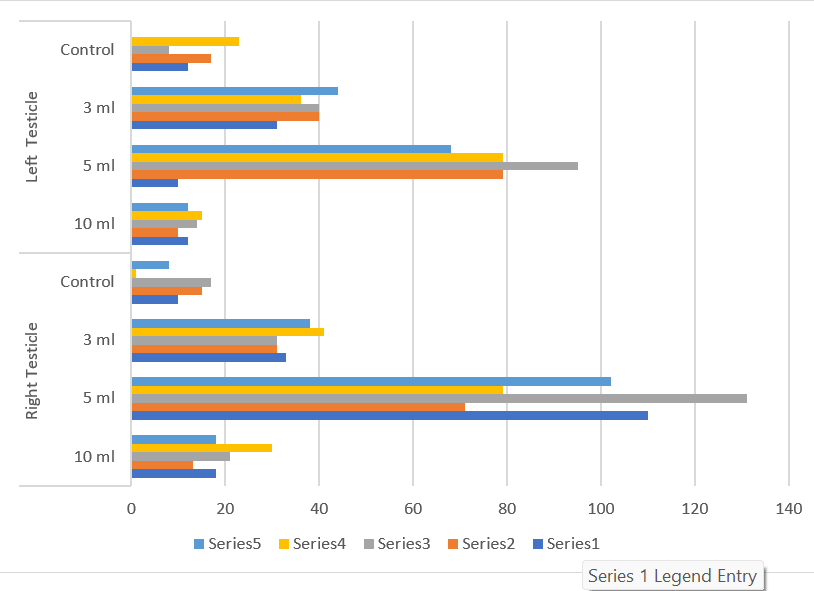
Citrus sinensis (sweet orange) is rich in vitamins, flavonoids, and bioactive compounds with antioxidant and immunomodulatory properties, which may influence growth performance, haematological parameters, and male reproductive function. This study evaluated the effects of graded doses of Citrus sinensis juice on growth performance, haematology, immune response, and epididymal sperm reserve in adult male rabbits. A total of twenty (20) rabbits were assigned to control, low (3 ml), medium (5 ml), and high (10 ml) juice dose groups and treated for six weeks. Body weight, average daily gain, haematological indices, white blood cell counts, and epididymal sperm parameters were assessed. Administration of Citrus sinensis juice resulted in a dose-dependent increase in body weight gain and average daily gain, particularly in the medium and high-dose groups, although differences were not statistically significant (p > 0.05). Haematological parameters, including packed cell volume and haemoglobin, remained stable, while white blood cell counts increased significantly (p < 0.05) in medium and high-dose groups, indicating enhanced immune activity without pathological lesions. Epididymal sperm reserve and morphometric indices exhibited trends toward improvement at higher doses, consistent with the antioxidant-mediated protection of spermatozoa; however, these changes were generally not statistically significant (p > 0.05). Some variability in sperm motility and morphometric parameters suggests dose-dependent and individual physiological responses. Citrus sinensis juice supplementation may support growth, maintain haematological stability, enhance immune function, and potentially improve male reproductive parameters in rabbits. Observed variability underscores the need for further studies to optimize dosing and clarify mechanisms of action.
References
Adewole, E., Adewumi, D. F., & Akinyemi, A. J. (2017). Effects of citrus fruit supplementation on growth performance and antioxidant status in animals. Journal of Animal Physiology and Animal Nutrition, 101(5), 1021–1029.
Agarwal, A., Majzoub, A., Esteves, S. C., Ko, E., Ramasamy, R., Panner Selvam, M. K., & Henkel, R. (2019). Clinical utility of oxidative stress testing in male infertility. Arab Journal of Urology, 17(1), 10–20. https://doi.org/10.1080/2090598X.2018.1548735
Agarwal, A., Virk, G., Ong, C., & du Plessis, S. S. (2014). Effect of oxidative stress on male reproduction. The World Journal of Men's Health, 32(1), 1–17.
Aitken, R. J., & Baker, M. A. (2006). Oxidative stress, sperm survival, and fertility control. Molecular and Cellular Endocrinology, 250(1–2), 66–69.
Aitken, R. J., & Roman, S. D. (2008). Antioxidant systems and oxidative stress in the testes. Oxidative Medicine and Cellular Longevity, 1(1), 15–24.
Cai, J., Liu, X., & Wang, L. (2021). Oxidative stress and male infertility: Current evidence and future directions. Cellular and Molecular Life Sciences, 78(8), 3527–3550. https://doi.org/10.1007/s00018-021-03828-7
Carr, A. C., & Maggini, S. (2017). Vitamin C and immune function. Nutrients, 9(11), 1211.
El Gindy, Y. M., Sabir, S. A., & Zahran, S. M. (2023). The protective effect of aqueous orange peel extract on reproductive efficiency and antioxidant status in rabbits under heat stress. Journal of Thermal Biology, 111, 103403. https://doi.org/10.1016/j.jtherbio.2022.103403
Fraga, C. G., Motchnik, P. A., Shigenaga, M. K., Helbock, H. J., Jacob, R. A., & Ames, B. N. (1991). Ascorbic acid protects against endogenous oxidative DNA damage in human sperm. Proceedings of the National Academy of Sciences, 88(24), 11003–11006.
Ghasemi, K., Ghasemi, Y., & Ebrahimzadeh, M. A. (2019). Antioxidant activity, phenol and flavonoid contents of citrus species. Food Chemistry, 117(3), 504–509.
Helmut Sies, Carsten Berndt, & Dean P. Jones. (2017). Oxidative stress. Annual Review of Biochemistry, 86, 715–748. https://doi.org/10.1146/annurev-biochem-061516-045037
Jimoh, O. A., Ayedun, E. S., Ayodele, S. O., Omoniyi, S. I., Oladepo, A. D., Lawal, A. A., Ademola, O. A., & Kolawole, B. J. (2020). Oxidative status and spermatozoa kinetics of rooster semen in citrus juice based diluent. Tropical Animal Health and Production, 53(1), 31. https://doi.org/10.1007/s11250-020-02482-5
Klimczak, I., Małecka, M., Szlachta, M., & Gliszczyńska Świgło, A. (2007). Effect of storage on the content of polyphenols, vitamin C, and the antioxidant activity of orange juices. Food Chemistry, 102(2), 421–428. https://doi.org/10.1016/j.foodchem.2006.05.034
Li, Y., Yao, J., Han, C., Yang, J., Chaudhry, M. T., Wang, S., Liu, H., & Yin, Y. (2016). Quercetin, inflammation and immunity. Nutrients, 8(3), 167. https://doi.org/10.3390/nu8030167
Oluremi, O. I. A., Ngi, J., & Andrew, I. A. (2010). Phytonutrients in citrus fruit peel meal and their effects on livestock production. Livestock Research for Rural Development, 22(5), 1–7.
Weiss, D. J., & Wardrop, K. J. (2010). Schalm's Veterinary Hematology (6th ed.). Wiley-Blackwell. Explains that leucocytosis can be physiological, particularly stress-induced, and not necessarily linked to pathological conditions Pp 10,117
Zhao, J. X. Li, Y. Liang et al., Dietary intervention & immunity: underlying mechanisms and future directions, Journal of Advanced Research, https://doi.org/10.1016/j.jare.2026.03.026
Downloads
Published
Issue
Section
Categories
License
Copyright (c) 2026 Mbursa Chiroma, Mapida Agabus Nuhu, Kwaru Mbursa Chiroma, Ijuptil Chiroma, Mubarak Sambo, Maryam Suleiman Bello, Mustapha Muhammad Aisami, Abubakkar Muhammad Wakil, Hannah A. Madziga, William Arastus Arastus

This work is licensed under a Creative Commons Attribution 4.0 International License.


