
PROXIMATE PROPERTIES AND MICROBIAL LOAD OF MEATLESS MEAT PRODUCED FROM THE BLENDS OF COW MILK AND COCONUT MILK
DOI:
https://doi.org/10.33003/fjs-2026-1005-4966Keywords:
Meat analogue, gastronomy, proximate value, food innovationAbstract
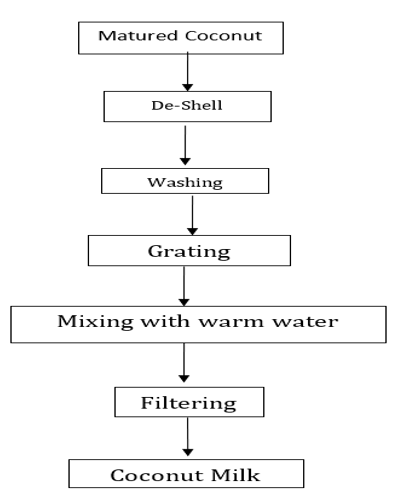
Meat is one of the primary sources of dietary protein, widely acknowledged for its high-quality protein and nutritional value. However, due to various dietary and health concerns surrounding red meat, there's a growing need for palatable and nourishing alternatives. This study evaluates the proximate composition and microbial load of meatless meat produced from a blend of cow's milk and coconut milk. Four dehusked coconuts weighing 540 g, 543 g, 550 g, and 555 g were processed to extract coconut milk using three litres of warm water filtered through a cotton cloth. The extracted coconut milk was blended with raw cow’s milk at varying proportions (90:10, 80:20, 70:30, and 60:40). Cheese produced from each blend was sliced, seasoned with spices, coloured using hibiscus flower extract to simulate the appearance of red meat, and deep-fried to produce the meat analogue. A sample containing 100% red meat served as the control. Results showed that yield decreased as the proportion of coconut milk increased, while processing time increased. The 90:10 cow milk–coconut milk blends produced the highest yield (486 g) with the shortest processing time (8 minutes). Proximate analysis revealed moisture (36.30–49.81%), ash (4.47–6.42%), crude fibre (13.93–22.91%), crude protein (17.98–29.13%), and carbohydrate (5.25–15.75%), with significant differences (p < 0.05) among samples. Microbiological analysis indicated the absence of coliform contamination. Overall, the cow milk–coconut milk blend demonstrates potential as a safe, nutritious, and innovative meat substitute with promising yield and functional properties.
References
AOAC. (2005). Official methods of analysis. Association of Official Analytical Chemists.
Amar, A., Sukotjo, S., Nurani, D., & Andini, D. (2024). Effect of substituting cow milk with saga bean (Adenanthera pavonina, Linn) milk during the processing of saga soft cheese. Food Research, 8(2), 8–15. https://doi.org/10.26656/fr.2017.8(2).097
Arya, V., Rinu, K. A., & Joseph, D. (2017). Cocos nucifera: Its pharmacological activities. World Journal of Pharmaceutical Sciences, 5(8), 195–200. https://www.researchgate.net/publication/329487842
Bakhsh, A., Lee, S. J., Lee, E. Y., Hwang, Y. H., & Joo, S. T. (2021). Traditional plant-based meat alternatives, current and future perspective: A review. Journal of Agriculture & Life Science, 55(1), 1–10. https://doi.org/10.14397/jals.2021.55.1
Balogun, M. A., Oyeyinka, S. A., Kolawole, F. L., Joseph, J. K., & Olajobi, G. E. (2019). Chemical composition and sensory properties of soy–tiger nut cheese. Ceylon Journal of Science, 48(4), 353–358.
Ekanem, G. O., & Ojimelukwe, P. C. (2017). Potentials of coconut milk as a substitute for cow milk in cheese making. Journal of Advances in Microbiology, 4(2), 1–9. https://doi.org/10.9734/JAMB/2017/34537
Guetouache, M., Guessas, B., & Medjekal, S. (2014). Composition and nutritional value of raw milk. Journal of Issues in Biological Sciences and Pharmaceutical Research, 2, 1588–1593.
Halim, J. K., Wangrimen, G. H., & Fitriani, A. (2022). Production of coconut milk cheese and its organoleptic characteristics. Journal of Agric-Food Science and Technology, 3(1), 1–9. https://doi.org/10.12928/jafost.v3i1.6219
He, J., Evans, N. M., Liu, H., & Shao, S. (2020). A review of research on plant-based meat alternatives: Driving forces, history, manufacturing, and consumer attitudes. Comprehensive Reviews in Food Science and Food Safety, 19(6), 2639–2656. https://doi.org/10.1111/1541-4337.12610
Herrmann, M., Mehner, E., Egger, L., Portmann, R., Hammer, L., & Nemecek, T. (2024). A comparative nutritional life cycle assessment of processed and unprocessed soy-based meat and milk alternatives including protein quality adjustment. Frontiers in Sustainable Food Systems, 8, Article 1413802. https://doi.org/10.3389/fsufs.2024.1413802
Hussein, J. B., Suleiman, A. D., Ilesanmi, J. Y. O., & Sanusi, S. A. (2016). Chemical composition and sensory qualities of West African soft cheese (warankashi) produced from blends of cow milk and soy milk. Nigerian Journal of Tropical Agriculture, 16, 79–89.
Kadbhane, V. S., Shelke, G. N., & Thorat, S. L. (2019). Preparation of non-dairy cheese analog enriched with coconut milk. The Pharma Innovation Journal, 8(10), 56–60.
Khanal, B. K. S., Pradhan, M., & Bansal, N. (2019). Cheese: Importance and introduction to basic technologies. Journal of Food Science and Technology Nepal, 11, 14–24.
Lee, H. J., Yong, H. I., Kim, M., Choi, Y. S., & Jo, C. (2020). Status of meat alternatives and their potential role in the future meat market—A review. Asian-Australasian Journal of Animal Sciences, 33(10), 1533–1543. https://doi.org/10.5713/ajas.20.0419
Leroy, F., Smith, N. W., Adesogan, A. T., Beal, T., Iannotti, L., Moughan, P. J., & Mann, N. (2023). The role of meat in the human diet: Evolutionary aspects and nutritional value. Animal Frontiers, 13(2), 12–18. https://doi.org/10.1093/af/vfac093
Matin, A., Rahman, N., Islam, T., & Ahmed, F. B. H. (2020). Effect of adding coconut milk on the physicochemical, proximate, microbial and sensory attributes of “Dahi”. Ukrainian Journal of Food Science, 8(1), 49–56. https://doi.org/10.24263/2310-1008-2020-8-1-6
Nieman, D. C., Wentz, L. M., & Gillitt, N. D. (2022). Vegetarian dietary patterns and human health: Nutritional considerations and recommendations. Journal of the American College of Nutrition, 41(1), 1–10. https://doi.org/10.1080/07315724.2021.1910629
Nwaeze, K. U., Ogah, C. O., Oribayo, O., Tinubu, A. O., Ezem, O. R., & Olaleye, O. O. (2020). Prevalence of some micro and macro-elements in different brands of processed cow milk in Lagos, Nigeria. Journal of Chemical Society of Nigeria, 45(3), 469–476.
Paul, A. A., Kumar, S., Kumar, V., & Sharma, R. (2020). Milk analog: Plant-based alternatives to conventional milk, production, potential and health concerns. Critical Reviews in Food Science and Nutrition, 60(18), 3005–3023.
Sultan, L., Maganinho, M., Padrão, P., & Iwok, E. S. (2024). Comparative assessment of the nutritional composition and degree of processing of meat products and their plant-based analogs. Journal of Food Composition and Analysis, 133, 106390. https://doi.org/10.1016/j.jfca.2024.106390
Swing, C. J., Thompson, T. W., Guimaraes, O., Geornaras, I., Engle, T. E., & Nair, M. N. (2021). Nutritional composition of novel plant-based meat alternatives and traditional animal-based meats. Journal of Food Science and Nutrition, 7, 109. https://doi.org/10.24966/FSN-1076/100109
Williams, P. (2007). Nutritional composition of red meat. Nutrition & Dietetics, 64(Suppl. 4), S113–S119. https://doi.org/10.1111/j.1747-0080.2007.00197.x
Zahari, I., Östbring, K., Purhagen, J. K., & Rayner, M. (2022). Plant-based meat analogues from alternative protein: A systematic literature review. Foods, 11(18), 2870.
Downloads
Published
Issue
Section
Categories
License
Copyright (c) 2026 Kikelomo Elizabeth Alaba, Emmanuel Gabriel

This work is licensed under a Creative Commons Attribution 4.0 International License.


