
SPATIAL VARIABILITY AND GEOSTATISTICAL ANALYSIS OF SOIL FERTILITY INDICATORS IN GUSAU LOCAL GOVERNMENT AREA, ZAMFARA STATE, NIGERIA
DOI:
https://doi.org/10.33003/fjs-2026-1006-4788Keywords:
Spatial variability, geostatistics, Soil fertility indicators, Available phosphorus, Soil organic carbonAbstract
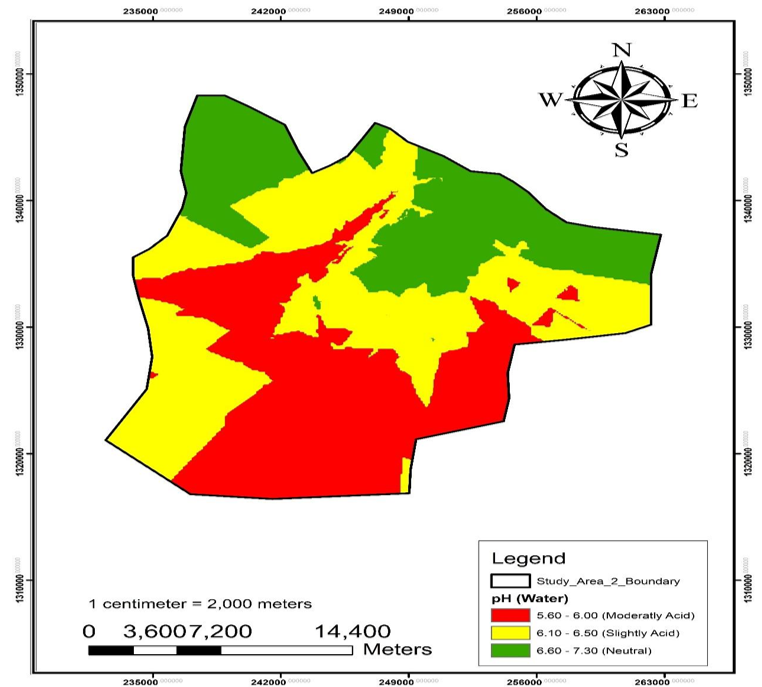
Soil fertility variability reveal a significant challenge to sustainable agriculture in tropical agroecosystems, particularly in sub-Saharan Africa. This study evaluated the spatial variability and geostatistical characteristics of soil fertility indicators in Gusau, Zamfara State, Nigeria. Using a systematic sampling approach across Wanke and Magami, 80 surface soil samples (0–20 cm) were analyzed for pH, organic carbon (OC), total nitrogen (TN), available phosphorus (AVP), exchangeable potassium (K), and cation exchange capacity (CEC). Descriptive statistics revealed low variability in pH, moderate variability in OC and K, and high variability in AVP, indicating pronounced spatial heterogeneity. Pearson correlation analysis showed weak to moderate relationships among properties, with OC and CEC emerging as primary drivers of nutrient dynamics. Regression analysis confirmed OC and CEC as significant predictors of soil fertility status (p < 0.001). Geostatistical analysis, employing semivariogram modeling and ordinary kriging, demonstrated moderate spatial dependence for most properties and revealed distinct spatial patterns across the landscape. Spatial distribution maps characterized the area as having slightly acidic soils, moderate OC, and adequate K availability, but widespread AVP deficiency. These findings underscore the necessity of site-specific nutrient management and the pivotal role of organic matter in stabilizing soil fertility. To enhance agricultural productivity and sustainability in the Sudan savanna region, the study recommends integrated soil fertility management practices, specifically prioritizing organic amendments and targeted phosphorus fertilization to address identified deficiencies. This research provides a critical and comprehensive framework for precision nutrient application to mitigate the negative effects of uneven soil conditions in northern Nigerian agroecosystems.
References
Bünemann, E. K., Bongiorno, G., Bai, Z., Creamer, R. E., De Deyn, G., De Goede, R., Fleskens, L., Geissen, V., Kuyper, T. W., Mäder, P., Pulleman, M., Sukkel, W., van Groenigen, J. W., & Brussaard, L. (2018). Soil quality—A critical review. Soil Biology and Biochemistry, 120, 105–125.
Burt, R. (2018). Soil survey laboratory methods manual (Soil Survey Investigations Report No. 42, Version 5.0). USDA-NRCS.
Chivenge, P., Rubianes, F., Vanlauwe, B., & Six, J. (2021). Long-term impact of reduced tillage and residue management on soil carbon stabilization. Soil and Tillage Research, 210, 104977.
Food and Agriculture Organization (FAO). (2022). World reference base for soil resources 2022: International soil classification system for naming soils and creating legends for soil maps. FAO.
Fageria, N. K., Baligar, V. C., & Jones, C. A. (2021). Growth and mineral nutrition of field crops (4th ed.). CRC Press.
Hazelton, P., & Murphy, B. (2019). Interpreting soil test results: What do all the numbers mean? (3rd ed.). CSIRO Publishing.
Hinsinger, P., Herrmann, L., Lesueur, D., Robin, A., Trap, J., Waithaisong, K., & Plassard, C. (2018). Impact of roots, microorganisms, and microfauna on the fate of soil phosphorus in the rhizosphere. Annual Review of Plant Biology, 69, 281–311.
Lal, R. (2018). Digging deeper: A holistic perspective of factors affecting soil organic carbon sequestration in agroecosystems. Global Change Biology, 24(8), 3285–3301.
Lehmann, J., Bossio, D. A., Kögel-Knabner, I., & Rillig, M. C. (2020). The concept and future prospects of soil health. Nature Reviews Earth & Environment, 1(10), 544–553.
Minasny, B., Malone, B. P., McBratney, A. B., Angers, D. A., Arrouays, D., Chambers, A., Chaplot, V., Chen, Z. S., Cheng, K., Das, B. S., Field, D. J., Gimona, A., Hedley, C. B., Hong, S. Y., Mandal, B., Marchant, B. P., Martin, M., McConkey, B. G., Mulder, V. L., & Winowiecki, L. (2019). Soil carbon 4 per mille. Geoderma, 292, 59–86.
Penn, C. J., & Camberato, J. J. (2019). A critical review on soil chemical processes that control how soil pH affects phosphorus availability to plants. Agriculture, 9(6), 120.
Vanlauwe, B., Descheemaeker, K., Giller, K. E., Huising, J., Merckx, R., Nziguheba, G., Wendt, J., & Zingore, S. (2019). Integrated soil fertility management in sub-Saharan Africa: Unravelling local adaptation. Soil, 5, 27–46.
Webster, R., & Oliver, M. A. (2007). Geostatistics for environmental scientists (2nd ed.). John Wiley & Sons.
Downloads
Published
Issue
Section
Categories
License
Copyright (c) 2026 Muhammad Auwal Abdulmuddalib, Ardo Musa Salihu, Muhammad Tahir Abubakar, Bapetel Usman, Ibrahim Rejoice Solomon

This work is licensed under a Creative Commons Attribution 4.0 International License.


