
A GEOSPATIALLY-ENHANCED MACHINE LEARNING FRAMEWORK FOR SOLAR RADIATION FORECASTING IN NIGERIA
DOI:
https://doi.org/10.33003/fjs-2026-1004-4776Keywords:
Solar Radiation, XG-Boost, Artificial Neural Network, Meteorology, Predictive Modelling, Environmental SustainabilityAbstract
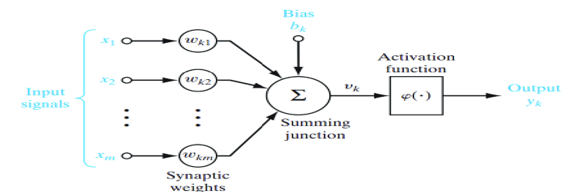
Precise forecast of solar radiation is essential for renewable energy development, environmental sustainability, and climate-informed decision-making, particularly in tropical regions with high atmospheric variability. This study evaluates the predictive performance of two advanced machine learning models Artificial Neural Network (ANN) and Extreme Gradient Boosting (XG-Boost) in estimating solar radiation (RADIA) using long-term meteorological data from Nigeria and Digital Elevation Model (DEM)-derived radiation values obtained via ArcGIS 10.6. The data span 29 years with major climatic predictors such as maximum temperature (TMAX), minimum temperature (TMIN), relative humidity (REHU), length of sunshine (SUNH), wind speed (WINS), (DEM), and evaporation pitch (EVPI). DEM-calculated values of ranged between 1200 to 2200 kWh per meter square per year and were divided into 5 solar potential classes. An extensive analytical model was used, which included correlation analysis, Variance Inflation Factor (VIF), residual diagnostics, predicted and observed comparisons and a variety of performance indicators. Results indicated significant relationships between solar radiation and atmospheric variables, with low VIF values confirming the absence of serious multi-collinearity. Comparative analysis showed that XG-Boost outperformed ANN, exhibiting superior residual behavior and closer alignment with the ideal prediction line. Its predictive accuracy was confirmed by strong performance metrics (MAE = 0.0282, MSE = 0.0010, RMSE = 0.0316, MAPE = 0.5412). Feature importance analysis identified maximum temperature and relative humidity as the most influential predictors. Thus, XG-Boost demonstrated strong predictive capability and reliability in forecasting solar radiation (1,200-2,200 kWh/m2/year), which can be used in the renewable energy planning, climate-wise agriculture, and sustainable policy development.
References
Abolude, D. S. (2007). Water Quality and Metal Concentrations in Sediments and Fish from Ahmadu Bello University Reservoir, Zaria, Nigeria, Ph.D. Thesis Ahmadu Bello University,Zaria.
Abolude, D. S., Davies, O. A., & Chia, A. M. (2012). Distribution and abundance of phytoplankton in relation to physicochemical conditions of water bodies. Journal of Environmental Biology, 33(2), 273–281.
Abubakar, M. M. (2014). Climatic influence on water temperature and aquatic productivity in arid zone reservoirs. Nigerian Journal of Fisheries, 11(2), 45–52.
Anago, I. J., Esenowo, I. K., & Ugwumba, A. A. A. (2011). The physico-chemical characteristics and plankton diversity of Awba Reservoir, Ibadan, Nigeria. Research Journal of Environmental and Earth Sciences, 3(1), 58–65.
Antakil, A., & Umaru, H. (2025). Seasonal variation of zooplankton as indicators of water quality in Kawo Dam, Niger State, Nigeria. African Journal of Aquatic Science, 50(1), 65–74.
Atobatele, O. E., & Ugwumba, A. A. A. (2008). Seasonal variation in the physicochemistry of a small tropical reservoir (Aiba Reservoir, Iwo, Nigeria). African Journal of Biotechnology, 7(12), 1962–1971.
Ayoade, A. A., Fagade, S. O., & Adebisi, A. A. (2006). Dynamics of limnological features and plankton populations in a tropical reservoir. African Journal of Biotechnology, 5(7), 601–608.
Charles, K. (2003). Freshwater ecology: Concepts and environmental applications. Academic Press.
Curtis, T. P., & Sloan, W. T. (2004). Prokaryotic diversity and its limits: Microbial community structure in natural environments. Nature Reviews Microbiology, 2, 719–726.
Dike, N. I., & Adedolapo, A. A. (2012). Seasonal dynamics of plankton abundance and diversity in a freshwater ecosystem in Nigeria. Journal of Aquatic Sciences, 27(1), 45–54.
Etuk, U. S., Ekpo, I. E., & Essien, N. B. (2023). Seasonal variation of biochemical oxygen demand and nutrient dynamics in Niger Delta rivers. Environmental Monitoring and Assessment, 195(3), 211–223.
FEPA (Federal Environmental Protection Agency). (1991). National guidelines and standards for water quality in Nigeria. Lagos: Federal Environmental Protection Agency.
Fusi, M., Bianchi, C. N., & Morri, C. (2023). Oxygen dynamics in aquatic ecosystems are under changing environmental conditions. Aquatic Sciences, 85(2), 112–125.
Idowu, E. O., Ugwumba, A. A. A., & Ugwumba, O. A. (2004). Physico-chemical studies of a tropical reservoir in relation to plankton productivity. Journal of Aquatic Sciences, 19(1), 1–9.
Ja’afaru, A. K., Ibrahim, S., & Mohammed, I. (2013). Physicochemical characteristics of Lake Alau, Borno State, Nigeria. International Journal of Fisheries and Aquatic Studies, 1(2), 30–35.
Jerling, H. L., & Wooldridge, T. H. (1995). Plankton distribution and abundance in estuarine ecosystems. Estuarine, Coastal and Shelf Science, 41, 145–160.
Jonah, S. O. (2025). Seasonal variation in physicochemical characteristics of Nigerian freshwater ecosystems. Nigerian Journal of Limnology, 18(1), 33–46.
Kiourt, C., Dimitriou, E., & Karaouzas, I. (2023). Conductivity classification and ecological implications in freshwater ecosystems. Water Research, 235, 119867.
Kolo, R. J., Oladimeji, A. A., & Umaru, H. (2010). Plankton diversity and abundance in a tropical reservoir in Northern Nigeria. Journal of Environmental Biology, 31(5), 787–794.
Kramer, K. J. M., & Botterweg, J. (1991). Aquatic biological monitoring of rivers and lakes. Hydrobiologia, 226, 141–148.
Lewis, W. M. (2000). Basis for the protection and management of tropical lakes. Ecological Applications, 10(1), 20–30.
McNeely, R. N., Neimanis, V. P., & Dwyer, L. (1979). Water quality sourcebook: A guide to water quality parameters. Ottawa: Inland Waters Directorate.
Mohammed, A. S., Ibrahim, S., & Abubakar, M. M. (2009). Plankton diversity and abundance in coastal waters of India and Nigeria. International Journal of Environmental Studies, 66(3), 345–356.
Mohammed, S. D., Abdullahi, M., & Sani, M. (2023). Environmental factors influencing zooplankton distribution in Lapai-Gwari stream, Niger State. Nigerian Journal of Aquatic Sciences, 38(1), 54–62.
Okere, O. O., Nwankwo, D. I., & Akin-Oriola, G. A. (2020). Seasonal variation of phytoplankton in Lagos Lagoon, Nigeria. African Journal of Aquatic Science, 45(2), 173–182.
Philips, D. J. H. (1985). Determination of ammonia in freshwater samples using the phenol-hypochlorite method. Water Research, 19(3), 341–345.
Singh, R., Kumar, P., & Sharma, V. (2025). Dissolved oxygen dynamics in freshwater ecosystems under climate variability. Environmental Research, 235, 117–128.
Ubani, C. N., Okafor, P. C., & Eze, J. N. (2024). Assessment of ammonia pollution in urban rivers of Enugu State, Nigeria. Environmental Monitoring and Assessment, 196(1), 102–115.
USEPA (United States Environmental Protection Agency). (2002). Methods for evaluating aquatic macroinvertebrates as indicators of water quality. Washington, DC: USEPA.
Wetzel, R. G. (1983). Limnology (2nd ed.). Philadelphia: Saunders College Publishing.
WHO (World Health Organization). (2006). Guidelines for drinking-water quality (3rd ed.). Geneva: World Health Organization.
Xu, Y., Zhang, L., & Chen, H. (2025). Seasonal dynamics of phytoplankton communities in tropical estuarine ecosystems. Marine
Downloads
Published
Issue
Section
Categories
License
Copyright (c) 2026 Gabriel Olugbenga Ojo, Olalekan Akeem Alausa; Oluwatobi Enitan Omotola

This work is licensed under a Creative Commons Attribution 4.0 International License.


