
IMPACT OF LUFFA CYLINDRICAL FIBER ASH ADDITION ON CEMENT PASTE AND CONCRETE CHARACTERISTICS
DOI:
https://doi.org/10.33003/fjs-2025-0912-4443Keywords:
LCFA, Cement paste, Concrete, Workability, Density, Compressive strengthAbstract
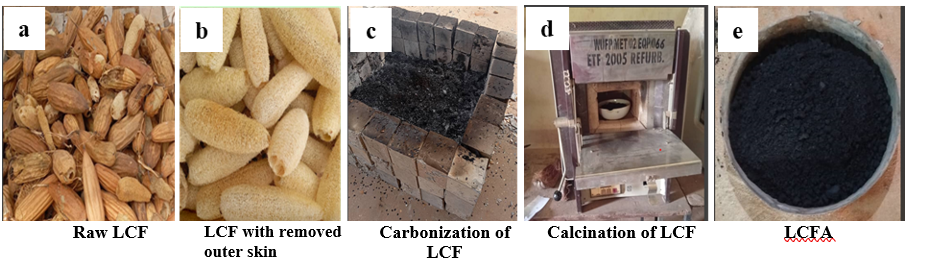
This study investigates the impact of luffa cylindrical fiber ash (LCFA) on behaviour of cement paste and concrete. LCFA was blended with cement from 0 to 10% by its weight, and laboratory tests were carried out to examine the chemical composition of the ash, as well as its physical properties such as standard consistency and setting time. Standard concrete cubes were cast and cured for 7, 14, and 28 days to determine density and compressive strength, following the requirements of BS EN 12390-3. The results of the oxide composition of LCFA revealed that it cannot act as a cement replacement material due to modest SiO₂ content and disproportionately high K₂O level that supports its classification as a low-reactivity and non-pozzolanic biomass ash. Although, the workability results indicated insignificant reduction in slump at high LCFA level, the hardened properties of cement paste and concrete at 28 days curing period, revealed that both density and compressive strength significantly reduced with high LCFA levels; for example, mixes showed reduced compressive strengths from 29.19 to 18.39 MPa. These findings suggest that LCFA lowers the overall performance of concrete when used as additive in cement-based composite. It is therefore more appropriate for non-structural or low-load bearing applications where reduced strength is not a major concern.
References
Abd-Al Ftah, R. O., Tayeh, B. A., Abdelsamie, K., & Hafez, R. D. A. (2022). Assessment on structural and mechanical properties of reinforcement concrete beams prepared with luffa cylindrical fibre. Case Studies in Construction Materials, 17, e01283. https://doi.org/10.1016/j.cscm.2022.e01283
Abdullahi, M. (2006). Properties of some natural fine aggregates in Minna, Nigeria and environs. Leonardo Journal of Science, 8, 1–6.
Abdullahi, M., & Abdullahi, M. (2006). Properties of some natural fine aggregates in Minna, Nigeria and environs. http://ljs.academicdirect.org
Adamu, I. M., Kaura, J. M., Lawan, A., & Ocholi, A. (2020). Strength development characteristics and microstructural properties of high strength concrete having optimal nanosilica dosage. FUDMA Journal of Sciences (FJS), 4(1), 480–489.
Ajagbe, W. O., Tijani, M. A., & A., O. I. (2015). Engineering and geological evaluation of rocks for concrete production. LAUTECH Journal of Engineering and Technology, 9(2).
Akinyemi, B. A., & Dai, C. (2022). Luffa cylindrical fibre as a natural reinforcement for cement composites: A review. Journal of Sustainable Cement-Based Materials, 11(5), 297–307. https://doi.org/10.1080/21650373.2021.1952658
Alhijazi, M., Safaei, B., Zeeshan, Q., Asmael, M., Eyvazian, A., & Qin, Z. (2020). Recent developments in Luffa natural fiber composites: Review. Sustainability, 12(18), 7683. https://doi.org/10.3390/su12187683
Aliyu, I., Sapuan, S. M., Zainudin, E. S., Rashid, U., Zuhri, M. Y. M., & Yahaya, R. (2023). Characterization of ash from sugar palm [Arenga pinnata (Wrumb) Merr.] fiber for industrial application. Journal of Natural Fibers, 20(1). https://doi.org/10.1080/15440478.2023.2170943
Al‑Mobarak, T., Gafur, M. A., & Mina, M. F. (2018). Preparation and characterization of raw and chemically modified sponge-gourd fiber reinforced polylactic acid biocomposites. Materials Sciences and Applications, 9(2), 281–304. https://doi.org/10.4236/msa.2018.92019
Anifowoshe, F., & Nwaiwu, N. (2016). The use of coconut fibre ash as a partial replacement for cement. British Journal of Applied Science & Technology, 17(5), 1–11. https://doi.org/10.9734/bjast/2016/25926
Ardalan, G. (2024). Improving the methodology for preventing alkali-silica reaction (ASR) in concrete.
Aryal, E. B. (2019). Field based quality assessment of cement. Saudi Journal of Civil Engineering, 3(5), 135–140. https://doi.org/10.36348/sjce.2019.v03i05.005
Bakar, R. A., Yahya, R., & Gan, S. N. (2016). Production of high purity amorphous silica from rice husk. Procedia Chemistry, 19, 189–195. https://doi.org/10.1016/j.proche.2016.03.092
Chen, D. (2020). Chemical characterization of recycled concrete.
Çolak, A. (2003). Characteristics of pastes from a Portland cement containing different amounts of natural pozzolan. Cement and Concrete Research, 33(4), 585–593. https://doi.org/10.1016/S0008-8846(02)01027-X[1]
Dahiru, D., Usman, J., & Yusuf, U. S. (2018). Characteristics of concrete produced with burnt clay as coarse aggregate. FUTY Journal of the Environment, 12(2), 26–38.
Das, J. K., Deb, S., & Bharali, B. (2021). Prediction of aggregate impact values and aggregate crushing values using light compaction test. Journal of Applied Engineering Sciences, 11(2), 93–100. https://doi.org/10.2478/jaes-2021-0012
El‑Sayed, M. A., & El‑Samni, T. M. (2006). Physical and chemical properties of rice straw ash and its effect on the cement paste produced from different cement types. Journal of King Saud University – Engineering Sciences, 19(1), 21–29. https://doi.org/10.1016/S1018-3639(18)30845-6[1]
Ferreira, D. L., Coelho, A. M. R., Gonçalves, C., Neves, E., Silva, D. da, & Mourão, A. B. (2022). The real reasons for choosing bushing fiber (Luffa cylindrica): A bibliographic review. International Journal of Advanced Engineering Research and Science, 9(7), 192–200. https://doi.org/10.22161/ijaers.97.20
Girish, D., Reddy, S. V. S. V., & Hanumantharao, C. (2020). Partial replacement of stone dust with coconut shell charcoal powder in flexible pavement. International Journal of Recent Technology and Engineering, 8(3), 890–896.
Haruna, A., Musa, A., Hamza, S., Muhammad, G., & Atinuke, O. (2021). Comparative analysis of soundness and setting time of Portland cement of three companies in West Africa. West Africa Built Environment Research (WABER) Conference Proceedings, 379–389.
Lin, D. F., Lin, J. D., & Chen, S. H. (2006). The application of baghouse fines in Taiwan. Resources, Conservation and Recycling, 46(3), 281–301. https://doi.org/10.1016/j.resconrec.2005.08.002
Maina, K., Gwaya, A. O., & Koteng, D. O. (2022). Effects of different fine aggregate on concrete strength. Proceedings of the Sustainable Research and Innovation Conference, 2, 135–140. https://sri.jkuat.ac.ke/jkuatsri/index.php/sri/article/view/130
Poletanovic, B., Dragas, J., Ignjatovic, I., Komljenovic, M., & Merta, I. (2020). Physical and mechanical properties of hemp fibre reinforced alkali-activated fly ash and fly ash/slag mortars. Construction and Building Materials, 259, 119677. https://doi.org/10.1016/j.conbuildmat.2020.119677
Sada, B. H., Amartey, Y. D., & Bako, S. (2013). An investigation into the use of groundnut shell as fine aggregate replacement. Nigerian Journal of Technology (NIJOTECH), 32(1), 54–60.
Shi, X., Park, P., Rew, Y., Huang, K., & Sim, C. (2020). Constitutive behaviors of steel fiber reinforced concrete under uniaxial compression and tension. Construction and Building Materials, 233, 117316. https://doi.org/10.1016/j.conbuildmat.2019.11731
Sholadoye, I. O., Aliyu, I., & Achara, B. E. (2023). Analysing the impact of banana leaf ash on the micro, physical, and mechanical characteristics of cement paste and concrete. Nigerian Journal of Engineering Science and Technology Research, 9(2), 189–198.
Tangchirapat, W., Rattanashotinunt, C., Buranasing, R., & Jaturapitakkul, C. (2013). Influence of fly ash on slump loss and strength of concrete fully incorporating recycled concrete aggregates. Journal of Materials in Civil Engineering, 25(2), 243–251. https://doi.org/10.1061/(ASCE)MT.1943-5533.0000585[1]
Tassew, S. T., & Lubell, A. S. (2014). Mechanical properties of glass fiber reinforced ceramic concrete. Construction and Building Materials, 51, 215–224. https://doi.org/10.1016/j.conbuildmat.2013.10.046
Vardhan, K., Goyal, S., Siddique, R., & Singh, M. (2015). Mechanical properties and microstructural analysis of cement mortar incorporating marble powder as partial replacement of cement. Construction and Building Materials, 96, 615–621. https://doi.org/10.1016/j.conbuildmat.2015.08.071
Abdullahi, M., & Abdullahi, M. (2006). Properties of Some Natural Fine Aggregates in Minna, Nigeria and Environs. http://ljs.academicdirect.org
Adamu, I. M., Kaura, J. M., Lawan, A., & Ocholi, A. (2020). Strength development characteristics and microstructural properties of high strength concrete having optimal nanosilica dosage. FUDMA Journal of Sciences (FJS), 4(1), 480–489.
Ajagbe, W. O., Tijani, M. A., & A., O. I. (2015). Engineering and Geological Evaluation of Rocks for Concrete Production. In /LAUTECH Journal of Engineering and Technology (Vol. 9, Issue 2).
Aliyu, I., Sapuan, S. M., Zainudin, E. S., Rashid, U., Zuhri, M. Y. M., & Yahaya, R. (2023). Characterization of Ash from Sugar Palm [Arenga Pinnata (Wrumb) Merr.] Fiber for Industrial Application. Journal of Natural Fibers, 20(1). https://doi.org/10.1080/15440478.2023.2170943
Ardalan, G. (2024). Improving the Methodology for Preventing Alkali-Silica Reaction (ASR) in Concrete.
Aryal, E. B. (2019). Field Based Quality Assessment of Cement. Saudi Journal of Civil Engineering, 03(05), 135–140. https://doi.org/10.36348/sjce.2019.v03i05.005
Bakar, R. A., Yahya, R., & Gan, S. N. (2016). Production of High Purity Amorphous Silica from Rice Husk. Procedia Chemistry, 19, 189–195. https://doi.org/10.1016/j.proche.2016.03.092
Çolak, A. (2003). Characteristics of pastes from a Portland cement containing different amounts of natural pozzolan. Cement and Concrete Research, 33(4), 585–593. https://doi.org/10.1016/S0008-8846(02)01027-X
Dahiru, D., Usman, J., & Yusuf, U. S. (2018). Characteristics of Concrete Produced With Burnt Clay as Coarse Aggregate. FUTY Journal of the Environment, 12(2), 26–38.
Das, J. K., Deb, S., & Bharali, B. (2021). Prediction of Aggregate Impact Values and Aggregate Crushing Values Using Light Compaction Test. Journal of Applied Engineering Sciences, 11(2), 93–100. https://doi.org/10.2478/jaes-2021-0012
El-Sayed, M. A., & El-Samni, T. M. (2006). Physical and Chemical Properties of Rice Straw Ash and Its Effect on the Cement Paste Produced from Different Cement Types. Journal of King Saud University - Engineering Sciences, 19(1), 21–29. https://doi.org/10.1016/S1018-3639(18)30845-6
Haruna, A., Musa, A., Hamza, S., Muhammad, G., & Atinuke, O. (2021). Comparative Analysis of Soundness and Setting Time of Portland Cement of Three Companies in. West Africa Environment Research (WABER) Conference, August, 379–389.
Maina, K., Gwaya, A. O., & Koteng, D. O. (2022). Effects of different fine aggregate on concrete strength. Proceedings of the Sustainable Research and Innovation Conference, 2, 135–140. https://sri.jkuat.ac.ke/jkuatsri/index.php/sri/article/view/130
Sada, B. H., Amartey, Y. D., & Bako, S. (2013). an Investigation Into the Use of Groundnut Shell As Fine Aggregate Replacement. Nigerian Journal of Technology (NIJOTECH), 32(1), 54–60.
Sholadoye, I. O., Aliyu, I., & Achara, B. E. (2023). Analysing the Impact of Banana Leaf Ash on the Micro, Physical, and Mechanical Characteristics of Cement Paste and Concrete. Nigerian Journal of Engineering Science and Technology Research, 9(2), 189–198.
Ugwu, J. . N. . and, & Egwuagu, O. (2022). Compressive strength of concrete made with mashed periwinkle shell as fine aggregate for disaster mitigation, 6(5), 1–7. https://doi.org/10.33003/fjs-2022-0605-1082
Vardhan, K., Goyal, S., Siddique, R., & Singh, M. (2015). Mechanical properties and microstructural analysis of cement mortar incorporating marble powder as partial replacement of cement. Construction and Building Materials, 96, 615–621. https://doi.org/10.1016/j.conbuildmat.2015.08.071
Downloads
Published
Issue
Section
Categories
License
Copyright (c) 2025 Kabiru Umar Dangoma, Muhammad Tanko, Aminu Bazata Yusuf, Aminu Alhaji Musa

This work is licensed under a Creative Commons Attribution 4.0 International License.


