
BIOREMEDIATION EFFICIENCY OF Exiguobacterium Profundum AND Bacillus Thuringiensis IN THE REMEDIATION OF BITUMEN
DOI:
https://doi.org/10.33003/fjs-2025-0912-4407Keywords:
Bitumen degradation, Hydrocarbon pollution, Exiguobacterium profundum, Bacillus thuringiensis, GC–MS analysis, n-alkanes, Bitumen-contaminated soil, NigeriaAbstract
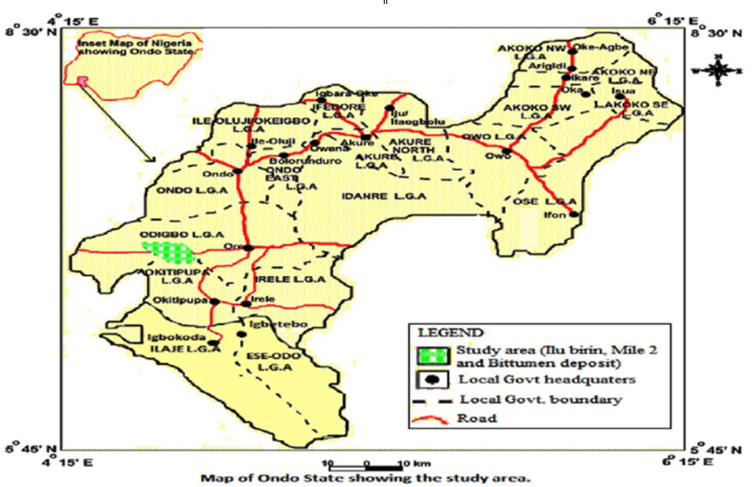
Industrial activities are major contributors to environmental pollution, particularly in soil and aquatic ecosystems. As petroleum remains a primary energy source, its by-products, such as bitumen, are prevalent environmental contaminants. This study investigates the bioremediation potential of Exiguobacterium profundum and Bacillus thuringiensis in degrading bitumen. These bacteria were isolated from bitumen-contaminated soil in Ondo State, Nigeria, and identified through standard biochemical and molecular techniques. After 30 days of incubation, both strains exhibited significant bitumen-degrading capabilities. GC-MS analysis revealed that E. profundum (PP278055) transformed n-alkanes (C3–C20) into fatty acids including hexadecanoic acid, oleic, octadecanoic acid, pentadecanoic acid, octanoic acids and octadecenal compounds. Similarly, B. thuringiensis (PP278059) degraded n-alkanes (C5–C19) into acetic, hexadecanoic acid, oleic acids, and octadecenal compounds. These transformations indicate effective hydrocarbon biodegradation. Quantitative analysis showed that E. profundum achieved a higher bitumen weight loss (36.2%) compared to B. thuringiensis (31.6%). These findings suggest that both bacterial strains, particularly E. profundum, hold promise for the bioremediation of bitumen-contaminated environments.
References
Adegoke OS (2000) Historical perspective of bitumen/tar sand development in Southwestern Nigeria. Proceedings of the 1st International Summit on Bitumen in Nigeria, Nov. 14-16, Akure, Nigeria, pp: 131-140.
Alexander, M. (1994). Biodegradation and Bioremediation. Academic Press, San Diego.
Dukda, S., Adriano, D.C., (1997). Environmental impacts of metal ore mining and processing: a review’. Reviews and analysis. J. Environ. Qual. Vol. 26.
Elshaghabee F.M.F., Rokana N., Gulhane R.D., Sharma C., Panwar H. (2017). Bacillus as potential probiotics: Status, concerns, and future perspectives. Front. Microbiol.;8:1490. doi: 10.3389/fmicb.2017.01490.
Gbolahan-Ayoade EE, Gbolahan WA, Oluwaseun A (2014) Environmental impact of aerophilic organisms on bitumen biodegradation. Int J Sci Res Publ 4: 1-5.
Gutiérrez-Preciado et al. (2017). The genomic sequence of Exiguobacterium chiriqhucha str. N139 reveals a species that thrives in cold waters and extreme environmental conditions. PeerJ 5:e3162; DOI 10.7717/peerj.3162
Head, I. M.; Jones, D. M.; Larter, S. R. (2003). Biological activity in the deep subsurface and the origin of heavy oil. Nature, 426, 344.
Kayukova, G.; Uspensky, B.; Abdrafikova, I.; Musin, R. (2016). Characteristic features of the hydrocarbon composition of Spirido novskoe (Tatarstan) and Pitch Lake (Trinidad and Tobago) asphaltites. Pet. Chem., 56, 572−579.
Larter, S.; Wilhelms, A.; Head, I.; Koopmans, M.; Aplin, A.; Di Primio, R.; Zwach, C.; Erdmann, M.; Telnaes, N. (2003). The controls on the composition of biodegraded oils in the deep subsurface- part 1: biodegradation rates in petroleum reservoirs. Org. Geochem., 34, 601−613.
Mahmood, A., Bilal, B., Naeem, Z., and Iram, S. (2021). “Physical, chemical, and biological remediation techniques for textile effluents in context with developed and developing countries,” In Rhizobiont in bioremediation of hazardous waste (Singapore: Springer), 409–441.
Mbadinga, S. M.; Wang, L.-Y.; Zhou, L.; Liu, J.-F.; Gu, J.-D.; Mu, B.-Z. (2011). Microbial communities involved in anaerobic degradation of alkanes. Int. Biodeterior. Biodegrad., 65,1−13.
Oboh OB, Ilori MO, Akinyemi JO, Adebusoye SA (2006) Hydrocarbon degrading potentials of bacteria isolated from a Nigerian bitumen (Tarsand) deposit. Nat Sci 4: 51-58.
Oguntimehin II, Ipinmoroti KO (2007) Solvent extraction of vanadium from Nigerian bitumen using tri-buthylphosphate. J Appl Sci 7: 4028-4031.
Olowomofe TO, Oluyege JO, Aderiye BI and Oluwole OA (2022) Degradation of poly aromatic fractions of crude oil and detection of catabolic genes in hydrocarbon-degrading bacteria isolated from Agbabu bitumen sediments in Ondo State. AIMS Microbiology, 5(4):308-323.
Pham V.H.T., Kim J., Chang S., Chung W. (2022). Bacterial biosorbents, an efficient heavy metals green clean-up strategy: Prospects, challenges, and opportunities. Microorganisms.;10:610. doi: 10.3390/microorganisms10030610.
Sonune, N. (2021). “Microbes: a potential tool for bioremediation,” in Rhizobiont in bioremediation of hazardous waste. Eds. K. Vivek, P. Ram and K. Manoj (Singapore: Springer), 391–407.
Spirov P, Rudyk S, Tyrovolas A, Jimoh I (2013) The bitumen extraction from Nigerian tar sand using dense carbon dioxide. Chem Eng Transact 32: 283 288.
Strausz OP, Morales-Izquierdo A, Kazmi N, Montgomery DS, Payzant JN, et al. (2010) Chemical composition of athabasca bitumen: The saturate fraction. Energy Fuels 24: 5053-5072.
Yakasai, H.M., et al., (2019). Response surface-based optimization of a novel molybdenum-reducing and cyanide-degrading Serratia sp. strain HMY1. Desalin. Water Treat. 145, 220–231.
Yoon S, Bhatt SD, Lee W, Lee HY, Jeong SY, et al. (2009) Separation and characterization of bitumen from Athabasca oil sand. Korean J Chem Eng 26: 64-71.
Downloads
Published
Issue
Section
Categories
License
Copyright (c) 2025 Amarachi N Ugwuja, Deke V Adegunloye, Adewale O Olalemi

This work is licensed under a Creative Commons Attribution 4.0 International License.


