
EXPERIMENTAL AND COMPUTATIONAL ELUCIDATION OF CORROSION INHIBITION POTENTIAL OF L-HISTIDINE ON MILD STEEL IN AQUEOUS HYDROCHLORIC MEDIUM
DOI:
https://doi.org/10.33003/fjs-2025-0912-4400Keywords:
Corrosion, Computational, Inhibition, Isotherm, L-histidine, Theoretical, QuantumAbstract
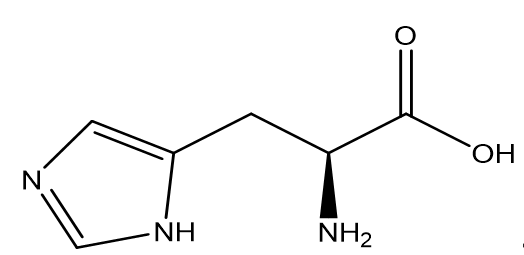
Deterioration of materials, usually metals, by chemical or electrochemical reactions in relation to their environment has been greatly described by corrosion and inhibitors have been effective in curbing its adverse potential on metals. Experimental and computational elucidation of corrosion inhibition potential of L-histidine in interaction with mild steel in HCl medium has been conducted using weight loss method and quantum chemical calculations. Results obtained revealed that raising the concentration of L-histidine from 0.003 to 0.01 mol dm-3 in aqueous HCl medium, for 2 – 6 hours, inhibits the corrosion progression rate of the coupons. The corrosion rate (CR) was observed to slightly decrease with increase in reaction temperature from 323k to 363k. Decrease in CR (i.e increase in inhibition efficiency) was very significant with the time of contact of the mild steel when the inhibitor was increased from 2hrs to 6 hrs. As the inhibitor’s concentration increases, the inhibition efficiency (IE %), was found to increase. Langmuir adsorption isotherm was used to fit surface coverage values and the significantly high value of the correlation (R2) suggests that Langmuir isotherm perfectly describes the adsorption process. R2 values obtained at 343 k and 363 k temperature is 0.9932 and 0.9921 respectively. The computational elucidation were performed by carry out electronic parameters characterize through quantum chemical calculations which were associated with inhibition efficiency. The electrochemical results are corroborated by theoretical data where E-HOMO and E-LUMO were calculated.
References
Al Mubarak, N. A., Khalid, K. F. and Abdel-Azim, K. M. (2010). Electrochemical Investigation of Corrosion and Corrosion Inhibition of Copper in NaCl Solutions. Journal of Material Environmental Science, 1: 9.
Ali, S.K.A. Saeed, M.T. Rahman, S.U. (2003). Theisoxazolidines: a new class of corrosion inhibitors of mild steel in acidic medium. Corrosion Science 45: 253–266.
Bobina, M., Kellenberger, A., Millet, J. P., Muntean C. and Vaszilcsin, N. (2013). Corrosion resistance of carbon steel in weak acid solutions in the presence of L-histidine as corrosion inhibitor,Corrosion Science.vol. 69 pp. 389–395.
Chen, L., Lu, D., & Zhang, Y. (2022). Organic compounds as corrosion inhibitors for carbon steel in HCl solution: a comprehensive review. Materials, 15(6), 2023.
Eddy N.O., Ameh P., Gimba C. E. , Ebenso E. E. (2012) . Chemical Information from GCMS of Corrosion of Mild Steel in HCl. Progress in Organic Coating 75: 456-462
Eddy, N. O., Odoemelam, S. A. and Ekwumemgbo, P. (2010). Inhibition of the corrosion of mild steel in sulphuric acid solution by penicillin G. Scientific Research and Essay. 4 (1): 033-038.
Fu, J. Li, S. Wang, Y. Cao, L. Lu, L. (2010). Computational and electrochemical studies of some amino acid compounds as corrosion inhibitors for mild steel inhydrochloric acid solution, Journal Material Science. 45: 6255–6265.
Huang, T., Sun, G., Zhao, L., Zhang, N., Zhong, R., & Peng, Y. (2021). Quantitative structure- activity relationship (QSAR) studies on the toxic effects of nitroaromatic compounds (NACs): A systematic review. International Journal of Molecular Sciences, 22(16), 8557.
Ibrahim, T., Alayan, H., and Al Mowaqet, T. (2012). The effect of Thyme leaves extract on
Inhibitory action of Phyllanthusamanusextract on the corrosion of mild steel in acidic media. Corrosion Science. 50:2310-2317.
Jones Denny A. (1991). Principles and prevention of corrosion. Maxwellmacmillan internationalpub. Group. ISBN978-0-02-361215-2
Li, S., Li, C., & Wang, F. (2024). Computational experiments of metal corrosion studies: A review. Materials Today Chemistry, 37, 101986
Machnikova, E. Whitmire, K.H. Hackerman, N. (2008). Corrosion inhibition of carbonsteel in hydrochloric acid by furan derivatives. Electrochim Actavol. 53: 6024–6032.
Oguzie E.E. (2006). Adsorption and corrosion inhibitive properties of azadirachtaindica in acid solutions. Pigment and resin technology. 35: 334-340.
Okafor. P. C., Ikpi, M. E., Uwaha, I. E., Ebenso, E. E., Ekpe, U. J., and Umoren, S. A. (2008). Ficus Platyphylla Gum and its Corrosion Inhibition Potential for Mild Steel in 0.1 M HCl. International Journal Electrochem Sciences., 7 (2012) 5677 – 5691
Oladunni N., Anweting I. B., Adetoro A., Ganiyu Y. O. and Uwaiya E. (2024). Investigation of corrosion inhibition potential of hyphaene thebaica shells extract on tannery machines parts in acidic medium. Chemical Society of. Nigeria. 49(2): 249 – 260.
Oladunni N., Yusuf, S.I., Anweting I. B., Agbele I. E. and Samaila P. O. (2020). Kinetics studies of sida acuta leaves extracts as corrosion inhibitor on tannery machines parts in acidic environment. Federal university wukari Trends in Science & Technology Journal, 5(1), 098 – 103.
Shimizu, A., Ishizaki, Y., Horiuchi, S., Hirose, T., Matsuda, K., Sato, H., & Yoshida, J. I. (2020). HOMO–LUMO energy-gap tuning of π-conjugated zwitterions composed of electron-donating anion and electron-accepting cation. The Journal of Organic Chemistry, 86(1), 770-781.
Silva, A.B. Agostinho, S.M.L. Barcia, O.E. Cordeiro, G.G.O. D’Elia, E. (2006).The effect of cysteine on the corrosion of 304L stainless steel in sulphuric acid. Corrosion Science. 48: 3668–3674.
Tsuru.T., Haruyama, S.and Gijutsu, B. (1978). Corrosion inhibition of iron by amphoteric surfactants in 2M HCl. Journal Japan Corrosion Society. 27:573-581.
Downloads
Published
Issue
Section
Categories
License
Copyright (c) 2025 Ahmed Adetoro, Nathaniel Oladunni, Kolawole Akiode O., Lawan Ishaq Y.

This work is licensed under a Creative Commons Attribution 4.0 International License.


