
ISOLATION AND EVALUATION OF NICKEL-TOLERANT BACTERIA FROM AQUATIC PLANT ROOTS FOR NICKEL BIOSORPTION IN LOKOJA, KOGI STATE
DOI:
https://doi.org/10.33003/fjs-2025-0912-4393Keywords:
Aquatic plants, Bacterial isolates, Biosorption, Nickel contaminationAbstract
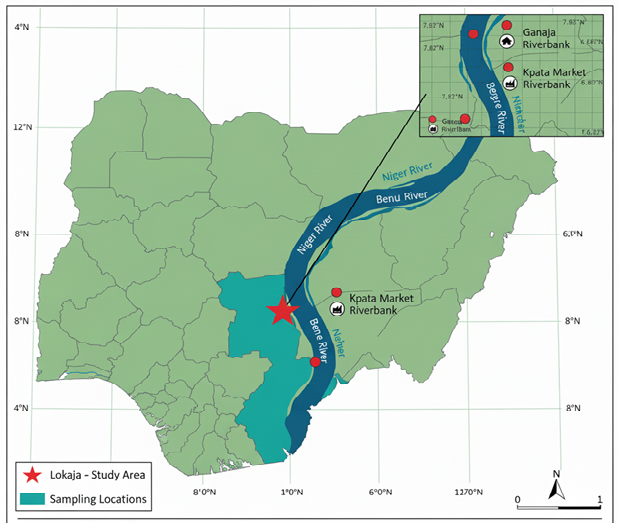
Nickel contamination in aquatic ecosystems poses increasing ecological and public-health risks, particularly in rapidly urbanizing riverine environments. This study aimed to isolate and evaluate nickel-tolerant bacteria associated with the roots of aquatic plants for their potential application in nickel biosorption within Lokoja, Kogi State, Nigeria. Water and root samples of Eichhornia crassipes, Nymphaea lotus, and Limnocharis flava were collected from three pollution-prone riverbank locations. Standard microbiological procedures were used for bacterial enumeration, isolation, and phenotypic characterization, while nickel tolerance was assessed using NiCl₂-supplemented media. Biosorption assays were conducted using dried bacterial biomass across varying nickel concentrations (5–20 ppm) and pH values (3–8). Data were analyzed using one-way ANOVA at p < 0.05. Four isolates: Pseudomonas putida, Pseudomonas aeruginosa, Enterobacter cloacae, and Bacillus subtilis, exhibited significant nickel tolerance (MIC > 3.0 mg/mL). P. aeruginosa demostrated the highest biosorption efficiency (84.63% at 20 ppm), with maximum removal for all isolates occurring at pH 7. Physicochemical analysis of water indicated moderate but increasing pollution downstream. These findings suggest that water plant root-associated bacteria, notably Pseudomonas spp. possess substantial potential for effective nickel bioremediation. It is therefore recommended that these isolates be further evaluated in pilot-scale bioremediation trials, particularly in resource-limited or nickel-impacted water systems.
References
Abedinzadeh, M., Etesami, H. and Alikhani, H. A. (2019). Characterization of rhizosphere and endophytic bacteria from roots of maize (Zea mays L.) plant irrigated with wastewater with biotechnological potential in agriculture. Biotechnology Reports, 21: e00305. https://doi.org/10.1016/j.btre.2019.e00305.
Adejuwon, J. O. and Akinola, F. A. (2025). Surface water quality evaluation of the historic Esinmirin River of antiquity, Ile-Ife, Nigeria. Heliyon, 11(4): e42620. https://doi.org/10.1016/j.heliyon.2025.e42620.
Ahmed Abdullahi, F., Muhammad Namadi, M. and Shuaibu Akpai, A. (2024). Evaluation ofEichhornia crassipes, Pistia stratiotes and Vetiver zizanoidesin phytoremediation of a hospital wastewater effluent. Sahel Journal of Life Sciences FUDMA, 2(1): 185–194. https://doi.org/10.33003/sajols-2024-0201-023.
Alboghobeish, H., Tahmourespour, A. and Doudi, M. (2014). The study of nickel resistant bacteria (NiRB) isolated from wastewaters polluted with different industrial sources. Journal of Environmental Health Science & Engineering, 12: 44. https://doi.org/10.1186/2052-336X-12-44.
Ali, M., Bukar, A., Kawo, A. H., Saleh, A. and Muhammad, B. (2025). Microbial diversity and physicochemical properties of Eichhornia crassipes. Sahel Journal of Life Sciences (SAJOLS): 3(3): 2 https://doi.org/10.33003/sajols-2025-0303-26.
Ansari, M. I. and Malik, A. (2007). Biosorption of nickel and cadmium by metal-resistant bacterial isolates from agricultural soil irrigated with industrial wastewater. Bioresource Technology, 98(16): 3149–3153. https://doi.org/10.1016/j.biortech.2006.10.008.
APHA (2017). Standard Methods for the Examination of Water and Wastewater (23rd ed.). Washington DC: American Public Health Association.
Aruna Devy, R. and Vasudevan, V. (2025). Heavy metals: Major environmental and organismal health impacts. In N. A. Anjum, A. Masood, S. Umar and N. A. Khan (Eds.): Heavy metals in air, soil and water, and plant responses – Recent research updates (Working title). IntechOpen. https://doi.org/10.5772/intechopen.1012537.
Aslam, A., Kanwal, F., Javied, S., Nisar, N. and Torriero, A. A. J. (2025). Microbial biosorption: A sustainable approach for metal removal and environmental remediation.International Journal of Environmental Science and Technology, 22: 13245–13276. https://doi.org/10.1007/s13762-025-06611-1.
Ayach, J., El Malti, W., Duma, L., Lalevée, J., Al Ajami, M., Hamad, H. and Hijazi, A. (2024). Comparing conventional and advanced approaches for heavy metal removal in wastewater treatment: An in-depth review emphasizing filter-based strategies. Polymers, 16(14): 1959. https://doi.org/10.3390/polym16141959.
Balla, A., Silini, A., Cherif-Silini, H., Mapelli, F. and Borin, S. (2025). Root colonization dynamics of alginate encapsulated rhizobacteria: Implications for Arabidopsis thaliana root growth and durum wheat performance. AIMS Microbiology, 11(1): 87–125. https://doi.org/10.3934/microbiol.2025006.
Begum, W., Rai, S., Banerjee, S., Bhattacharjee, S., Mondal, M. H., Bhattarai, A. and Saha, B. (2022). A comprehensive review on the sources, essentiality and toxicological profile of nickel. RSC Advances, 12(15): 9139–9153. https://doi.org/10.1039/d2ra00378c.
Brenner, D. J., Krieg, N. R. and Staley, J. T. (Eds.). (2005). Bergey's manual of systematic bacteriology: Vol. 2. The Proteobacteria (Part C, 2nd ed.). Springer.
Briffa, J., Sinagra, E. and Blundell, R. (2020). Heavy metal pollution in the environment and their toxicological effects on humans. Heliyon, 6(9): e04691. https://doi.org/10.1016/j.heliyon.2020.e04691.
Cappuccino, J. G. and Sherman, N. (2014). Microbiology: A laboratory manual (10th ed.). Pearson.
Carroll, D., Holden, N., Gifford, M. L. and Dupuy, L. X. (2020). Framework for quantification of the dynamics of root colonization by Pseudomonas fluorescens isolate SBW25. Frontiers in Microbiology, 11: 585443. https://doi.org/10.3389/fmicb.2020.585443.
Costa, F. S., Macedo, M. W. F. S., Araújo, A. C. M., Rodrigues, C. A., Kuramae, E. E., Alcanfor, S. K. de B., Pessoa-Filho, M. and Barreto, C. C. (2019). Assessing nickel tolerance of bacteria isolated from serpentine soils. Brazilian Journal of Microbiology, 50(3): 705–713. https://doi.org/10.1007/s42770-019-00111-4.
Crump, B. C. and Koch, E. W. (2008). Attached bacterial populations shared by four species of aquatic angiosperms. Applied and Environmental Microbiology, 74(19): 5948–5957. https://doi.org/10.1128/AEM.00952-08.
Demarco, C. F., Quadro, M. S., Carlos, F. S., Pieniz, S., Morselli, L. B. G. A. and Andreazza, R. (2023). Bioremediation of aquatic environments contaminated with heavy metals: A review of mechanisms, solutions and perspectives. Sustainability, 15(2): 1411. https://doi.org/10.3390/su15021411.
Díaz, A., Marrero, J., Cabrera, G., Coto, O. and Gómez, J. M. (2022). Optimization of nickel and cobalt biosorption by native Serratia marcescens strains isolated from serpentine deposits using response surface methodology. Environmental Monitoring and Assessment, 194(3): 167. https://doi.org/10.1007/s10661-022-09816-w.
Dijoux, J., Gigante, S., Lecellier, G., Guentas, L. and Burtet-Sarramegna, V. (2025). Plant nickel-exclusion versus hyperaccumulation: A microbial perspective. Microbiome, 13: 110. https://doi.org/10.1186/s40168-025-02098-7.
Duan, Y., Han, M., Grimm, M., Schierstaedt, J., Imani, J., Cardinale, M., Le Jean, M., Nesme, J., Sørensen, S. J. and Schikora, A. (2023). Hordeum vulgare differentiates its response to beneficial bacteria. BMC Plant Biology, 23: 460. https://doi.org/10.1186/s12870-023-04518-8.
Edegbene, A. O., Yandev, D., Omotehinwa, T. O., Zakari, H. and Andy, B. O. (2025). Water quality assessment in Benue South, Nigeria: An investigation of physico-chemical and microbial characteristics. Water Science, 39(1): 279–290. https://doi.org/10.1080/23570008.2025.2483013.
Edeki, P. E., Isah, E. C. and Mokogwu, N. (2023). Assessment of physicochemical and bacteriological quality of drinking water in Sapele local government area of Delta State, South-South, Nigeria. Journal of Water and Health, 21(2): 286–298. https://doi.org/10.2166/wh.2023.246.
Elgamal, M. S., Ahmed, A. F. and Abdelbary, S. (2018). Evaluation of nickel tolerance by identified Pseudomonas aeruginosa isolated from Egyptian polluted soils. Bioscience Research, 15(1): 518–529.
Gates, A., Jakubowski, J. A. and Regina, A. C. (2023). Nickel toxicology. In StatPearls. StatPearls Publishing. https://www.ncbi.nlm.nih.gov/books/.
Genchi, G., Carocci, A., Lauria, G., Sinicropi, M. S. and Catalano, A. (2020). Nickel: Human health and environmental toxicology.International Journal of Environmental Research and Public Health, 17(3): 679. https://doi.org/10.3390/ijerph17030679.
Holt, J., Krery, H., Sneathe, R. and Williams, S. (1994). Bergey’s manual of determinative bacteriology, 8th edition, Williams and Wittkens company Baltimore USA.
Jolaosho, T. L., Elegbede, I. O., Ndimele, P. E., Marouani, M., Yusuf, A. O., Omoregha, J. K., Mustapha, A. A., Hungbo, J. J. and Rasaq, M. F. (2025). Seasonal and spatial variations of physicochemical parameters and heavy metals in surface water of interconnected Nigeria lagoons experiencing distinct anthropogenic disturbances. Scientific Reports, 15: e38816. https://doi.org/10.1038/s41598-025-22727-3.
Kim, Z. K., Park, Y. S., Yang, T.-J., Kim, H. and Lee, Y.-H. (2025). Unveiling microbial complexity within Astragalus propinquus and Glycyrrhiza uralensis roots. Annals of Microbiology, 75: 10. https://doi.org/10.1186/s13213-025-01802-0.
Laoye, B., Olagbemide, P., Ogunnusi, T. and Akpor, O. (2025). Heavy metal contamination: Sources, health impacts, and sustainable mitigation strategies with insights from Nigerian case studies (Version 4). F1000Research, 14: 134. https://doi.org/10.12688/f1000research.160148.4.
Lau, L. L., Strezov, V., Gonçalves, M. V. B. and Bagatini, M. C. (2021). Trace elements emission in iron ore sintering: A review.Environmental Advances, 6: 100123. https://doi.org/10.1016/j.envadv.2021.100123.
Léonard, A., Gerber, G. B. and Jacquet, P. (1981). Carcinogenicity, mutagenicity and teratogenicity of nickel.Mutation Research/Reviews in Genetic Toxicology, 87(1): 1–15. https://doi.org/10.1016/0165-1110(81)90002-6.
Levická, J. and Orliková, M. (2024). The toxic legacy of nickel production and its impact on environmental health: A case study.International Journal of Environmental Research and Public Health, 21(12): 1641. https://doi.org/10.3390/ijerph21121641.
Madigan, M. T., Bender, K. S., Buckley, D. H., Sattley, W. M. and Stahl, D. A. (2018). Brock biology of microorganisms (15th ed., Global ed.). Pearson. (ISBN: 9781292235103).
Maduka, O. and Ephraim-Emmanuel, B. (2019). The quality of public sources of drinking water in oil-bearing communities in the Niger Delta region of Nigeria. AAS Open Research, 2: 23. https://doi.org/10.12688/aasopenres.12964.1.
Makino, A., Nakai, R., Yoneda, Y., Toyama, T., Tanaka, Y., Meng, X.-Y., Mori, K., Ike, M., Morikawa, M., Kamagata, Y. and Tamaki, H. (2022). Isolation of aquatic plant growth-promoting bacteria for the floating plant duckweed (Lemna minor). Microorganisms, 10(8): 1564. https://doi.org/10.3390/microorganisms10081564.
Martínez-Martínez, J. G., Rosales-Loredo, S., Hernández-Morales, A., Arvizu-Gómez, J. L., Carranza-Álvarez, C., Macías-Pérez, J. R., Rolón-Cárdenas, G. A. and Pacheco-Aguilar, J. R. (2023). Bacterial communities associated with the roots of Typha spp. and its relationship in phytoremediation processes. Microorganisms, 11(6): 1587. https://doi.org/10.3390/microorganisms11061587.
Mathivanan, K., Chandirika, J. U., Vinothkanna, A., Yin, H., Liu, X. and Meng, D. (2021). Bacterial adaptive strategies to cope with metal toxicity in the contaminated environment: A review. Ecotoxicology and Environmental Safety, 226: 112863. https://doi.org/10.1016/j.ecoenv.2021.112863.
Meneguzzi, R. del V., Fernandez, M., Cappellari, L. del R., Giordano, W. and Banchio, E. (2024). Isolation and characterization of plant growth-promoting bacteria from the rhizosphere of medicinal and aromatic plant Minthostachys verticillata. Plants, 13(15): 2062. https://doi.org/10.3390/plants13152062.
Moeini, F., Doudi, M., Emami Karvani, Z. and Fouladgar, M. (2024). Biosorption of copper, nickel, and manganese as well as the production of metal nanoparticles by Bacillus species isolated from soils contaminated with electronic wastes. Brazilian Journal of Microbiology, 55(3): 2131–2147. https://doi.org/10.1007/s42770-024-01369-z.
Ogungbile, P. O., Ajibare, A. O., Ogunbode, T. O., Akande, J. A., Aliku, C. B. and Sridhar, M. K. C. (2023). Assessment of physico-chemical characteristics of River Niger at Ajaokuta, Kogi State, Nigeria. Ghana Journal of Geography, 15(1): 185–197. https://doi.org/10.4314/gjg.v15i1.9.
Oladimeji, T. E., Oyedemi, M., Emetere, M. E., Agboola, O., Adeoye, J. B. and Odunlami, O. A. (2024). Review on the impact of heavy metals from industrial wastewater effluent and removal technologies.Heliyon, 10(23): e40370. https://doi.org/10.1016/j.heliyon.2024.e40370.
Onojake, M. C., Sikoki, F. D., Omokheyeke, O. and Akpiri, R. U. (2017). Surface water characteristics and trace metals level of the Bonny/New Calabar River Estuary, Niger Delta, Nigeria. Applied Water Science, 7: 951–959. https://doi.org/10.1007/s13201-015-0306-y.
Oyewole, O. A., Zobeashia, S. S. L., Oladoja, E. O., Raji, R. O., Odiniya, E. E. and Musa, A. M. (2019). Biosorption of heavy metal polluted soil using bacteria and fungi isolated from soil. SN Applied Sciences, 1: 857. https://doi.org/10.1007/s42452-019-0869-5.
Pagnucco, G., Overfield, D., Chamlee, Y., Shuler, C., Kassem, A., Opara, S., Najaf, H., Abbas, L., Coutinho, O., Fortuna, A., Sulaiman, F., Farinas, J., Schittenhelm, R., Catalfano, B., Li, X. and Tiquia-Arashiro, S. M. (2023). Metal tolerance and biosorption capacities of bacterial strains isolated from an urban watershed. Frontiers in Microbiology, 14: 1278886. https://doi.org/10.3389/fmicb.2023.1278886.
Pandey, P. K., Choubey, S., Verma, Y., Pandey, M., Kalyan Kamal, S. S. and Chandrashekhar, K. (2007). Biosorptive removal of Ni(II) from wastewater and industrial effluent. International Journal of Environmental Research and Public Health, 4(4): 332–339. https://doi.org/10.3390/ijerph200704040009.
Pishchik, V., Mirskaya, G., Chizhevskaya, E., Chebotar, V. and Chakrabarty, D. (2021). Nickel stress-tolerance in plant–bacterial associations. PeerJ, 9: e12230. https://doi.org/10.7717/peerj.12230.
Raharja, N. I., Hossain, M. A. and Akamine, H. (2025). Microbial population in Curcuma species at different growth stages. Agriculture, 15(10): 1092. https://doi.org/10.3390/agriculture15101092.
Rahmi, T. M., Hanifa, D., Agustin, R. and Djamaan, A. (2024). Isolation of endophyte bacteria from water hyacinth plants (Pontederia crassipes) and testing their activity as silver nitrate (AgNO₃) bioreductors in the formation of silver nanoparticles (AgNPs). IOSR Journal of Pharmacy and Biological Sciences, 19(5, Ser. 1): 70–75. https://doi.org/10.9790/3008-1905017074.
Raji, M. I. O., Ibrahim, Y. K. E., Tytler, B. A. and Ehinmidu, J. O. (2015). Physicochemical characteristics of water samples collected from River Sokoto, northwestern Nigeria. Atmospheric and Climate Sciences, 5(3): 194–199. https://doi.org/10.4236/acs.2015.53013.
Ramos, C., Mølbak, L. and Molin, S. (2000). Bacterial activity in the rhizosphere analyzed at the single-cell level by monitoring ribosome contents and synthesis rates. Applied and Environmental Microbiology, 66(2): 801–809. https://doi.org/10.1128/aem.66.2.801-809.2000.
Rana, A. K., Vyas, P., Sharma, S. and Sardana, V. (2023). Groundnut harbours non-nodulating non-rhizobial plant growth-promoting bacterial endophytes. 3 Biotech, 13(12): 420. https://doi.org/10.1007/s13205-023-03837-z.
Saini, S., Nair, N. and Saini, M. R. (2013). Embryotoxic and teratogenic effects of nickel in Swiss albino mice during the organogenetic period. BioMed Research International, 2013: 701439. https://doi.org/10.1155/2013/701439.
Sathees Kumar, V., Gokulan, R., Geetha, M. B. and Zunaithur Rahman, D. (2022). Biosorption of heavy metal ions from the aqueous solutions using groundnut shell activated carbon: batch adsorption, kinetic and thermodynamic studies. Global NEST Journal, 24(4): 729–742. https://doi.org/10.30955/gnj.004491.
Sofo, A., Elshafie, H. S. and Camele, I. (2020). Structural and functional organization of the root system: A comparative study on five plant species. Plants, 9(10): 1338. https://doi.org/10.3390/plants9101338.
Tanaka, Y., Matsuzawa, H., Tamaki, H., Tagawa, M., Toyama, T., Kamagata, Y. and Mori, K. (2017). Isolation of novel bacteria including rarely cultivated phyla, Acidobacteria and Verrucomicrobia, from the roots of emergent plants by simple culturing method. Microbes and Environments, 32(3): 288–292. https://doi.org/10.1264/jsme2.ME17027.
Tanaka, Y., Tamaki, H., Matsuzawa, H., Nigaya, M., Mori, K. and Kamagata, Y. (2011). Microbial community analysis in the roots of aquatic plants and isolation of novel microbes including an organism of the candidate phylum OP10. Microbes and Environments, 27(2): 149–157. https://doi.org/10.1264/jsme2.ME11288.
Thangavelu, L., Royapuram Veeraragavan, G., Mallineni, S. K., Devaraj, E., Parameswari, R. P., Syed, N. H., Dua, K., Chellappan, D. K., Balusamy, S. R. and Bhawal, U. K. (2022). Role of nanoparticles in environmental remediation: An insight into heavy metal pollution from dentistry. Bioinorganic Chemistry and Applications, 2022: 1946724. https://doi.org/10.1155/2022/1946724.
Tula, M. Y., Enabulele, O. I., Ophori, E. A. and Aziegbemhin, A. S. (2022). A comprehensive study on the physicochemical characteristics of two water sources from the Adamawa North senatorial zone, Nigeria. Public Health Toxicology, 2(4): 18. https://doi.org/10.18332/pht/158012.
Ubuoh, E. A., Nwogu, F. U., Ofoegbu, C. C. and Chikezie, P. C. (2023). Environmental pollution loads on surface water chemistry and potentially ecological risks of inland aquatic ecosystem in South-Eastern State, Nigeria. Environmental Systems Research, 12: 22. https://doi.org/10.1186/s40068-023-00302-x
Uchendu, C. and Edogbo, B. (2025). Monitoring and evaluation of potentially toxic metals and water conditions in designated rivers near industrial areas in Kano State, Nigeria. Discover Applied Sciences, 7: 1401. https://doi.org/10.1007/s42452-025-07249-x.
Udechukwu, C. I., Okere, S. G., Essien, E. A., Onyima, E. C., Ekpenyong, E. A. and Udotong, U. F. (2025). Physicochemical and microbiological analysis of water quality of Nworie River in Imo State, Nigeria. World Journal of Advanced Research and Reviews, 26(2): 1504–1511. https://doi.org/10.30574/wjarr.2025.26.2.1491
Usmonkulova, A., Malusa, E., Kadirova, G., Khalilov, I., Canfora, L. and Abdulmyanova, L. (2025). Ni²⁺ and Cd²⁺ biosorption capacity and redox-mediated toxicity reduction in bacterial strains from highly contaminated soils of Uzbekistan. Microorganisms, 13(7): 1485. https://doi.org/10.3390/microorganisms13071485
Uzamere, O., Kpee, F. and Momta, P. N. (2023). Determination of levels of physicochemical parameters in water samples of New Calabar River, Rivers State, Nigeria. Faculty of Natural and Applied Sciences Journal of Scientific Innovations, 4(1): 55–63. https://fnasjournals.com/index.php/FNAS-JSI/article/view/117.
Vahedi, M., Hosseini-Jazani, N., Yousefi, S. and Ghahremani, M. (2017). Evaluation of anti-bacterial effects of nickel nanoparticles on biofilm production by Staphylococcus epidermidis. Iranian Journal of Microbiology, 9(3): 160–168.
Vílchez, J. I., Yu, Y., Yi, D. and Zhang, H. (2021). Measurements of root colonized bacteria species. Bio-Protocol, 11(7): e3976. https://doi.org/10.21769/BioProtoc.3976.
Vishwakarma, S. K., Patil, A., Kaintura, M., Verma, A., Singh, S. and Arya, M. (2025). Bioremediation of nickel (Ni²⁺) from contaminated environments using thermophilic bacterial biomass: A comparative study. Bioremediation Journal. Advance online publication. https://doi.org/10.1080/10889868.2025.2566432.
Walker, C. H., Sibly, R. M. and Peakall, D. B. (2012). Principles of ecotoxicology (4th ed.). CRC Press. https://doi.org/10.1201/b11767.
World Health Organization (WHO) (2021). Nickel in drinking-water: Background document for development of WHO guidelines for drinking-water quality (Public review version). https://cdn.who.int/media/docs/default-source/wash-documents/wash-chemicals/who-guidelines-for-drinking-water-quality-background-document-nickel-2021_public-review-version-.pdf.
Xi, J., Qian, K., Shan, L., Huang, J. and Yan, Y. (2022). The potential of mineral weathering of halophilic-endophytic bacteria isolated from Suaeda salsa and Spartina anglica. Archives of Microbiology, 204(9): 561. https://doi.org/10.1007/s00203-022-03129-9.
Yaashikaa, P. R., Senthil Kumar, P., Saravanan, A. and Vo, D.-V. N. (2021). Advances in biosorbents for removal of environmental pollutants: A review on pretreatment, removal mechanism and future outlook. Journal of Hazardous Materials, 420: 126596. https://doi.org/10.1016/j.jhazmat.2021.126596.
Zaki, R. M., Afify, A. H., Ashour, E. H. and El-Sawah, A. M. (2025). Salt-tolerant bacteria support salinity stress mitigating impact of arbuscular mycorrhizal fungi in maize (Zea mays L.). Microorganisms, 13(6): 1345. https://doi.org/10.3390/microorganisms13061345.
Downloads
Published
Issue
Section
Categories
License
Copyright (c) 2025 Ogu Gideon I., Odoh Joshua A., Ojiego Beatrice O., Obioh Gloria I.B., Madu Josephine

This work is licensed under a Creative Commons Attribution 4.0 International License.


