
POST-OCCUPANCY PERFORMANCE OF OWNER-OCCUPIED RESIDENTIAL BUILDINGS IN KADUNA METROPOLIS: INFLUENCE OF STAKEHOLDER PARTICIPATION
DOI:
https://doi.org/10.33003/fjs-2025-0912-4391Keywords:
Owner-occupied housing, Building engineering, Construction technology, Post-occupancy evaluation, Housing performance, Owner participationAbstract
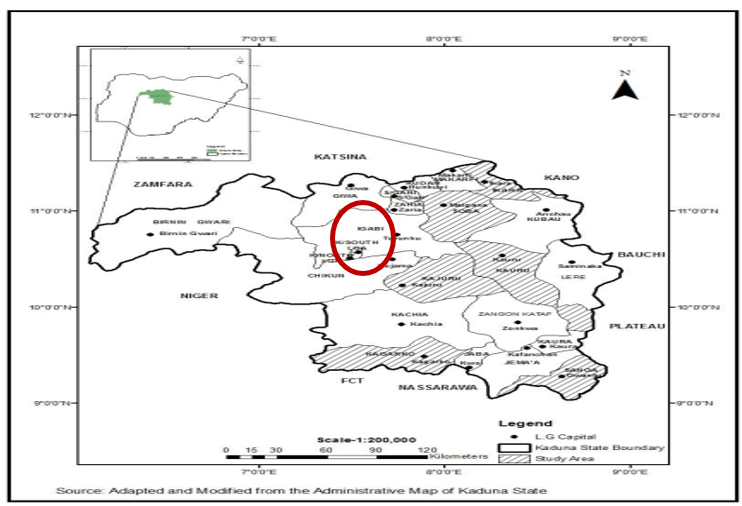
Post-Occupancy Evaluation (POE) provides a systematic approach for assessing the operational performance of residential buildings based on occupant use after completion. This study evaluates the post-occupancy performance of owner-occupied residential buildings in the Mando and Mahuta communities of Kaduna Metropolis, Nigeria, with emphasis on functional efficiency, space adequacy, building adaptability, and user satisfaction. A mixed-methods research design was adopted, combining structured household questionnaires with focus group discussions involving owner-occupiers of houses completed between 2004 and 2024. Quantitative data were analysed using descriptive statistics, while qualitative responses were used to support performance interpretation. The results indicate high levels of post-occupancy modification, reflecting the incremental nature of owner-occupied housing development. Over 96% of households reported adjustments related to internal space configuration, finishes, and service areas to improve usability. Buildings where owners were involved in design and construction decisions recorded higher functional performance and satisfaction levels (up to 78%) compared to buildings developed through unilateral decision-making (56%). Limited early-stage owner involvement was associated with increased post-occupancy alterations, indicating design–performance mismatch at the initial planning stage. Although the study is limited to two communities within Kaduna Metropolis, the findings provide practical insights applicable to similar urban residential contexts. Overall, the study demonstrates that post-occupancy performance of owner-occupied residential buildings is strongly influenced by technical and managerial decisions made during earlier housing delivery phases. The findings emphasize POE as a feedback mechanism for improving residential building design and long-term operational efficiency in urban Nigeria. Incorporating structured owner participation during early stages enhances functionality and sustainability.
References
Chukwuma-Uchegbu, M. (2025). Examining the relationship between housing
satisfaction and post-occupancy modifications in Owerri Metropolis. Gombe
Journal of Administration and Management, 9(1A), 188–194.
https://journals.gjbeacademia.com
12
Ibem, E. O., Opoko, A. P., Adeboye, A. B., & Amole, D. (2013). Performance evaluation
of residential buildings in public housing estates in Ogun State, Nigeria.
Facilities, 31(5– 6), 178–197. https://doi.org/10.1108/02632771311307045
Ilesanmi, A. O. (2010). Post-occupancy evaluation and residents’ satisfaction with public
housing in Lagos, Nigeria. Journal of Building Appraisal, 6(2), 153–169.
https://doi.org/10.1057/jba.2010.20
Jiboye, A. D. (2012). Post-occupancy evaluation of residential satisfaction in Lagos,
Nigeria: Feedback for residential improvement. Frontiers of Architectural
Research, 1(3), 236–243. https://doi.org/10.1016/j.foar.2012.08.001
Nubi, T. G., &and Adegbemile, T. (2007). Post-occupancy evaluation (POE) as a tool for
quality assessment of housing in Nigeria: Case study of LSDPC estates.
The Quantity Surveyor Journal. https://ir.unilag.edu.ng
Preiser, W. F. E., Rabinowitz, H. Z., & White, E. T. (1988). Post-occupancy evaluation.
Van Nostrand Reinhold.
Waziri, A. G., Yusof, N. A., & Salleh, A. G. (2013). Residential satisfaction with public
housing estates in Nigeria. Journal of Housing and the Built Environment, 28(4),
Downloads
Published
Issue
Section
Categories
License
Copyright (c) 2025 PJ Ugochukwu, H Babangida, ML Sagada

This work is licensed under a Creative Commons Attribution 4.0 International License.


