
ADHOC REMEDIES FOR MSMES PERFORMANCE IN NIGERIA: TECHNOLOGY INCUBATION PROGRAMME APPROACH
DOI:
https://doi.org/10.33003/fjs-2025-0912-4350Keywords:
Business Incubators, New Firms, Government Policy, PerformanceAbstract
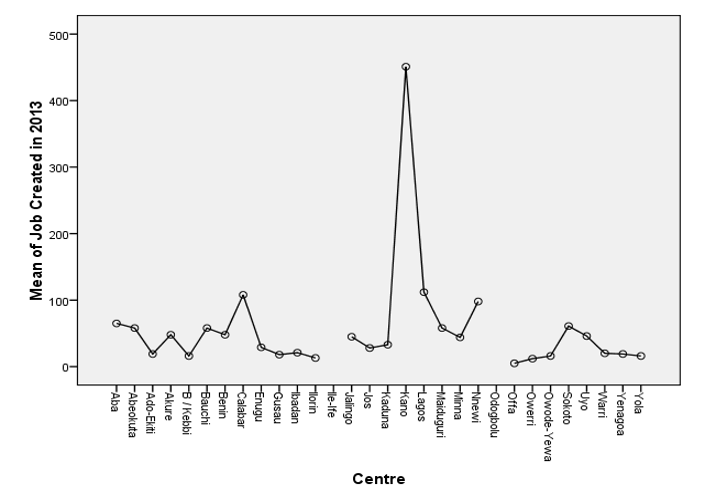
Several efforts have been made in dealing with the violation of the assumptions made regarding the success story of MSMEs documented and some yielded results. Particular attention is that of the start-up problem. Business incubators are organizations created to help small and young firms become stable and profitable, which is a mainstay of economic development programs. The literature emphasizes several criteria and indicators to measure incubators’ performance or outcomes such as occupancy, jobs created, firms graduate, tenant revenues, number of patent applications per firm, number of discontinued businesses and others. Incubators have been observed as helping to build entrepreneurial cultures and clusters, acting as a catalyst for the development of integrated business support networks which include finance providers, universities, business schools, large companies, business professionals and government bodies. Due to the significance of technological innovation and entrepreneurship in shaping the future, this paper looks at technology incubation centres and their role in commercializing technologies and developing high value-added products, processes and services. In the new environment of rapid technological advances and globalizing trade, modern small businesses are playing a significant role in creating innovations, employment, income and growth with equity. This study deals with performance assessment of incubators with respect to job creation using the existing Technology Incubation Centres in Nigeria. The objectives of this paper will be focus on Technology Incubation Centres implementation processes, institutional structures and the services provided by the government to the incubatees and affiliates.
References
Adegbite, Oyeyemi, (2001). “Business Incubators and Small Enterprise Development: The Nigerian Experience”. Small Business Economics 17: 157-166.
Aernoudt, R. (2004), “Incubators: tool for entrepreneurship?”, Small Business Economics, Vol. 23 No. 2, pp. 127-135.
Al-Mubaraki, H.M. and Busler M, (2012) “Incubators economic Indicators: Mixed Approach” Journal of Case Research in Business and Economics.
Aremu M. A. and Adeyemi. (2011) “Small and Medium scale Enterprises as a survival strategy for employment generation in Nigeria. Journal of Sustainable Development, 4(1), 200-206,
Cromie, S. (1991). The problems experienced by young firms. International Small Business Journal, Vol. 9, No.3, pp.51-69.
Davidsson, P. and Gordon, S.R. (2010), “Panel studies of new venture creation: a review and suggestions for future research”, Proceedings of Annual Meeting of the Academy of Management, Academy of Management, Montre´al Convention Center, Montreal, August 6 10.
FMST, (2005). Federal Ministry of Science and Technology Quarterly, vol.2, Abuja, Nigeria.
Gartner, W.B. (1985), “A conceptual framework for describing the phenomena of new venture creation”, The Academy of Management Review, Vol. 10 No. 4, pp. 696-706.
Gary D. Libecap.(2011) “Advances in the Study of Entrepreneurship, Innovation & Economic Growth, Volume 22), Emerald Group Publishing Limited, pp. ix – xii.
Hackett, S.M. and Dilts, D.M. (2004a), “A systematic review of business incubation research”, Journal of Technology Transfer, Vol. 29 No. 1, pp. 55-82.
Ihenacho, R.N., (2005). A study of the Dynamics of institutional support Measures to SMEs in Nigeria. A Ph.D Dissertation in Management. St Clements University, USA.
Kothari, C., 2004. Research Methodology: Methods and Techniques. New Age International Publishers.
Kumar K. S. and Ravindran D. S. R, (2012). “A Study on Elements of Key Success Factors Determining the Performance of Incubators” European Journal of Social Sciences ISSN 1450-2267 Vol.28 No.1 pp. 13-23.
Lichtenstein, B.B., Dooley, K.J. and Lumpkin, G.T. (2006), “Measuring emergence in the dynamics of new venture creation”, Journal of Business Venturing, Vol. 21 No. 2, pp. 153-175.
NBTI, (2005), Policy, Functions, Structures and Operational Guidelines, Abuja, Nigeria.
NBTI, (2015), Annual monthly report, Abuja, Nigeria.
Phan, P.H., Siegel, D.S. and Wright, M. (2005), “Science parks and incubators: observations,
synthesis and future research”, Journal of Business Venturing, Vol. 20 No. 2, pp. 165-182.
Obitayo K. M, (2011), “ Creating an enabling environment for Small and Medium Industries, CBN 25(3).
Rajasekar, S., Philominathan, P., Chinnathambi, V., (2006). Research methodology. Reg. Anesth. Pain Med. 36, 23. Available at: http://arxiv.org/abs/physics/0601009.
Shepherd, D.A. (2011), “Multilevel entrepreneurship research: opportunities for studying entrepreneurial decision making”, Journal of Management, Vol. 37 No. 2, pp. 412-420.
Downloads
Published
Issue
Section
Categories
License
Copyright (c) 2025 Kolawole R. Kazeem, Olugbenga P Olufemi, Tunji N Nofiu

This work is licensed under a Creative Commons Attribution 4.0 International License.


