
MOLECULAR EPIDEMIOLOGY OF MULTIDRUG- AND EXTENSIVELY DRUG-RESISTANT TUBERCULOSIS IN KANO STATE, NORTHWESTERN NIGERIA
DOI:
https://doi.org/10.33003/fjs-2025-0912-4279Keywords:
Multidrug-resistant tuberculosis, Extensively drug-resistant tuberculosis, Molecular epidemiology, MTBDRplus/MTBDRsl assays, Kano, NigeriaAbstract
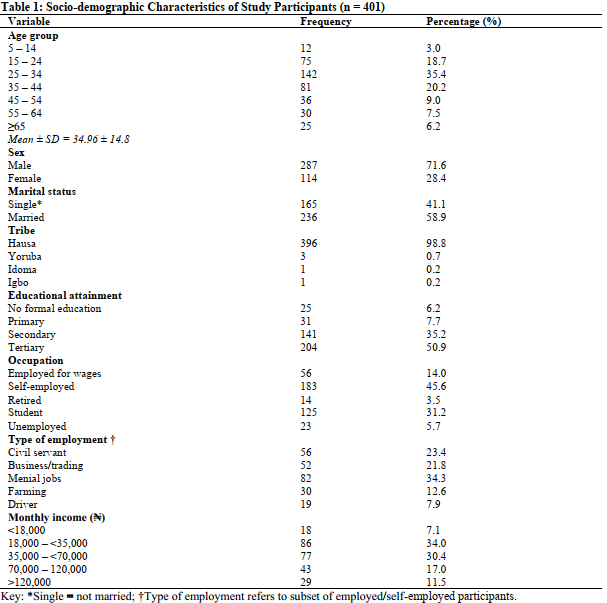
Tuberculosis (TB) remains a major global public health challenge, and Nigeria is among the eight countries that contribute the highest burden of casesThe emergence and rise of multidrug-resistant (MDR) and extensively drug-resistant (XDR) TB threaten progress toward elimination, yet molecular epidemiological data from northwestern Nigerian states remain limited. The objective of this study was to determine the prevalence and molecular determinants of MDR- and XDR-TB among GeneXpert-positive pulmonary TB patients in Kano State using MTBDRplus and MTBDRsl assays. A cross-sectional study was conducted using samples collected from 401 GeneXpert-positive TB patients recruited across 19 DOTS clinics in Kano State between 2018 and 2019. Sputum samples were cultured on Lowenstein–Jensen medium, followed by molecular drug susceptibility testing with the Genotype MTBDRplus (first-line resistance) and MTBDRsl (second-line resistance) assays. Socio-demographic and clinical data were obtained via structured questionnaires. Multidrug-Resistant Tuberculosis (MDR-TB) was detected in 41 patients (10.2%), while rifampicin and isoniazid mono-resistance occurred in 26 (6.5%) and 6 (1.5%), respectively. Resistance clustered in urban LGAs, notably Nasarawa (3.5%), Fagge (1.5%), and Gwale (0.7%). MDR-TB was most prevalent among males (11.5%) and patients aged 25–34 years (35.4%).There was no significant association between HIV status and MDR-TB (HIV-positive: 9.8%; HIV-negative: 10.3%). Second-line resistance showed fluoroquinolone resistance in 6 (1.5%), aminoglycoside resistance in 12 (3.0%), and low-level amikacin resistance in 1 (0.2%). Two XDR-TB cases (0.5%) were identified in Nasarawa and Ungogo LGAs. The MDR-TB burden in Kano State is high, with urban hotspots and emerging XDR-TB, requiring strengthened surveillance, targeted interventions, and rational antibiotic...
References
Alabi, E. D., Rabiu, A. G., & Adesoji, A. T. (2025). A review of antimicrobial resistance challenges in Nigeria: The need for a one health approach. One Health, 20, 101053. https://doi.org/10.1016/j.onehlt.2025.101053
Aliyu, G., El-Kamary, S. S., Abimiku, A., Brown, C., Tracy, K., Hungerford, L., & Blattner, W. (2020). Prevalence of drug resistance tuberculosis in Nigeria: A multicenter study. BMC Infectious Diseases, 20(1), 1–9. https://doi.org/10.1186/s12879-020-05074-5
Becton, Dickinson and Company. (2007). Specimen collection and transport guidelines. BD Biosciences.
Bello, D. (2025). Assessing tuberculosis surveillance in northwest Nigeria: Evidence from a systematic review. AKASA M-J, 1(3). https://akasa.com.ng/ojs/index.php/journal. eISSN: 3093 0421
Centers for Disease Control and Prevention. (2020). Laboratory procedures for the diagnosis of tuberculosis. CDC.
Centers for Disease Control and Prevention. (2023). Mycobacteriology laboratory manual. CDC.
Chen, Z., Wang, T., Du, J., Sun, L., Wang, G., Ni, R., An, Y., Fan, X., Li, Y., Guo, R., Mao, L., Jing, W., Shi, K., Cheng, J., Wang, Q., Nie, W., Liu, H., Liang, J., & Gong, W. (2025). Decoding the WHO Global Tuberculosis Report 2024: A critical analysis of global and Chinese key data. Zoonoses, 5(1). https://doi.org/10.15212/ZOONOSES-2024-0061
Cochran, W. G. (1977). Sampling techniques (3rd ed.). Wiley.
Desta, K., Tilahun, B., & Sitotaw, Y. (2020). Spatial distribution and determinants of multidrug-resistant tuberculosis in Ethiopia. PLOS ONE, 15(9), e0239179. https://doi.org/10.1371/journal.pone.0239179
Dheda, K., Mirzayev, F., Cirillo, D. M., Udwadia, Z., Dooley, K. E., Chang, K.-C., Omar, S. V., Reuter, A., Perumal, T., Horsburgh, C. R. Jr., Murray, M., & Lange, C. (2024). Multidrug-resistant tuberculosis. Nature Reviews Disease Primers, 10(1), Article 22. https://doi.org/10.1038/s41572-024-00504-2
Dillman, D. A., Smyth, J. D., & Christian, L. M. (2014). Internet, phone, mail, and mixed-mode surveys: The tailored design method (4th ed.).
Faye, L. M., Hosu, M. C., Dlatu, N., Iruedo, J., & Apalata, T. (2025). Predicting treatment adherence in patients with drug-resistant tuberculosis: Insights from socioeconomic, demographic, and clinical factors of patients in the rural Eastern Cape. Frontiers in Tuberculosis, 3, 1659333. https://doi.org/10.3389/ftubr.2025.1659333
Global Laboratory Initiative (GLI). (2019). Laboratory diagnosis of tuberculosis by line probe assays: Implementation manual. Stop TB Partnership.
Kalton, G., & Brick, J. M. (2005). Weighting schemes for survey sampling. Journal of Official Statistics, 21(2), 193–214.
Kano State Tuberculosis and Leprosy Control Programme (KSTBLCP). (2018). Annual TB report. KSTBLCP.
Kish, L. (1965). Survey sampling. Wiley.
Lange, C., Chesov, D., Heyckendorf, J., Leung, C. C., Udwadia, Z., & Dheda, K. (2018). Drug-resistant tuberculosis: An update on disease burden, diagnosis and treatment. Respirology, 23(7), 656–673. https://doi.org/10.1111/resp.13304
Lawson, L., Yassin, M. A., Thacher, T. D., Olatunji, F., Lawson, J. O., Akingbogun, T. I., … Cuevas, L. E. (2011). Resistance to first-line tuberculosis drugs in three cities of Nigeria. Tropical Medicine & International Health, 16(8), 974–980. https://doi.org/10.1111/j.1365-3156.2011.02799.x
Lu, G., Cao, Y., Chai, L., Li, Y., Li, S., Heuschen, A.-K., Chen, Q., Müller, O., Cao, J., & Zhu, G. (2022). Barriers to seeking health care among returning travellers with malaria: A systematic review. Tropical Medicine & International Health, 27(1), 28–37. https://doi.org/10.1111/tmi.13698
Lynn, P. (2003). Developing quality standards for cross-national survey research: Five approaches. International Journal of Social Research Methodology, 6(4), 323–336.
National Tuberculosis and Leprosy Control Programme (NTBLCP). (2022). Annual report. Federal Ministry of Health, Nigeria.
Ogbo, F. A., Ezeh, O. K., Awosemo, A. O., Ifegwu, I. K., Olusanya, B. O., Olusanya, J. O., & Page, A. (2018). Tuberculosis disease burden and attributable risk factors in Nigeria, 1990–2016. Tropical Medicine and Health, 46, 34. https://doi.org/10.1186/s41182-018-0114-0
World Health Organization. (2023). Global tuberculosis report 2023. WHO. https://www.who.int/publications/i/item/9789240089851
Downloads
Published
Issue
Section
Categories
License
Copyright (c) 2025 Ado Umar Adamu, Nasir Rabiu Said, Ummussalama Kabir Lamido, Amina Abdullahi, Dalha Wada Taura, Muhammad Dauda Mukhtar, Lawan Dahiru Rogo, Umar Aliyu Ahmad, Musa K. Bawa, Tukur Mustapha, Salwa Shehu Dawaki, Hamza Shuaibu Fagge, Ibrahim Aliyu Umar, Habib Musa

This work is licensed under a Creative Commons Attribution 4.0 International License.


