PROTECTIVE AND DOSE-DEPENDENT EFFECTS OF Cucumis melo SEED OIL ON TESTICULAR FUNCTION AND OXIDATIVE STRESS IN TRICARBALLYLIC ACID – INDUCED TOXICITY IN MALE WISTAR RATS
DOI:
https://doi.org/10.33003/fjs-2025-0912-4064Keywords:
Cucumis melo seed oil, Tricarballylic acid, Testicular toxicity, Oxidative stress, Sperm quality, Wistar ratsAbstract
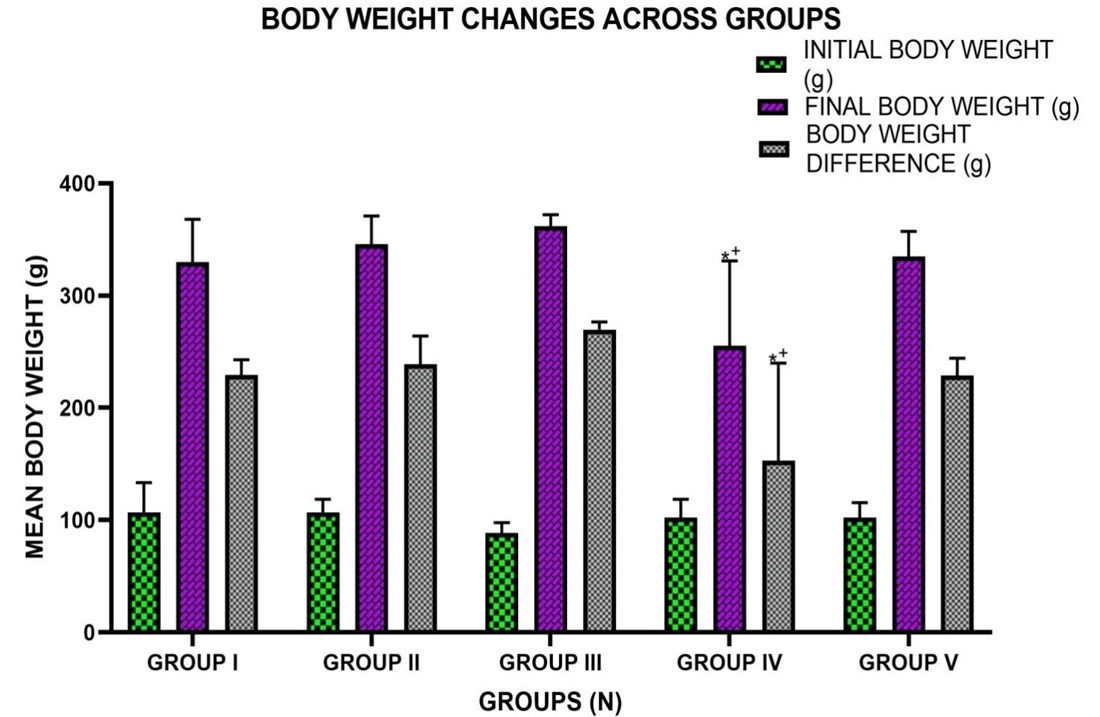
Cucumis melo seed oil (CMSO), rich in polyunsaturated fatty acids, tocopherols, and phenolic antioxidants, has demonstrated antioxidant and anti-inflammatory potential. This study evaluated the dose-dependent protective effects of CMSO on Tricarballylic acid (TCA)-induced testicular oxidative stress and functional impairment in male Wistar rats. Twenty-five male Wistar rats were randomly assigned into five groups (n = 5) and treated orally for 21 days: Control (normal saline), TCA only (200 mg/kg), and TCA (200 mg/kg) co-administered with CMSO at 100, 200, and 300 mg/kg. Body weight, oxidative stress markers (SOD, MDA), reproductive hormones (FSH, testosterone), sperm parameters, and testicular histology were assessed. TCA significantly decreased SOD activity (10.42±1.61 U/mg; p<0.05) and increased MDA (1.25±0.25 nmol/mg) compared to controls (18.02±3.00; 0.80±0.24). Co-administration of CMSO improved SOD activity in a dose-dependent pattern, with the highest level observed at 300 mg/kg (14.77±2.73; p<0.05). Testosterone suppression by TCA (3.22±0.05 ng/mL) was ameliorated by CMSO, especially at 200 mg/kg (4.02±0.45 ng/mL; p< 0.05). FSH levels showed mild dose-related increase. Sperm motility decreased markedly with TCA (35.26±13.35%) but improved only at 300 mg/kg CMSO (45.63±13.75%; p<0.05). Histology revealed focal degeneration, including tubular disorganization and germ-cell loss at medium and high CMSO doses. CMSO exerted dose-dependent biochemical protection against TCA-induced oxidative and hormonal disruptions, with the 300 mg/kg dose showing the greatest antioxidant effect. However, the persistence of histological alterations at higher doses suggests that biochemical improvements do not fully translate to structural recovery, highlighting the need for dose optimization and longer-duration studies to clarify therapeutic potential.
References
Abdullahi, A. M., Ibrahim, A. S., & Musa, A. I. (2021). Dose-dependent effects of natural oils on testicular oxidative stress and histopathology in rats. Journal of Experimental Biology and Agricultural Sciences, 9(5), 712–720.
Adeyemi, O. S., Akinyemi, A. I., & Bello, O. M. (2021). Nutritional and antioxidant potentials of melon seed oil in experimental models. Food Science and Nutrition, 9(4), 1970–1980.
Agarwal, A., Baskaran, S., Parekh, N., Cho, C. L., Henkel, R., Vij, S., & Shah, R. (2020). Male oxidative stress infertility (MOSI): Proposed terminology and clinical practice guidelines for management of idiopathic male infertility. World Journal of Men's Health, 38(3), 296–312.
Agarwal, A., Mulgund, A., Hamada, A., & Chyatte, M. R. (2021). A unique view on male infertility around the globe. Reproductive Biology and Endocrinology, 19(1), 1-15.
Almeida, F. L., Da Silva, F. M., & Souza, C. M. (2020). Tricarboxylic acid cycle disruption and oxidative stress in rat models of toxicity. Toxicology Reports, 7, 1234–1242.
Bello, T. A., Olawuyi, O. T., & Olufunmilayo, A. E. (2021). Antioxidant activity of Cucumis melo seed oil in mitigating oxidative stress in vivo. Biomedicine & Pharmacotherapy, 137, 111311.
Bosky, N. (2022). Testicular anatomy and physiology. International Journal of Reproductive Medicine, 2022, Article ID 9938574.
Buege, J. A., & Aust, S. D. (1978). Microsomal lipid peroxidation. Methods in Enzymology, 52, 302–310.
Carvalho, L. M. J., Machado, B. A. S., Ferreira, I. M. P. L. V. O., & Faria, J. A. F. (2011). Fruit seeds and their oil as potential functional food ingredients: A review. Food Science and Technology, 44(3), 587–593.
Chen, J., Wang, L., & Li, H. (2023). Phytochemical composition and antioxidative properties of melon seed oil: Implications for reproductive health. Phytotherapy Research, 37(1), 80–89.
Chen, Y., & Kang, J. (2013). Hypoglycemic effects of melon seed extract in type 2 diabetic rats. Phytotherapy Research, 27(6), 886–891.
Drake, R. L., Vogl, A. W., & Mitchell, A. W. M. (2015). Gray’s Anatomy for Students (3rd ed.). Elsevier.
El-Boshy, M. E., Abdel-Daim, M. M., & El-Sayed, Y. S. (2022). Impact of toxicants on reproductive hormones and testicular function: A review. Environmental Toxicology and Pharmacology, 89, 103820.
Górnaś, P., Rudzińska, M., & Segliņa, D. (2014). Evaluation of antioxidant capacity and fatty acid composition of fruit seeds oils. Food Chemistry, 162, 87–93.
Gumel, M., Sharif, N. M., & Usman, A. (2019). Citric acid: Properties, production, and applications. Food Science and Biotechnology, 28(5), 1359–1373.
Heidy, T. M., Mohamed, A. H., & Fatma, M. A. (2017). Production of organic acids by submerged fermentation: A review. Biotechnology Reports, 15, 76-85.
Ibrahim, R. M., Mahmoud, M. E., & El-Far, A. H. (2023). Protective effects of natural antioxidants on testicular toxicity induced by environmental pollutants. Environmental Science and Pollution Research, 30(11), 30020–30033.
Jin, Y., Zhang, Z., & Liu, X. (2024). Hormetic responses to phytochemicals: A review of dose-dependent effects on metabolism and oxidative stress. Phytochemistry Reviews, 23(1), 1–19.
Kumar, S., Singh, R., & Verma, A. (2022). High-dose effects of plant oils on testicular morphology and function in rodent models. Journal of Toxicological Sciences, 47(3), 189–198.
Kumar, V., Abbas, A. K., & Aster, J. C. (2013). Robbins Basic Pathology (9th ed.). Elsevier Saunders.
Mæhre, H. K., Dalheim, L., Edvinsen, G. K., Elvevoll, E. O., & Jensen, I.-J. (2018). Protein Determination—Method Matters. Foods, 7(1), 5. https://doi.org/10.3390/foods7010005
Mallek-Ayadi, S., Ksouri, R., Trabelsi, N., & Hamdaoui, G. (2018). Nutritional and antioxidant potential of melon (Cucumis melo L.) seeds. Industrial Crops and Products, 113, 137–144.
Maran, J. P., & Priya, K. A. (2015). Impact of tricarboxylic acid cycle intermediates on male fertility: A review. Journal of Reproductive Toxicology, 54, 1-9.
Musa, A. I., Abdullahi, A. M., & Ibrahim, A. S. (2021). Effects of antioxidants on sperm parameters in chemically induced testicular toxicity. Reproductive Toxicology, 100, 27–35.
Nwosu, E. C., Okonkwo, C. U., & Obi, A. I. (2020). Role of antioxidants in ameliorating endocrine disruption in male reproductive toxicity. Andrologia, 52(9), e13600.
Nyam, K. L., Wong, N. K., & Shah, N. M. (2009). Physicochemical properties and antioxidant activity of melon seed oil. Journal of the American Oil Chemists’ Society, 86(8), 823–829.
Ogunleye, T., Olaniyan, O., & Ajayi, O. (2022). Bioactive compounds in melon seed oil and their metabolic effects. Nutrition and Metabolism, 19(1), 55.
Olawuyi, O. T., Bello, T. A., & Adeyemi, O. S. (2023). Dose-dependent effects of melon seed oil on sperm motility and testicular oxidative stress in rats. Andrology Reports, 5(2), 110–119.
Patel, R., Desai, P., & Mehta, K. (2022). Antioxidant therapy for male infertility: A review of recent evidence. Journal of Assisted Reproduction and Genetics, 39(7), 1565–1576.
Rukmini, C., Raghuram, T. C., & Vijayaraghavan, K. (2004). Manual of laboratory techniques. New Delhi: National Institute of Nutrition, Indian Council of Medical Research.
Smith, J. A., Roberts, L. T., & Chen, W. (2023). Biphasic effects of plant-based compounds on metabolism: A review of hormesis in natural products. Journal of Nutritional Biochemistry, 112, 108860. https://doi.org/10.1016/j.jnutbio.2022.108860
Winterbourn, C. C., Hawkins, R. E., Brian, M., & Carrell, R. W. (1975). The estimation of red cell superoxide dismutase activity. Journal of Laboratory and Clinical Medicine, 85(2), 337–341.
Zeb, A. (2016). Phenolic content and antioxidant activity of melon seed oil. Journal of Food Science and Technology, 53(2), 1024–1031.
Zegers-Hochschild, F., Adamson, G. D., Dyer, S., Racowsky, C., De Mouzon, J., & Sokol, R. (2009). The International Committee for Monitoring Assisted Reproductive Technology (ICMART) glossary on infertility and fertility care. Fertility and Sterility, 92(5), 1520-1524.
Zhang, Y., Li, H., & Wang, X. (2024). Antioxidant supplementation and restoration of testosterone synthesis in rodent models of testicular toxicity. Endocrine Connections, 13(1), e210658.
Downloads
Published
Issue
Section
Categories
License
Copyright (c) 2025 Swesme Enyioma-Alozie

This work is licensed under a Creative Commons Attribution 4.0 International License.