
APPLICATION OF U-NET ARCHITECTURE FOR FLOOD DETECTION IN BAYELSA STATE
DOI:
https://doi.org/10.33003/fjs-2025-0912-3949Keywords:
Deep Learning, Disaster Management, Flood Monitoring, Image Segmentation, Satellite Imagery, U-Net ArchitectureAbstract
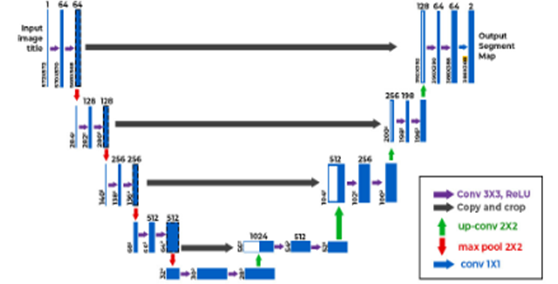
Floods are recurring disasters in Bayelsa State, Nigeria, causing significant damage to infrastructure, displacement of people, and loss of livelihoods. The research aims to develop an accurate and efficient method for identifying flood-affected areas using satellite imagery and deep learning techniques. The U-Net architecture, a convolutional neural network designed for image segmentation tasks, was adapted and trained on a dataset of high-resolution satellite images including both flood and non-flood periods. The model's performance was evaluated using various metrics, including precision, recall, and F1-score. Results demonstrate that the U-Net-based approach achieves high accuracy in delineating flood extents, outperforming traditional methods. The study also explores the model's ability to detect flood progression over time and its potential for real-time flood monitoring. The model achieved an accuracy of 88.66%, Recall of 0.90, Loss of 0.2846, Dice of 0.90, and IoU of 0.75. This research contributes to the development of advanced flood detection systems, which can aid in disaster management and mitigation efforts in Bayelsa State and similar flood-prone regions.
References
Adelekan, I. O. (2016). Flood risk management in the coastal city of Lagos, Nigeria. Journal of Flood Risk Management, 9(3), 255–264.
Falk, T., Mai, D., Bensch, R., Çiçek, Ö., Abdulkadir, A., Marrakchi, Y., & Ronneberger, O. (2019). U-Net: Deep learning for cell counting, detection, and morphometry. Nature Methods, 16(1), 67–70.
Guo, H., Wang, L., & Chen, F. (2020). Artificial intelligence applications in flood management: Opportunities and challenges. Water, 12(6), 1695.
IPCC. (2021). Climate Change 2021: The Physical Science Basis. Contribution of Working Group I to the Sixth Assessment Report of the Intergovernmental Panel on Climate Change.
Kingma, D. P., & Ba, J. (2015). Adam: A method for stochastic optimization. International Conference on Learning Representations (ICLR).
Li, Y., et al. (2020). Deep learning for flood detection: A review. Journal of Hydrology, 586, 124311.
Lin, L., Sun, Z., Rahman, M. S., Shrestha, R., Kang, L., Deng, M., Tang, J., Di, L., Hu, L., Zhang, C., & Yu, E. G. (2016, July). A review of remote sensing in flood assessment. In 2016 5th International Conference on Agro-Geoinformatics (Agro-Geoinformatics) (pp. 1–4). IEEE.
Mateo-Garcia, G., et al. (2020). Flood detection with satellite images using deep learning. IEEE Transactions on Geoscience and Remote Sensing, 58(10), 8411–8423.
Nkwunonwo, U. C., et al. (2020). Flood risk assessment and mapping in Nigeria: A review. Journal of Flood Risk Management, 13(2), e12615.
Nnodi, J. T., & Obasi, E. C. M. (2025). Leveraging artificial intelligence for detecting insider threats in corporate networks. University of Ibadan Journal of Science and Logics in ICT Research, 13(1), 130–144.
Obasi, E. C. M., & Abosede, O. (2025). Leveraging machine learning algorithms for enhanced prediction of product yields and purity in chemical reactions. Nile Journal of Engineering and Applied Sciences.
Obasi, E. C. M., Anekwe, U. L., & Timadi, M. E. (2025). Development of an early flood warning system using satellite imagery and deep learning algorithm. Nile Journal of Engineering and Applied Sciences.
Obasi, E. C. M., & Timadi, M. E. (2025). Application of Machine Learning Algorithms with Zero Trust Principles for Preventing Malware and SQL Injection Attack in a Cloud Database. International Journal of Computer Applications, 187(53), 8–19.
Obasi, E. C. M., & Nlerum, P. A. (2023). A model for the detection and prevention of backdoor attacks using CNN with federated learning. University of Ibadan Journal of Science and Logics in ICT Research, 10(1), 9–21.
Obasi, E. C. M., & Stow, M. T. (2023). A predictive model for uncertainty analysis on big data using Bayesian CNN. University of Ibadan Journal of Science and Logics in ICT Research, 9(1), 52–62.
Ologunorisa, T. E. (2004). Flood risk assessment and management in Nigeria: Challenges and opportunities. Journal of Environmental Sciences, 16(2), 161–171.
Opolot, E. (2013). Application of remote sensing and geographical information systems in flood management: A review. Research Journal of Applied Sciences, Engineering and Technology, 6(10), 1884–1894.
Rahman, M. A., & Wang, Y. (2016). Optimizing intersection-over-union in deep neural networks for image segmentation. International Symposium on Visual Computing, 234–244.
Ronneberger, O., et al. (2015). U-Net: Convolutional networks for biomedical image segmentation. Medical Image Computing and Computer-Assisted Intervention, 234–241.
Schumann, G. J. P., & Domeneghetti, A. (2016). Exploiting remote sensing data for flood prediction. Hydrology and Earth System Sciences, 20(10), 4017–4039.
Shen, X., Li, J., & Wang, Y. (2019). Flood detection using machine learning techniques: A review. Remote Sensing, 11(15), 1769.
Song, J., Shao, Z., Zhan, Z., & Chen, L. (2024). State-of-the-art techniques for real-time monitoring of urban flooding: A review. Water, 16(17), 2476.
Stow, M. T., & Obasi, E. C. M. (2025). An interpretable early warning system for malaria outbreak in Bayelsa State using deep learning and climate data. International Journal of Advanced Research in Computer and Communication Engineering, 14(8), 58–101.
Tanim, A. H., Goharian, E., Mcrae, C. B., & Tavakol-Davani, H. (2022). Flood detection in urban areas using satellite imagery and machine learning. Water, 14(7), 1140.
Timadi, M. E., & Obasi, E. C. M. (2025). A zero trust hybrid machine learning algorithms for threat detection and Prevention with Explainable Threat Intelligence, UIJSLICTR, 15(1), pp.246-261.
Timadi, M. E., & Obasi, E. C. M. (2025). Integrating zero-trust architecture with deep learning algorithm to prevent structured query language injection attack in cloud database. University of Ibadan Journal of Science and Logics in ICT Research, 13(1), 52–62.
Twele, A., Cao, W., Plank, S., & Martinis, S. (2016). Sentinel-1-based flood mapping at high spatial resolution: A case study in Germany. Remote Sensing, 8(6), 456.
Uso, N. O., & Onye, O. J. (2025). Performance evaluation of five probability distribution models for the analysis of flood data at River Niger. FUDMA Journal of Sciences, 9(4), 307–323.
Wang, Y., et al. (2019). Flood detection using remote sensing images: A review. Remote Sensing, 11(11), 1344.
Zhang, H., Chen, Y., & Ma, J. (2021). Deep learning for environmental monitoring: Applications and challenges. IEEE Access, 9, 86143–86157.
Zhu, X. X., Tuia, D., Mou, L., Xia, G. S., Zhang, L., Xu, F., & Fraundorfer, F. (2019). Deep learning in remote sensing: A review. IEEE Geoscience and Remote Sensing Magazine, 5(4), 8–36.
Downloads
Published
Issue
Section
Categories
License
Copyright (c) 2025 Emmanuella Obasi, Promise, Francis Eze

This work is licensed under a Creative Commons Attribution 4.0 International License.