
KNOWLEDGE AND UTILIZATION OF PAIN ASSESSMENT TOOLS AMONG SURGICAL NURSES AT FEDERAL MEDICAL CENTRE GUSAU, ZAMFARA STATE
DOI:
https://doi.org/10.33003/fjs-2025-0912-3880Keywords:
Pain, Pain assessment tools, knowledge, Gusau, ZamfaraAbstract
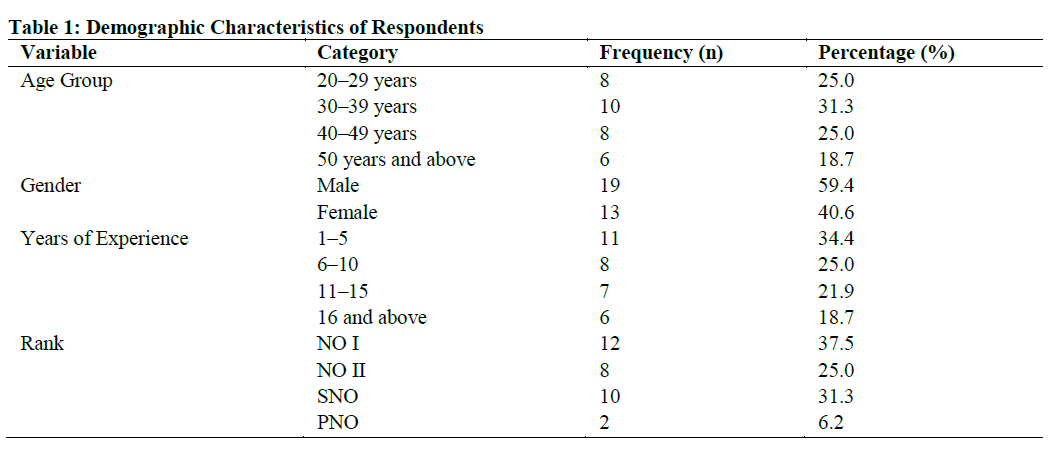
Effective pain assessment is a cornerstone of quality patient care, especially in surgical settings where unmanaged pain can impede recovery and compromise outcomes. This study assessed the knowledge and utilization of pain assessment tools among surgical nurses at the Federal Medical Centre (FMC) Gusau, Zamfara State, Nigeria. Using a descriptive cross-sectional design and purposive sampling, 32 surgical nurses participated in a structured, self-administered questionnaire. Data were collected between October and November 2024, ensuring broad participation from nurses across all surgical units. Data analysis was conducted using Microsoft Excel, employing descriptive statistics such as frequencies, percentages, and charts to summarize key findings. Findings revealed that while 87.5% of nurses were aware of pain assessment tools, only a few were familiar with diverse tools beyond the Numeric Rating Scale (53.1%) and Visual Analogue Scale (31.3%). Approximately 62.5% had received formal training, and 56.3% reported using these tools every shift. However, significant barriers including difficulty interpreting results (81.3%), time constraints (75.0%), and inadequate training (62.5%) were identified. Respondents recommended increased training (87.5%) and enhanced institutional support as key interventions. The study concludes that, although awareness and self-reported confidence are relatively high, gaps in formal training, tool diversity, and institutional support hinder the effective assessment of pain. Strengthening nurse education and improving hospital policies are crucial to enhancing pain management outcomes in surgical care.
References
Shrestha, S., Sapkota, S., Teoh, S. L., Kc, B., Paudyal, V., Lee, S. W. H., & Gan, S. H. (2024). Comprehensive assessment of pain characteristics, quality of life, and pain management in cancer patients: A multi-center cross-sectional study. Quality of Life Research, 33(10), 2755–2771. https://doi.org/10.1007/s11136-024-03725-w
International Association for the Study of Pain. (2020). IASP announces revised definition of pain. https://www.iasp-pain.org/publications/iasp-news/iasp-announces-revised-definition-of-pain/
Dueñas, M., Ojeda, B., Salazar, A., Mico, J. A., & Failde, I. (2016). A review of chronic pain impact on patients, their social environment and the health care system. Journal of Pain Research, 9, 457–467. https://doi.org/10.2147/JPR.S105892
Nkhoma, K., Seymour, J., & Arthur, A. (2015). An educational intervention to reduce pain and improve pain management for Malawian people living with HIV/AIDS and their family carers: A randomized controlled trial. Journal of Pain and Symptom Management, 50(1), 80–90.e4. https://doi.org/10.1016/j.jpainsymman.2015.01.011
Rababa, M., Al-Sabbah, S., & Hayajneh, A. A. (2021). Nurses' perceived barriers to and facilitators of pain assessment and management in critical care patients: A systematic review. Journal of Pain Research, 14, 3475–3491. https://doi.org/10.2147/JPR.S332423
Onianwa, P. O., Alonge, T. O., Otegbayo, J. A., Ike, E. U., Chukura, F. O., Are, O. O., Akanbi, F. O. M., Ayorinde, M. O., Adubi, I. O., & Yaya, O. S. (2017). Pain as 5th vital sign: Impact of pain assessment training program on Nigerian nurses’ knowledge of pain management. International Journal of Nursing and Midwifery, 9(11), 129–135. https://doi.org/10.5897/IJNM2017.0283
Bilawu, Y. A., & Rasheed, T. O. (2022). Pain management practices and perceived barriers among nurses working in National Orthopedic Hospital, Igbobi, Lagos. International Journal of Life Science Research Archive, 2(2), 89–98. https://doi.org/10.53771/ijlsra.2022.2.2.0052
Alanizi, A. W., Shaqiqi, W., Cabaldo, L. C., Awaji, R. M., Alotaibi, R. A., & Alanazi, A. M. (2025). Nurses' knowledge and attitudes toward pain assessment and management: A cross-sectional study. Nursing Research and Practice, 2025, Article 6646998. https://doi.org/10.1155/nrp/6646998
Chin, A. S.-F., Husaini, A., Abdul Rahman, N. A. H., & Venkatasalu, M. R. (2021). Acute pain assessment practice among healthcare professionals from medical and surgical wards in Brunei hospitals. Aging Medicine and Healthcare, 12(3), 72–78. https://doi.org/10.33879/AMH.123.2020.03007
Afenigus, A. D. (2024). Evaluating pain in non-verbal critical care patients: A narrative review of the critical care pain observation tool and its clinical applications. Frontiers in Pain Research, 5, Article 1481085. https://doi.org/10.3389/fpain.2024.1481085
Matthews, E., & Malcolm, C. (2007). Nurses' knowledge and attitudes in pain management practice. British Journal of Nursing, 16(3), 174–179. https://doi.org/10.12968/bjon.2007.16.3.22972
Saleh, A. M. (2023). Nurses' assessment and management practices of pain among intensive care patients in King Khalid Hospital, Kharj, Riyadh. Heliyon, 9(9), e19986. https://doi.org/10.1016/j.heliyon.2023.e19986
Gregory, J., & Richardson, C. (2014). The use of pain assessment tools in clinical practice: A pilot survey. Journal of Pain & Relief, 3(2). https://doi.org/10.4172/2167-0846.1000140
[14] El-Tallawy, S. N., Ahmed, R. S., & Nagiub, M. S. (2023). Pain management in the most vulnerable intellectual disability: A review. Pain and Therapy, 12, 939–961. https://doi.org/10.1007/s40122-023-00526-w
Tata, T. K., Ohene, L. A., Dzansi, G. A., & Aziato, L. (2024). Factors influencing nurses' pain assessment and management of road traffic casualties: A qualitative study at a military hospital in Ghana. BMC Emergency Medicine, 24(1), 100. https://doi.org/10.1186/s12873-024-01016-8
Bozorgi, F., Ghorbani Afrachali, M., Kumar Mudgal, S., Hosseini Marznaki, Z., Goli Khatir, I., Kalal, N., Keshavarzi, F., & Hosseininejad, S. M. (2024). Knowledge, attitudes, and perceived barriers of nurses regarding pain management in emergency department; a KAP study. Archives of Academic Emergency Medicine, 12(1), e67. https://doi.org/10.22037/aaem.v12i1.2356
Atefeh, S. (2025). Barriers and facilitators of pain management in children: A scoping review. BMC Anesthesiology, 25(1), 148. https://doi.org/10.1186/s12871-025-02941-2
Siddiqui, A. S., Zehra, T., Afshan, G., Shakil, S., & Ahmed, A. (2025). Bridging gaps in pain management: The effectiveness of educational intervention for nurses in a teaching hospital of low- and middle-income countries. Nursing Research and Practice, 2025, Article 8874509. https://doi.org/10.1155/nrp/8874509
Kwame, A., & Petrucka, P. M. (2021). A literature-based study of patient-centered care and communication in nurse-patient interactions: Barriers, facilitators, and the way forward. BMC Nursing, 20, 158. https://doi.org/10.1186/s12912-021-00684-2
Weatherly, S., McKenna, T., Wahba, S., Friedman, A., Goltry, W., Wahid, T., Abourahma, H., Lee, K., Rehman, A., Odeh, A., & Costin, J. (2024). Effectiveness of digital health interventions (DHI) in chronic pain management: A scoping review of current evidence and emerging trends. Cureus, 16(10), e72562. https://doi.org/10.7759/cureus.72562
Downloads
Published
Issue
Section
License
Copyright (c) 2025 Tukur Ismail, Tujjani Sulaiman, Fatima Tanko, Najaatu Yuguda, Bello Arkilla

This work is licensed under a Creative Commons Attribution 4.0 International License.


